CWF Releases its First Annual Report Ever Using a Story Map Format: “2014 Annual Report“
By David Wheeler, Executive Director
Technology has proven to be vital to Conserve Wildlife Foundation’s work protecting rare wildlife species over the years. Our biologists depend greatly on modern technologies to band, track, and share online the journeys of wildlife. Our webcams broadcast the most intimate behaviors of nesting birds and bats across the web. And we seek out ever-evolving communications technologies to spread the word about the inspiring stories of wildlife, from social media and infographs to e-books and Story Maps. These technologies offer newfound abilities to share complex data on multiple levels, while still incorporating the awe-inspiring photography and videos that bring wildlife’s stories to life.
Conserve Wildlife Foundation of New Jersey is excited to offer our 2014 Annual Report in a unique format that utilizes one of those technologies – Story Maps. In the past year, we have explored the wonders of American oystercatchers with our first Story Map – and now the annual report allows all of our projects to be highlighted in this interactive format.
A screen capture of one of the pages of the CWF 2014 Annual Report Story Map.
Visit the multiple pages within this Story Map to learn about Conserve Wildlife Foundation’s many projects and partnerships in 2014, and the imperiled wildlife species in need of our help. Find examples of the innovative and dedicated leadership of our biologists and volunteers. And take an online journey across the state to learn how our projects made a difference in all corners of New Jersey in 2014 – a great year for wildlife in the Garden State!
Road Closures Help Amphibians Migrate to Vernal Pools to Breed
Conserve Wildlife Foundation is excited to celebrate Amphibian Awareness Month during March 2015! Follow us on social media and be sure to check your email (sign up for our list) for weekly stories on the amphibians of the Garden State and our work to protect them.
On the night of March 14, Conserve Wildlife Foundation Communications Coordinator Lindsay McNamara attended the first closure of Beekman Road this season. Beekman Road, in East Brunswick, New Jersey, is closed to traffic about two or three nights for six to twelve hours each spring by Friends of the East Brunswick Environmental Commission(Friends of EBEC). Friends of EBEC organizes these road closures to maintain local biodiversity.
In the woods on either side of Beekman Road, vernal pool habitat exists. Vernal pools are temporary woodland ponds that fill with water during the winter and spring and dry out in the summer. These vernal pools are extremely important for a number of amphibians in the area. Spotted salamanders, wood frogs, green frogs, spring peepers, Fowlers toads and chorus frogs all rely on the vernal pools for breeding.
Some amphibians, like spotted salamanders and wood frogs are entirely dependent on the vernal pools for breeding. They leave their winter hibernation spots in upland forests and migrate (often in large groups) to the vernal pools. Research suggests that these species follow the same migratory paths each year, often traveling distances of as much as 1,000 feet from their hibernation spots.
At the vernal pool, mating occurs, eggs are deposited by the females, and the adults leave the habitat and venture to the surrounding woods. The adults spend their summer in these wooded areas before slowly retreating back to their winter hibernation areas, and the natural cycle begins again.
Unfortunately, the migrating amphibians need to cross Beekman Road to get from their hibernating spots to their vernal pool breeding grounds. Road kills during this journey significantly reduce salamander and frog populations and can lead to local extinctions at breeding ponds.
Friends of the East Brunswick Environmental Commission has worked together with a number of partners to close Beekman Road to traffic during nights when amphibian migration is extremely likely. These road closures help protect migrating salamanders and frogs as they move across Beekman Road to their breeding vernal pools.
Friends of EBEC consider a number of variables before they decided to close the road. A wide range of factors trigger salamander migration including the amount and timing of rainfall, the date, the temperature of the air, the temperature of the ground, the availability of open water on the vernal pools, the depth the salamanders are migrating, soil moisture and many others. Interestingly, studies have shown that males typically migrate first and arrive at the vernal pools before the females. It seems females need a higher average air temperature to stimulate their movement than the males.
Volunteers are encouraged to come on these rainy nights to help the amphibians cross the road. Bring your friends, your family and don’t forget a flashlight, to the next road closure of the season! Updates are posted on the Friends of the East Brunswick Environmental Commission’s blog.
These road closures are a great way to protect local biodiversity and educate New Jersey residents about wildlife in their state. Conserve Wildlife Foundation, in partnership with the New Jersey Division of Fish & Wildlife’s Endangered and Nongame Species Program, lead a number of Amphibian Crossing volunteer programs across New Jersey. Join us!
Emerging Disease Known to Affect Amphibians, Reptiles and Fish
Conserve Wildlife Foundation is excited to celebrate Amphibian Awareness Month during March 2015! Follow us on social media and be sure to check your email (sign up for our list) for weekly stories on the amphibians of the Garden State and our work to protect them.
While human diseases such as Ebola and the zombie apocalypse virus have made recent headlines in the news and on our TV screens, there is a virus that is also affecting our local amphibian population. This emerging disease known as Ranavirus, has become increasingly common in the U.S., including New Jersey.
This virus has been known to affect amphibians, reptiles and fish. It is of great concern because it can kill nearly 100% of amphibian larvae (tadpoles) within just a few days once a population is infected. Ranavirus causes skin ulcerations and organ hemorrhaging, and is especially threatening to larvae, specifically wood frogs (Lithobates sylvaticus). Transmission of the disease can be spread direct contact, waterborne exposure, contaminated soil, and ingestion of infected tissues.
While the virus has been known to cause major die-offs all over the world, little information on the timing, extent, and frequency of the disease outbreaks is known in the Mid-Atlantic U.S.. In order to gain more information, a multi-state survey has been underway since 2013. The project is led by Scott Smith of the Maryland Department of Natural Resources. Conserve Wildlife Foundation staff biologists are doing a large amount of New Jersey’s field surveillance with support from the New Jersey Division of Fish and Wildlife Endangered and Nongame Species Program (ENSP).
As part of this project, in 2013, breeding ponds throughout the New Jersey were sampled for prevalence of Ranavirus. Thirty larvae from each study pond were captured by dip net, physically examined, euthanized, and preserved for screening and other analyses at the labs of Montclair State University and/or the National Wildlife Health Center. Results determined that about half of these ponds tested positive for Ranavirus.
In 2014, Ranavirus-positive sites were re-sampled for presence of the disease. At about 25% of the sites, disease symptoms and/or dead tadpoles were found, though no mass die-offs were observed. Investigations are still ongoing to further determine the impact of Ranavirus on amphibian populations as well as potential environmental factors that may be associated with the disease.
This week, Conserve Wildlife Foundation’s Wildlife Ecologist Stephanie Feigin went into Hibernia Mine with New Jersey Division of Fish & Wildlife Endangered Species and Nongame Program (ENSP) Biologist MacKenzie Hall and John Gumbs with BATS Research Center. The group collected data for important research studies on the fungus responsible for White-nose Syndrome (Pseudogymnoascus destructans) and White-nose Syndrome itself. The data will be used in a UC Santa Cruz University study led by Dr. Winifred Frick, as well as a Rutgers University study led by 2014 Women & Wildlife Education Award Winner Dr. Brooke Maslo.
Hibernia Mine (c) Stephanie FeiginHibernia Mine Entrance (c) Stephanie FeiginHibernia Mine Entrance from Inside Cave (c) Stephanie FeiginStalagmites in Hibernia Mine (c) Stephanie FeiginLittle Brown Bats (c) Stephanie FeiginLittle Brown being swabbed for study (c) Stephanie FeiginENSP Biologist MacKenzie Hall with Little Brown Bat (c) Stephanie FeiginLittle Brown Bats (c) Stephanie FeiginLittle Brown Bat (c) Stephanie FeiginLittle Brown Bat shows significant signs of White Nose Syndrome on wings and nose (c) Stephanie FeiginCWF Wildlife Ecologist Stephanie Feigin holding Little Brown Bat (c) Stephanie Feigin
Studying the New Jersey Endangered Eastern Tiger Salamander
Conserve Wildlife Foundation is excited to celebrate Amphibian Awareness Month during March 2015! Follow us on social media and be sure to check your email (sign up for our list) for weekly stories on the amphibians of the Garden State and our work to protect them.
Biologists and volunteers go out to pools during the winter months to survey for egg masses to determine if the pools are being used by Tiger Salamanders. The cold winter made getting out to pools difficult due to the ice cover, so now that it is warming up we hoped to still be able to find egg masses that hadn’t yet hatched.
Surveying for Tiger Salamander egg masses
One hundred sixty egg masses were found in the largest pool, some the of eggs had already hatched but others were still intact. Tiger Salamander larvae was seen along with the larvae of the Marbled Salamander. Vernal pools are breeding grounds for many species which is why it is so important to protect them.
Marbled Salamander larvae @ Pat Sutton
In New Jersey, there are only 15 known Tiger Salamander breeding pools in the southern most part of the state. Tiger Salamanders themselves are targeted by collectors for the pet trade which is why their breeding locations are kept a secret. Their habitat is declining due to habitat loss and fragmentation, development, pollution, changes in hydrology, and climate change.
To see what biologists are doing to protect them visit:
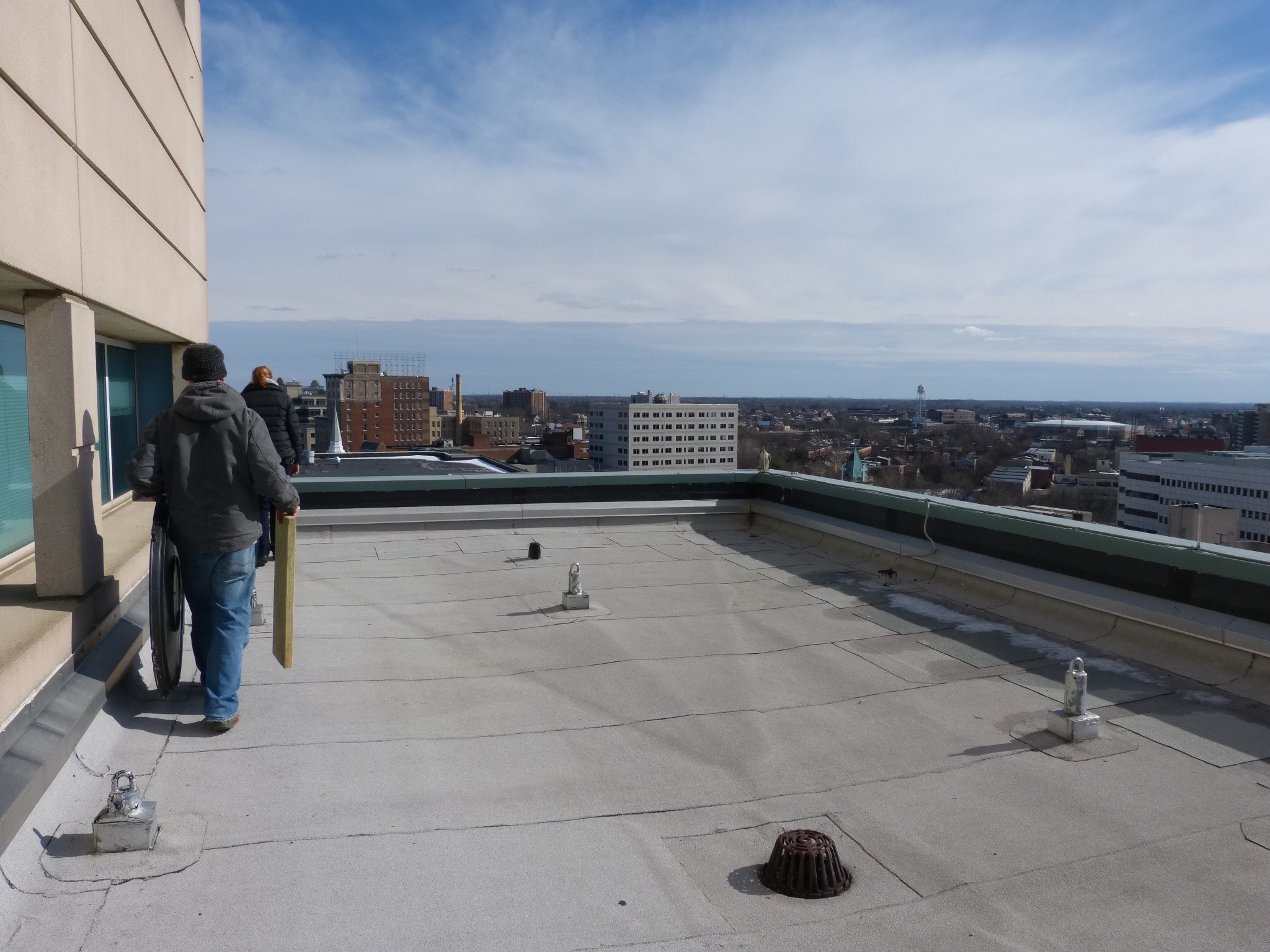
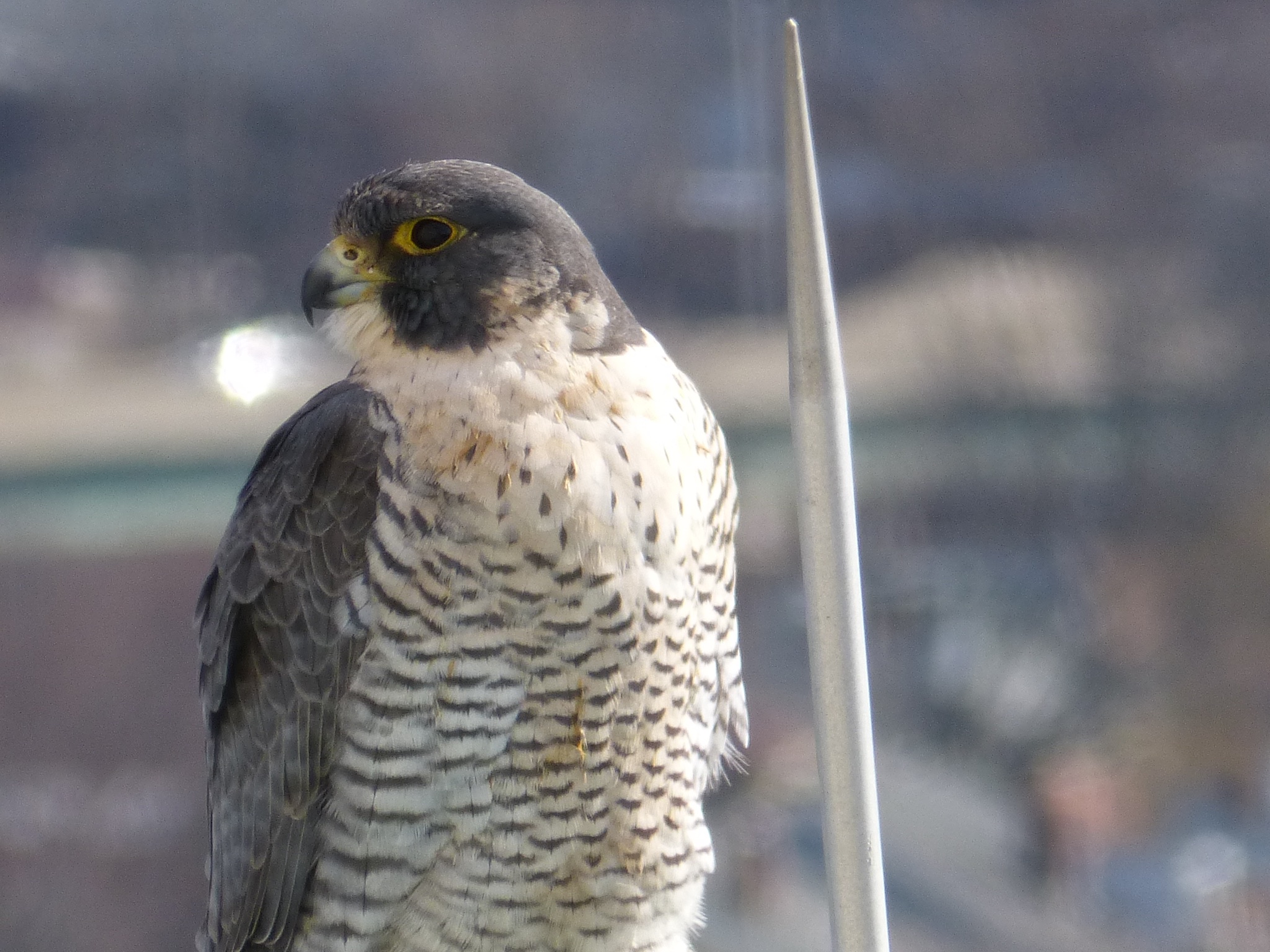
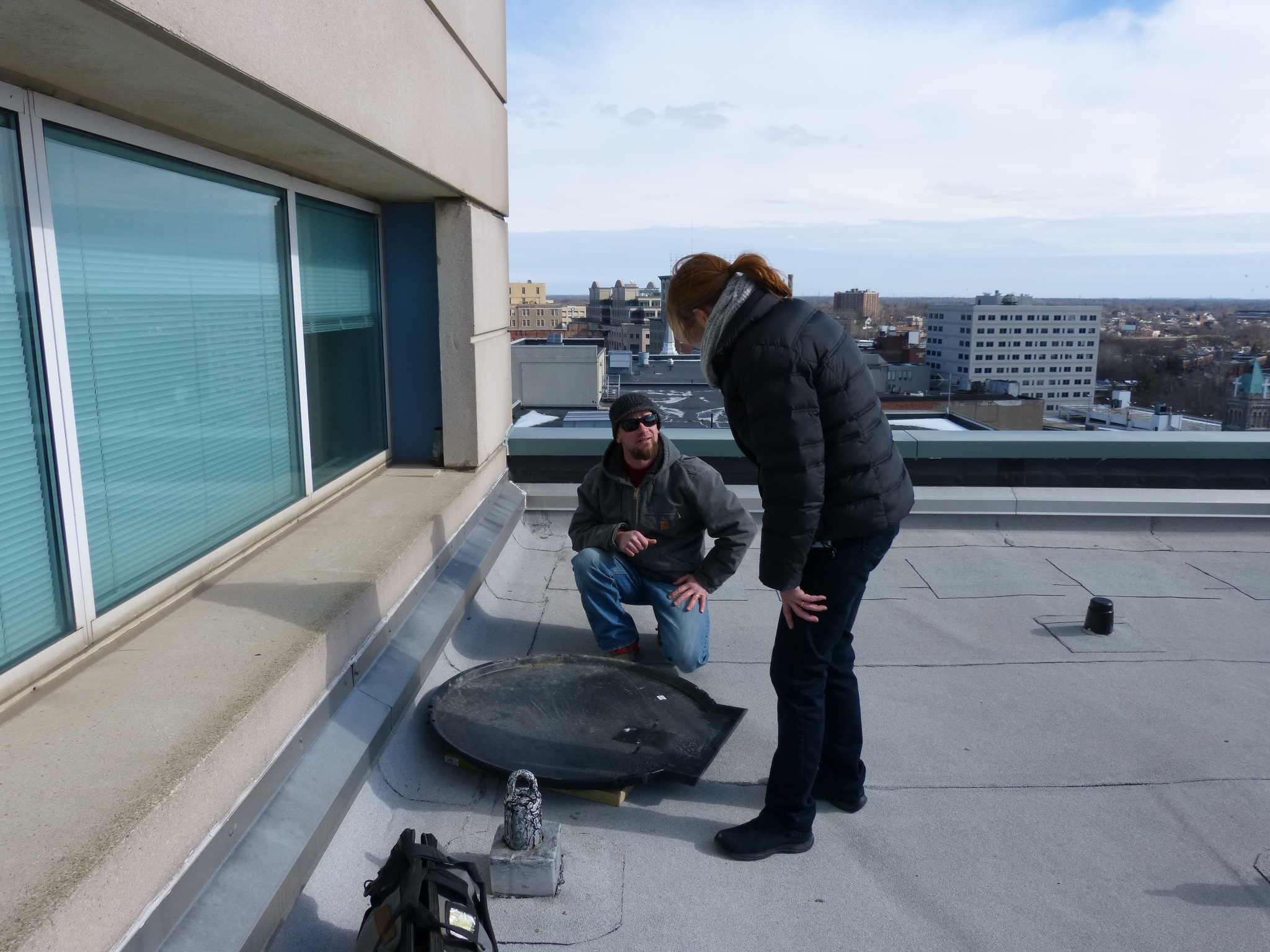
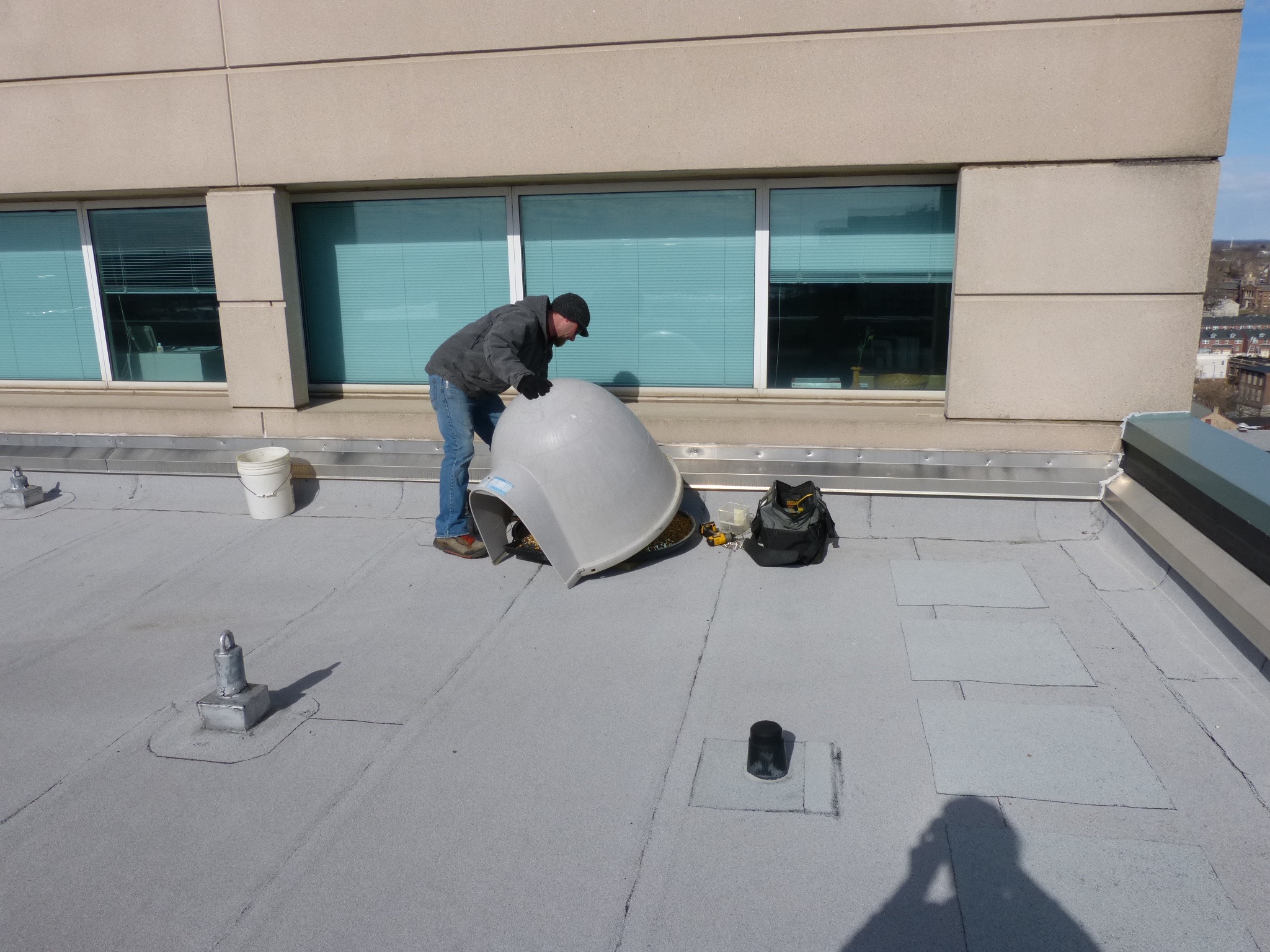
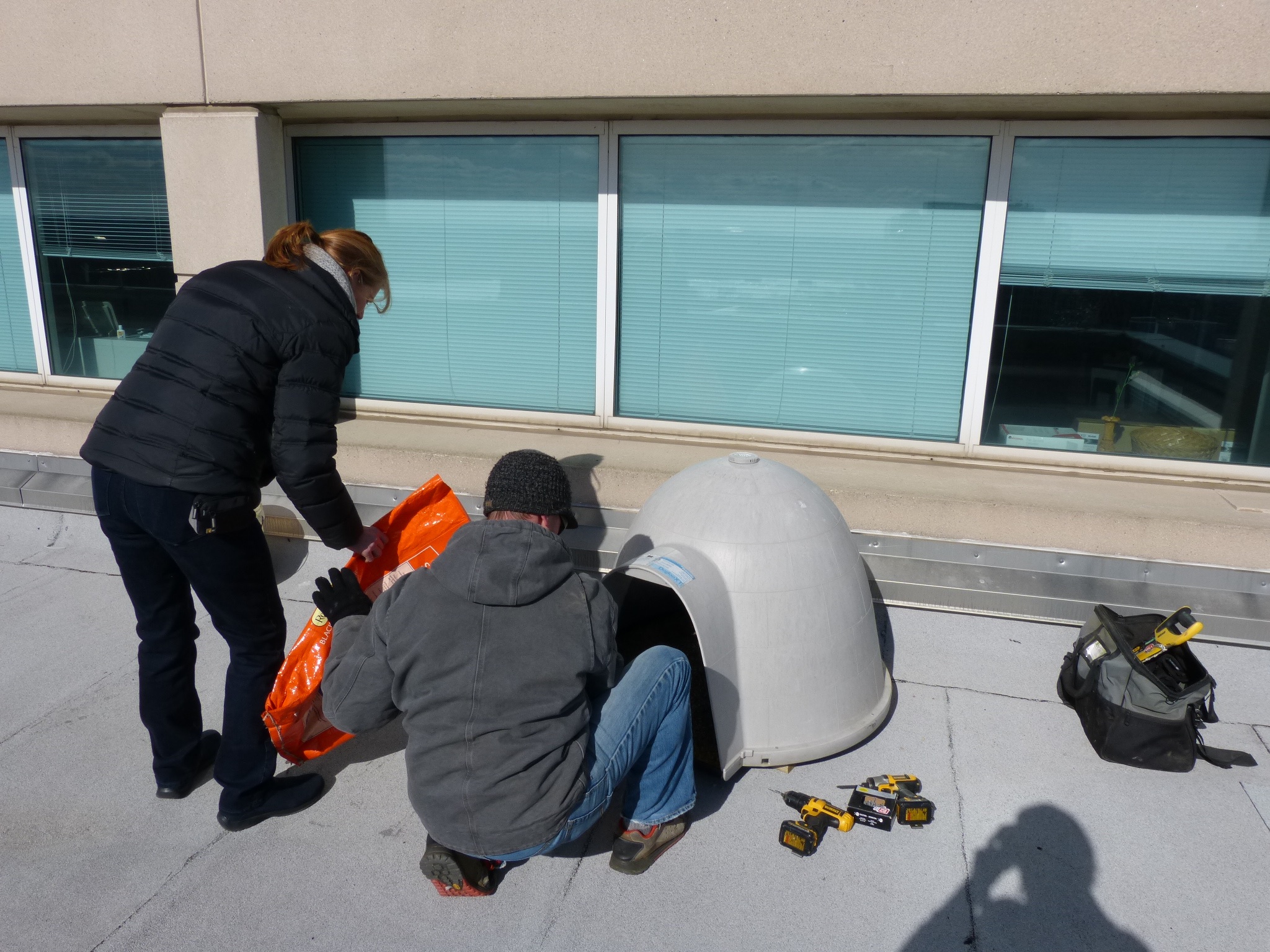
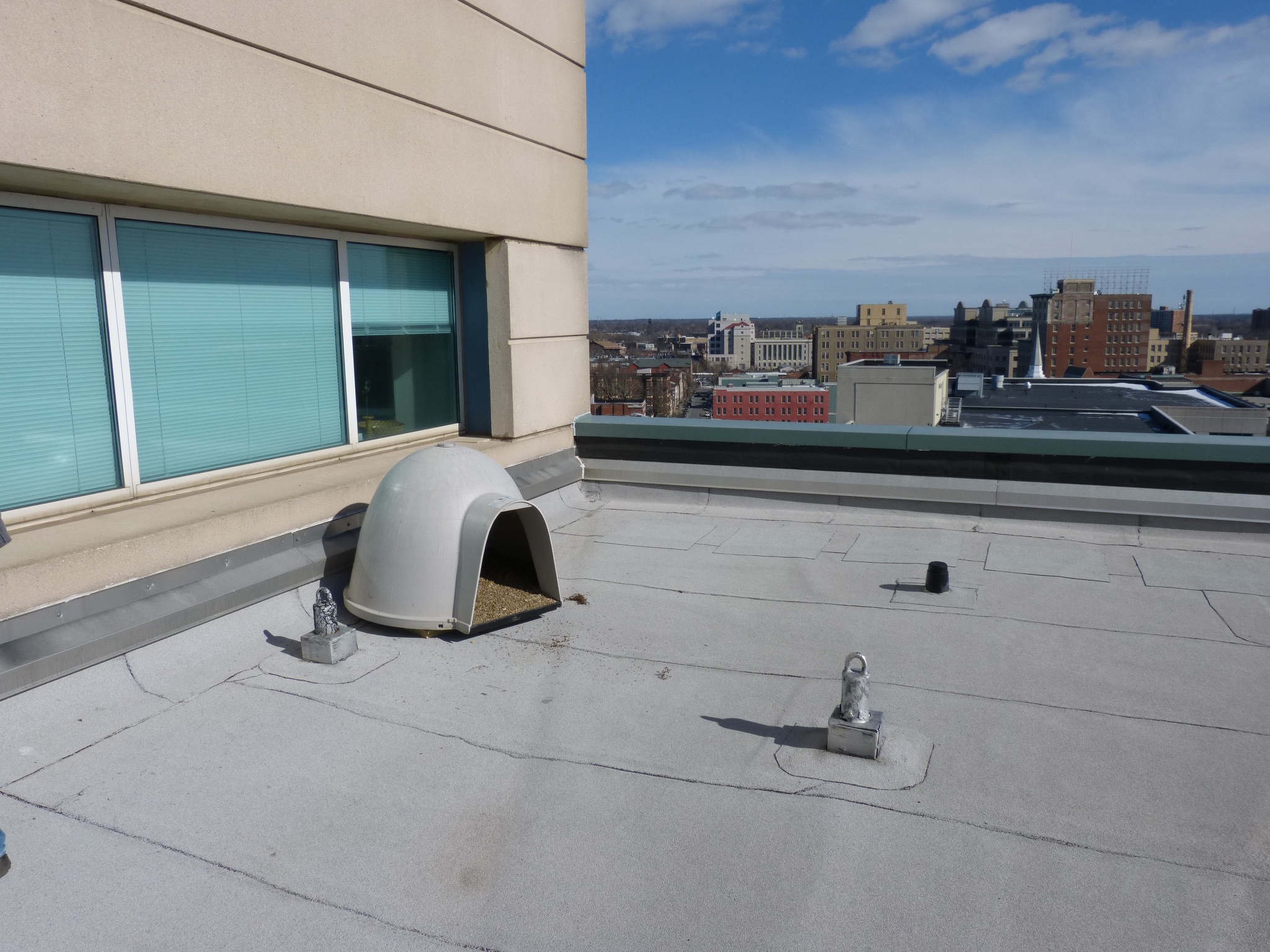
In 1993-94 six young peregrine falcons were released at 20 West State Street (Mary G. Roebling Building) in Trenton to help bolster the population of urban nesting falcons in the area. Currently the closest nest is 20 miles away at the Tacony-Palmyra Bridge (where they also have a camera at the nest). Twenty years later and we may finally get some nesting falcons in Trenton! It all started when Jean Bickal, a worker in the building, noticed a falcon that often perched on the building ledges. From there Kathy Clark, a Zoologist with New Jersey Division of Fish & Wildlife made a site visit and took measurements to see if we could fit a nestbox (dog igloo) out a window on the 10th floor, which also had a roof on it. It appeared one would fit so we setup a date to install the new nestbox.
Cities and urban areas actually provide suitable habitat for falcons. Urban areas usually have lots of ledges under bridges or on buildings for them to nest, and abundant prey, in the form of pigeons and other songbirds. In New Jersey we have three other pairs that nest on buildings in Jersey City, Elizabeth, and Atlantic City, plus pairs that nest on the Tacony-Palmyra, Walt Whitman, Betsy Ross, and Burlington-Bristol Bridges.
On February 5th we helped install a new nestbox on top of a roof at 20 W. State St. We’re hoping that the falcon seen that day will find a mate and use the nestbox to raise young. Fingers crossed that we get some good news soon!
Photo Credit: Brian Zarate, NJ Division of Fish and Wildlife
Wetlands are important because they are part of New Jersey’s water resources and are vital to the health of our waterways. Although historically underappreciated, wetlands provide many environmental benefits such as filtering pollutants, storing floodwaters and serving as carbon sinks. New Jersey is comprised of a multitude of wetland types, including freshwater swamps, bogs, fens as well as estuarine and tidal marshes.
Many threatened and endangered species in New Jersey depend directly on wetlands, including the small and elusive bog turtle (Glyptemys muhlenbergii)! Bog turtles spend their entire lives in mossy bogs, wet meadows or stream fed seeps. They fed mostly on invertebrates, seeds, berries and carrion. Bog turtles are important members of their ecosystem because they help recycle nutrients, keep insect populations in check, and serve as indicators of wetland function and water quality. This tiny turtle and other wetland species are often victims of habitat loss and fragmentation, so protection of our precious wetlands is important to the long term vitality of many wildlife populations!
Millions of citizens enjoy their local wetlands every year through recreational uses provided by photography, hiking, fishing, canoeing and more! Did you know New Jersey is home to over 900,000 acres of wetlands? Get out and explore today!
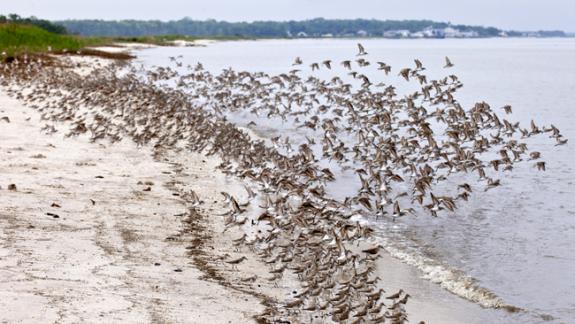
Each spring New Jersey hosts the largest concentration of shorebirds in North America! From about the first week in May to the second week in June, the biggest gathering of horseshoe crabs in the world comes to Delaware Bay to spawn.
At the same time, hundreds of thousands of shorebirds arrive on the Bayshore to refuel on horseshoe crab eggs at a critical stopover during their migration. Delaware Bay is an extremely important area for a number of at-risk wildlife, including Red Knots and Horseshoe Crabs.
Conserve Wildlife Foundation proudly partners with Atlantic City Electric to help protect New Jersey’s rarest amphibian, the Eastern Tiger Salamander. The survival of Eastern Tiger Salamanders is threatened by sea level rise, over-development of critical habitat and climate change.
We are working together to build a vernal pool along a portion of Atlantic City Electric’s transmission right-of-way in Cape May County. Vernal pools hold water in the winter and spring, but dry out during the summer months. Since fish cannot live in vernal pools, salamander eggs are not in danger of being eaten. We are hopeful that these ideal breeding conditions will aid Eastern Tiger Salamander recovery over time.
Last Friday, Conserve Wildlife Foundation biologists and other state biologists took Eastern Tiger Salamander egg masses from a productive pool and placed them into the new vernal pools.
Christine Melillo, Pepco Holdings and NJDEP Division of Land Use Regulation biologist Karena Dileo moving salamander egg masses.
January 2015 is the Month of the Eagle! CWF is kicking off the new year by celebrating all things eagle. Follow us on social media and be sure to check your email (sign up for our list) for weekly stories on these amazing raptors from our own eagle biologist Larissa Smith. Larissa, a wildlife biologist who has been working for Conserve Wildlife Foundation since 2000, coordinates the New Jersey Bald Eagle Monitoring Project.
By: Larissa Smith, Wildlife Biologist and Volunteer Manager
During the Month of the Eagle, we have thanked the dedicated Bald Eagle Project volunteers, the backbone of the New Jersey Eagle Project.
Our volunteers get an incredible, intimate look into the lives of eagle pairs. Read their stories:
My best eagle memory comes from May 15, 1996 — my second visit to the first eagle nest I ever monitored. Eric Stiles had called a week earlier to tell me a nest had been found in Smithville and asked if I’d like to become involved in the project. I said “Of course!” and we arranged to get together the next day.
Back then there were only about a dozen nest sites known in the state and he wanted me to keep secret the locale and everything I observed. We drove his truck into the woods out of sight, then walked in through a white cedar forest, whispering as we got close. “It’s two young birds,” he told me, “in a small nest, probably a red-tailed nest they pirated.” Both had flecks of black and brown in the feathering on their heads, especially the male, whose head and tail showed lots of brown. “They may be too young to breed this year,” he explained. “It may be just a housekeeping year.”
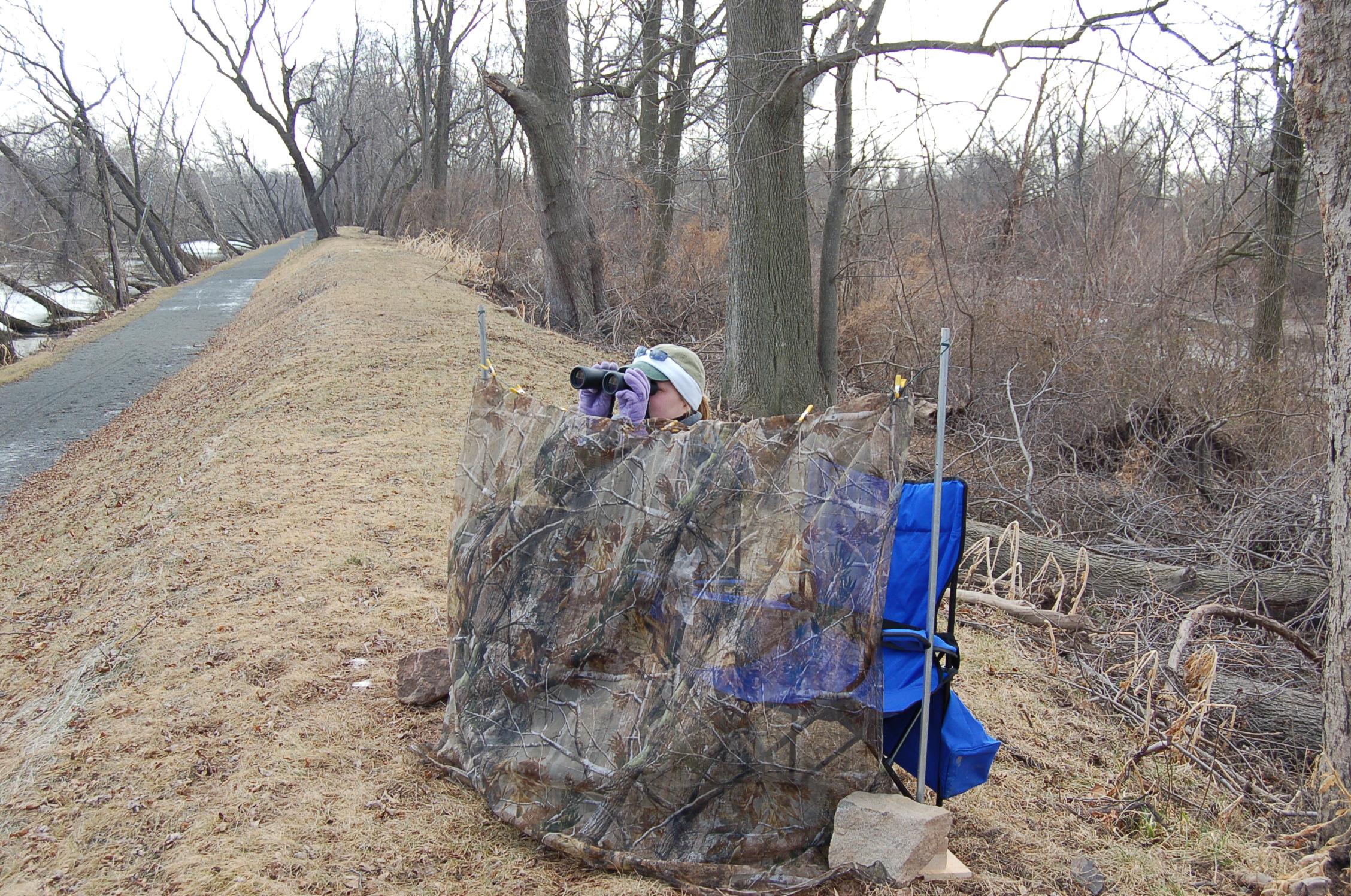
“Brownie” flew off soon after we arrived; his mate sat in her pine tree for the full half-hour we watched, looking over-sized for her nest. “We need to keep disturbance to a minimum,” Eric told me as we left. “You shouldn’t come back here more than once a week.”One week later, when I returned to the hiding place in the cedars, I could see the female in the nest with my bins. I unfurled my tripod as quietly as I could, focused my scope — and my heart leaped: a fuzzy blue-gray chick with big black eyes was looking back at me! Soon after, his mother stood up and called into the sky. “Brownie” was coming back.
He landed in the nest, and after more screaming, let his mate take the fish he’d carried in. She carefully pulled it apart, feeding tiny bits to the chick and the larger pieces to herself. I had never seen eagles in action at a nest and was thoroughly enchanted – but there was another surprise to come. As the female turned in the nest ripping at the fish, something flashed. I focused the scope again and saw first a silver band gleaming on one leg and next a green band on the other. She was a New Jersey bird — hatched herself probably in 1991 or 1992, from one of the handful of nests in the state in those years. That was a sweet thrill!
That was the start of a long relationship between “Brownie,” “Greenie,” and me – and the eagles that have come along in the two decades since (the nest has moved two times over those years). I am very grateful to Eric Stiles for involving me originally and to Larissa Smith, Kathy Clark, Larry Niles and all the many hard-working, dedicated folks who have allowed me to participate in this wonderful project. Thanks largely to them, our state now has an order of magnitude more nests than we had in 1996: 150+! Wow! — Jack Connor
Karin Buynie monitors the Crosswicks Creek nest @ Kevin Buynie
We have a lot of good memories through the years of eagle volunteering. None that stand out more than just being able to talk to the many people that stumble upon you trying to figure out what all the gear is for and then seeing the surprise on their face when you tell them you are watching a bald eagle pair raise their young. Being able to pass on all the knowledge you learned from our many conversations with the biologist is very fulfilling. It is nice to see people walk away knowing how far our nation’s symbol has rebounded in our state. We have been able to help 16 eaglets fledge in our seven years of volunteering. — Kevin & Karin Buynie
My best memory was to see the eagle stand up in the nest and the egg pop out.
–Ed Sheppard
Last year was my first year monitoring an eagle’s nest. I guess the best experience was watching the pair behavior, moving sticks around on the nest and then seeing them mating, which was interrupted when an immature eagle came flying by. It was pretty cool. — Karyn Cichocki
Lake Barnegat@Paul Lenzo
My best local sighting was in March of 2009 on Lake Barnegat in Forked River. From the road, as I was driving home, I saw an eagle attacking a cormorant and pulled over. After numerous attempts in the air and on the water, the eagle finally killed the cormorant. After watching for about 15 minute., I drove home to get my cameras (about a ten minute round trip), hoping the eagle would still be there when I returned. To my surprise when I returned a pair of birds was feeding on and fighting over the carcass. — Paul Lenzo
My most awesome experience was participating in the banding of a young male bald eagle chick from the Supawna Meadows nest. How awesome to actually hold the chick while blood was drawn and measurements taken. I will never forget that great experience. — Cheryl Leonard
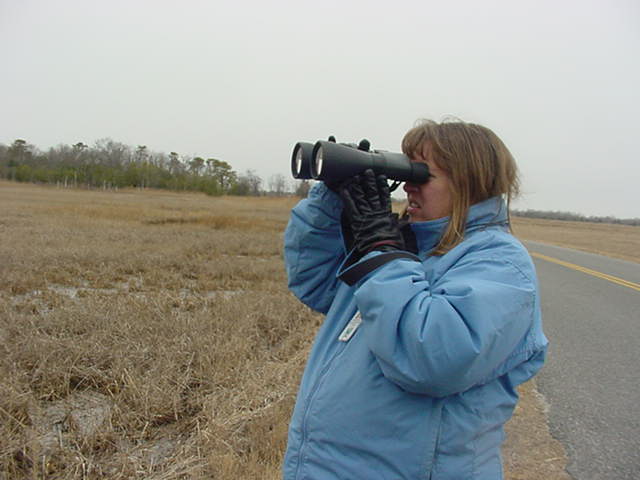
Donna Poolake monitoring nest
“Busy day at Turkey Point: Upon arrival, one adult was in the nest housekeeping and three juveniles were in a snag about 100 feet to the right of the nest. We think these are most likely last year’s fledglings since the adult was not concerned they were so close. There was an adult that flew over the nest towards open water and out of sight. There were another four juveniles in the trees to the right of the meadow across the creek. Across the street from the crabbing business were six more juveniles perched in the trees.
Another adult flew to the nest and perched just above it. Then it jumped to a different branch in the nest tree. That’s when the adult that was housekeeping in the nest jumped up and bit the tail of the adult that just approached and was perched above the nest. Fluffy feathers floated down from that adult while he flew away towards where the three juveniles were perched and landed in a snag. The housekeeping adult that had just gone after tail feathers flew to the same snag as the adult she just “bit” and perched about 10 feet above him.
All of this caused the three juveniles that were perched there to fly off. So, she was telling him to get home and help while the three youngsters said ‘We’re out of here!'”
This is from several years ago at Turkey Point. We were observing a nest with three chicks in it that were about six weeks old. An adult was perched on a snag not far from the nest. We suddenly got a good view of a chick and noticed that he was much larger than the others. Then we realized this was not a chick but most likely a fledgling from last year. Mom was not too upset but once the fledgling started to eat the fish that was in the nest she flew over, landed in the nest, and chased the juvenile away. It seems she didn’t mind him visiting but he better go get his own meals. The chicks didn’t seem to mind the visitor but became much more active after he left! — Donna & Heiki Poolake
I was astonished to see a pair of eagles take over an osprey nest in the rear of my home several years ago. This is what started me in the eagle program. The eagles did not stay long as the red-tailed hawks and osprey were too annoying. I then started to observe nest in Brick, New Jersey and let Kim Korth know whatever I saw. One day Kim called me and asked if I would like to go and be part of a eagle banding project. I was overjoyed to go. The banding took place in Brick, New Jersey on a private piece of property. I held an eagle for about 15 minutes and it was one of the best things I have ever experenced in my entire life. To actually hold an eagle. WOW! — Richard Gauer
Is it the thrill of the first sighting of that fuzzy little head? Is it the beauty of that majestic bird soaring above with a blue background? Maybe it’s the anticipation of a first sighting of another species? Or the beauty of the area where you are doing your observation, the breath-taking sight of thousands of Snow Geese that perhaps land near-by? For us, it is all of these things and the knowledge we have gained observing these magnificent birds (and all the information Larissa has imparted to us, bless her). We feel it has been an honor to have taken part in the program and we hope to be able to continue for years to come. — Clare Luisi & Anne Stiles
Two adult eagles were perched over the waterway near their nest. But this time instead of both being on a relatively high perch, one was perched on a branch just a few feet from the water. The water level was low and the area beneath the eagle was mucky. The eagle on the low branch was studying the mucky water below. Then it floated off the branch by just opening its wings and dropping down like a parachute into the muck. It flew up from the muck with a turtle in its beak! Then as it lifted hire into the air, it banked around past us and we watched it transfer the turtle from its beak to its talon in mid flight. We are so used to seeing eagles drop their talons into the water to pick up fish, that this eagle’s retrieval of a turtle with its beak was really surprising and wonderful to watch.
— Bonnie Hart & Ted Henning