Grassland Birds of New Jersey

Part II: Restoring Critical Breeding Habitat

by Meghan Kolk, Wildlife Biologist

In Part I of this series, I discussed the drastic loss of grasslands in New Jersey and the importance of preserving and restoring this disappearing habitat for grassland-dependent bird species.  Due to this habitat loss, in much of the northeastern United States (including New Jersey) airports have become significant breeding grounds for many threatened and endangered grassland birds.  In fact, airports are often the only suitable habitat available for New Jersey’s rarest grassland bird, the upland sandpiper.  If these large expanses of open fields are managed properly, they can support nesting birds while still remaining safe for aircraft operation.  This is the goal of CWF’s new restoration project at one of the most critical breeding sites in New Jersey.

Restoration site at Lakehurst breeding grounds, December 2017. Photo by Meghan Kolk.

The Joint Base McGuire-Dix-Lakehurst (JBMDL) in central New Jersey hosts the largest known breeding colony of the endangered upland sandpiper (Bartramia longicauda), and the second-largest known breeding colony of the threatened grasshopper sparrow (Ammodramus savannarum) in the State.  The bobolink (Dolichonyx oryzivorus), savannah sparrow (Passerculus sandwichensis), horned lark (Eremophila alpestris) (all threatened) and eastern meadowlark (Sturnella magna) (special concern) all make a home here as well during the nesting season.  CWF has  partnered with the U.S. Fish and Wildlife Service to restore hundreds of acres of this vital land to increase suitability and to alter management practices to benefit both wildlife and airfield operations. Continue reading “Grassland Birds of New Jersey”

New Jersey 2017 Bald Eagle Project Report

Another productive year for NJ’s eagles

by Larissa Smith, CWF Wildlife Biologist

E/07,Purcellville, VA;10/16/17@ Amie Ware

The Conserve Wildlife Foundation of NJ in partnership with the NJ Endangered and Nongame Species Program has released the 2017 NJ Bald Eagle Project Report.  In 2017, 178 eagle nests were monitored during the nesting season. Of these nests 153 were active (with eggs) and 25 were territorial or housekeeping pairs. One hundred and ninety young were fledged. Continue reading “New Jersey 2017 Bald Eagle Project Report”

W34: A NY Banded Eagle In NJ

Bands help to tell his story.

by: Larissa Smith, CWF Wildlife Biologist

Eagle banded W-34@ Randy Lubischer

In the end of October, NJ Eagle Project volunteer Randy Lubischer spotted a banded adult bald eagle near his home in Monmouth County. He was able take good photos that showed the bird was banded with a blue (NY) band on the left leg and was able to get a very clear image of the letter and number code on the band. We reached out to the NY Division of Fish, Wildlife and Marine Resources to find out more information on the eagle.

In the fall of 2011, an injured hatch year bird was found on the side of the road in Onondaga County, NY. The bird was rehabbed,  banded (NY Blue band W34) and released on October 7, 2011 at the Montezuma NWR.  On 11/18/2016, W34 was sighted in Darlington, Maryland and then in in NE Maryland again on 3/1/2017.

W34& mate 11/7/17@Randy Lubischer

W34 looks to be staying in NJ to nest as he has found a mate, a sub-adult female, who still has dark feathers on her head. They have started to build a nest and have been copulating.

We can’t necessarily assume that W34 was hatched in NY. Since he was found injured and not banded he could well be a NJ bird. We have followed NJ recent fledges outfitted with transmitters, take long flights north after leaving their nest areas.  We also know that many NJ banded eagles do return to NJ to nest. So we’ll never know the true origin of W34 but we can piece together some of his story and hopefully have more news about him and his mate in the upcoming nesting season.

W34 in flight@Randy Lubischer

NorthJersey.com: Scout builds tower for chimney swifts in Westwood

by Jim Wright, northjersey.com —

“Chimney swifts, which migrate through northern New Jersey by the thousands each September, have fallen on tough times as more and more large chimneys fall into disuse.

These small, insect-devouring birds have abandoned traditional migration roosts like the huge chimney at George Washington Middle School in Ridgewood in recent years. Another popular roost for these fast-flying, bug-eating birds — a chimney at the Berkeley Elementary School in Westwood — may get capped in 2018.”


2017: Piping Plover Nesting Season

How did they do?

Emily Heiser, CWFNJ Wildlife Biologist

Statewide pair-nest success was down this year, but remains above the long-term average. photo by Northside Jim.

For the 12th year in a row, the Conserve Wildlife Foundation of New Jersey, in partnership with New Jersey Division of Fish & Wildlife’s Endangered and Nongame Species, assisted in monitoring and managing the state’s Beach Nesting Bird Project.  Four species are regularly monitored throughout the field season: piping plovers (federally threatened, state endangered), least terns (state endangered), black skimmers (state endangered), and American oystercatchers (state species of special concern). Statewide, piping plovers are of particular concern as their numbers continue to decline and federal recovery goals have not been achieved.  Continue reading “2017: Piping Plover Nesting Season”

Photo From The Field

CWF Volunteers Are Wildlife Heroes

NJ Osprey Project Volunteers Wayne Russell, Matt Tribulski and John King repair an osprey platform.

New Jersey ospreys have headed for warmer climates until their return in the spring. NJ osprey project volunteers are busy repairing and cleaning out nests, adding predator guards and perches in preparation for the nesting season.  It’s an endless job as there are 100’s of nesting platforms throughout the state and maintenance is always needed. These repairs keep the nests as safe as possible for the nesting ospreys.

Thank you to all the dedicated CWF volunteers!


Planting For Pollinators

A new pollinator habitat is created in Middle Township

By: Larissa Smith; CWF Wildlife Biologist

The Middle Township Environmental Commission in cooperation with the Conserve Wildlife Foundation of NJ worked to create a pollinator habitat at a recreation site in the township which is located in Cape May County. Commission members had been working to obtain permission to plant a pollinator garden on a township site. The Ockie Wisting Recreation Complex was just officially opened in the end of October. This recreation site will have playing fields, a playground and a wooded trail that leads to a lake and fishing pier.

With funding from Atlantic City Electric volunteers with the Middle Township Environmental Commission and Conserve Wildlife Foundation of NJ  planted 138 native perennials . While it doesn’t look like much right now, come next spring and summer there will be plants for bees, butterflies and birds to use for food and habitat.  Not only will this pollinator meadow be great for wildlife, it won’t have to be mowed.  The Environmental Commission will be in charge of  maintenance and plans another work day in the spring to remove any non-native plants and trees in the area. We also plan to use this site as a demonstration garden for others interested in planting for pollinators.


  • Ockie Wisting Pollinator Habitat: List of Plantings – Fall 2017
    • Common Name             Scientific name
      Yellow Giant Hyssop       Agastache nepetoides
      Prairie Onion                   Allium stellatum
      Common Milkweed        Asclepias syriaca
      Butterflyweed                 Asclepias tuberosa
      Whorled Milkweed         Asclepias verticillata
      Boltonia                          Boltonia asteroides
      Maryland Golden Aster  Chrysopsis mariana
      Purple Mistflower           Conoclinium coelestinum
      Pink Coreopsis                Coreopsis rosea
      Purple Coneflower          Echinacea purpurea
      Rattlesnake Master         Eryngium yuccifolium
      Hyssop-leaved Thoroughwort Eupatorium hyssopifolium
      Showy Aster                    Eurybia spectabilis
      Coastal Joe-Pye Weed    Eutrochium dubium
      Ten-petal Sunflower       Helianthus decapetalus
      Meadow Blazingstar       Liatris ligulistylis
      Cardinal Flower               Lobelia cardinalis
      Scarlet Bee balm             Monarda didyma
      Wild Bergamot                Monarda fistulosa
      Spotted Horsemint         Monarda punctata
      Pink Muhly Grass            Muhlenbergia capillaris
      Calico Beardtongue        Penstemon calycosus
      Hairy Beardtongue         Penstemon hirsutus
      Garden Phlox                  Phlox paniculata
      Obedient Plant               Physostegia virginiana
      Lyre-leaf Sage                Salvia lyrata
      Fire Pink                         Silene virginica
      Compass Plant               Silphium laciniatum
      Seaside Goldenrod        Solidago sempervirens
      Aromatic Aster              Symph. oblongifolium
      Heath Aster                   Symphyotrichum ericoides
      New York Aster             Symphyotrichum novi-belgii
      Upland Ironweed          Vernonia glauca
      Culver’s Root                 Veronicastrum virg.
      Golden Alexanders        Zizia aurea


  • CMC Herald: Shovel’s in Hand: Pollinator Garden Planted at Wisting Rec. Complex:
  • CWF Pollinator Conservation Project

NEW JERSEY AUDUBON’S KELLY MOOIJ HONORED FOR LEADERSHIP IN CONSERVATION

By Mara Cige

Kelly Mooij, 2017 Leadership Award Honoree

As Vice President of Government Relations for New Jersey Audubon, 2017 Women & Wildlife Leadership Award Honoree Kelly Mooij works to promote and secure a legal and regulatory framework that supports habitat conservation, open space preservation, and species protection and recovery in New Jersey. She has dedicated her time and efforts in utilizing the tools of law, policy, and government affairs to protect our state’s wildlife.

Ms. Mooij earned her Juris Doctorate and Master of Studies in Environmental Law, focusing on marine biodiversity and land and water use issues, and has worked for New Jersey Audubon since 2008. Her efforts often center on bringing interested parties together to support efforts to protect the region’s wildlife. In 2012, Ms. Mooij helped lead the formation of the multi-state Coalition for the Delaware River Watershed. This coalition seeks to protect the watershed that provides drinking water for 16 million people, supports hundreds of miles of vital habitat for fish and wildlife, and is critical to the economic well-being of the mid-Atlantic region. Continue reading “NEW JERSEY AUDUBON’S KELLY MOOIJ HONORED FOR LEADERSHIP IN CONSERVATION”

Photo from the Field

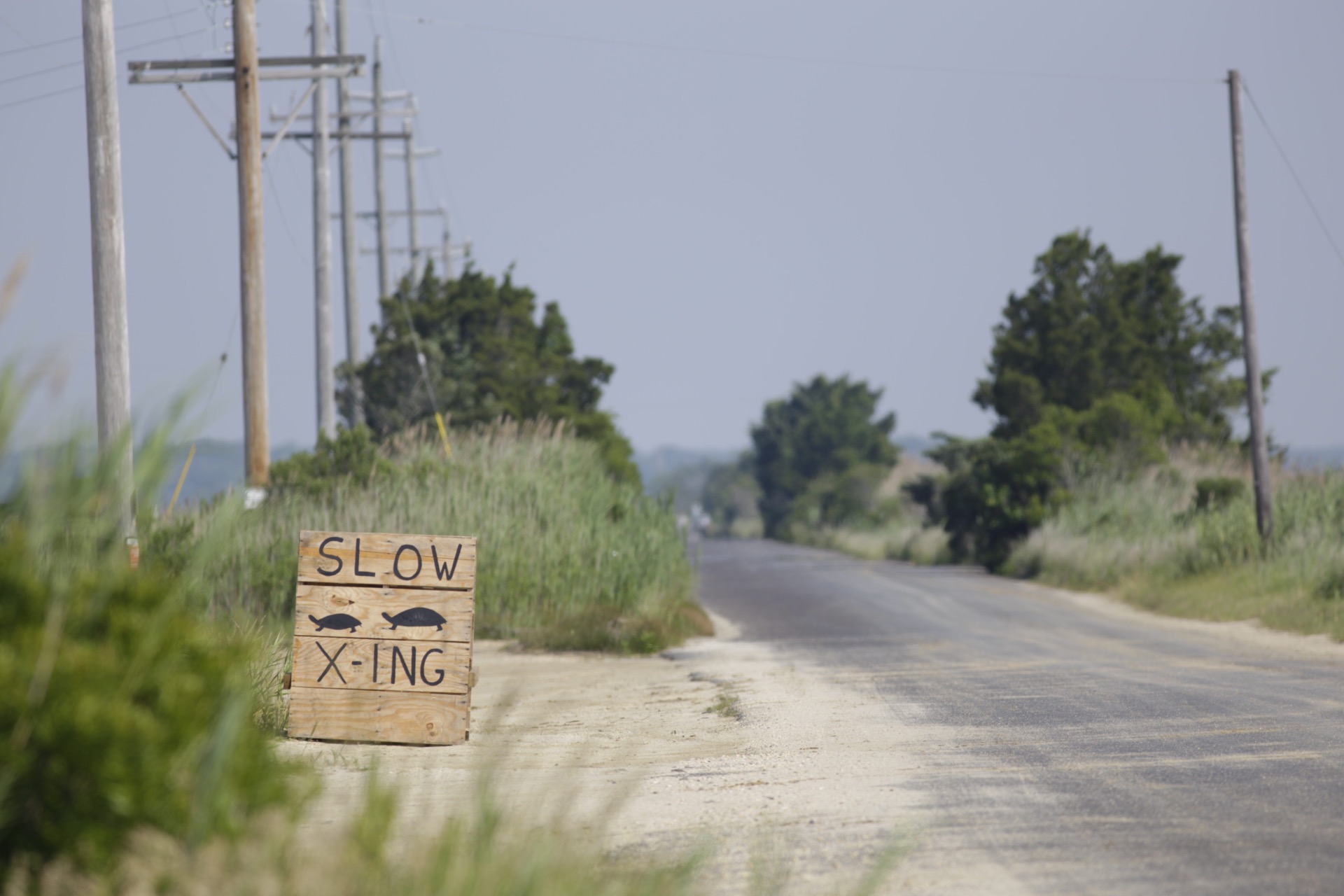
The Lucky 8: Tiny terrapin hatchlings rescued!

by Ben Wurst, Habitat Program Manager

A clutch of eight tiny terrapin hatchlings found beneath one of our X-ING signs. photo by Ben Wurst

While removing our seasonal (better late than never!) terrapin X-ING signs on Great Bay Blvd. in Little Egg Harbor yesterday, we stumbled upon some tiny northern diamondback terrapin hatchlings. These little guys were hiding or trapped under a very large (and heavy) X-ING sign made from old pallets that someone knocked over (I say guys because they hatched later in the season and it was a very cool August, but some could be girls). At first I didn’t see anything, but upon closer inspection I saw several hatchlings in the vegetation. One, two, three, four, five, six. Then I dug a little with my hand and found two more. The sign had been atop a nest. Continue reading “Photo from the Field”

Help Ensure Ospreys Have a Future in New Jersey

ACTION ALERT: Support ecological management of the most valuable public resource for our coastal ecosystem and economy

by Ben Wurst, Habitat Program Manager

Menhaden is a common food source for ospreys during their nesting season in New Jersey. Photo by Northside Jim.

The Atlantic States Marine Fisheries Commission is accepting public comment on the establishment of ecological management of Atlantic menhaden (Brevoortia tyrannus), which is a keystone species. Basically, a keystone species is one that plays a large role in the ecosystem where it lives. If a keystone species is lost then the ecosystem would dramatically change or cease to function, causing widespread effects to other species that benefit. In New Jersey, ospreys have largely benefited from a healthy menhaden population as we’ve had relatively high reproductive rates (more than double what’s needed to sustain population) over the past decade. From 2006 to 2016, the population has grown by 30% and above the pre-DDT, historic milestone of over 500 nesting pairs. Around 82% of the state population of ospreys nests along the Atlantic Coast and we observe menhaden at a huge number of nests during our mid-summer surveys. If menhaden numbers drop, then we will likely see osprey numbers follow suite, as reproductive rates will decline, as they are in the Chesapeake Bay.

Continue reading “Help Ensure Ospreys Have a Future in New Jersey”