Project RedBand continues on Barnegat Bay

92 Ospreys Enlisted in Citizen Science Based Re-sighting Project

by Ben Wurst, Habitat Program Manager

A young osprey was banded with a color auxiliary band: 76/C for future tracking at a nest on Long Beach Island.
A young osprey named “Danny” was banded with a color auxiliary band 76/C for future tracking at a nest on Long Beach Island. Photo by Northside Jim.

This is the critical time of year for monitoring our nesting ospreys. Each year biologists and specially trained volunteers, aka Osprey Banders, conduct ground surveys by boat to monitor the state population. They visit or survey the most densely populated colonies of nesting ospreys: Sandy Hook, Barnegat Bay, Great Bay, Absecon, Ventnor-Margate-Ocean City, Great Egg Harbor Watershed, Sea Isle, Avalon-Stone Harbor, Wildwood, Maurice River, and parts of the Delaware Bay. These surveys have been conducted since the early 1970s when ospreys were not so common, with only 50 pairs in 1973.


Their recovery has been quite remarkable. With an estimated 600 nesting pairs throughout the state, our ospreys are in a much better position today. Why put so much time and effort into monitoring a seemingly healthy population? Even though their population is much larger than it was decades ago, ospreys still face a variety of threats that jeopardize their ultimate survival. It’s commonly known that ospreys face very high mortality rates in their first year of life. Before even leaving the nest their young are so vulnerable. They can fall or be blown out of the nest, predated by raccoons, crows, or eagles, killed by their own siblings, or die from starvation. After they fledge, then they need to learn to find and catch prey and avoid power lines and wind turbines. Then they need to learn to migrate south and avoid being shot in the process. Once they find a suitable wintering site, then they remain in the same area for the next two years. Then they return to their natal areas to find a suitable nest site and start their own osprey family!


Today, we need your help! We cannot reach all active nests in New Jersey. There is still plenty of time to help us keep track of the state population. Citizens are encouraged to submit sightings of activity at osprey nests on Osprey Watch, a global osprey watching community. In 2013 all of the known locations for osprey nests was released on Osprey Watch’s website. As a partner with Osprey Watch, we share and use the data collected to help determine the overall health of the population, which is summarized in our annual report.


To help engage our Osprey Watchers, we started Project RedBand, a citizen science based osprey re-sighting project. This is year two of the project. So far we’ve deployed 92 red bands (out of 100) on young produced at nests on Barnegat Bay (62 in 2014 and 30 in 2015). The young that were banded last year will start to return to New Jersey in 2016. Usually young adults return later than older adults, so the red banded birds might not be seen until May or June. That’s when they’ll find areas with high prey availability and suitable nest sites. Usually males don’t stray far from their natal areas but females do. With these red bands, we hope to learn a little more about where our ospreys are dispersing to and at the same time engaging our coastal communities in osprey conservation.


Learn more:


Ben Wurst is the Habitat Program Manager for Conserve Wildlife Foundation of New Jersey.
Impacts from Severe Weather minimal

Nesting ospreys fared well from June 23rd storms on B. Bay

by Ben Wurst, Habitat Program Manager

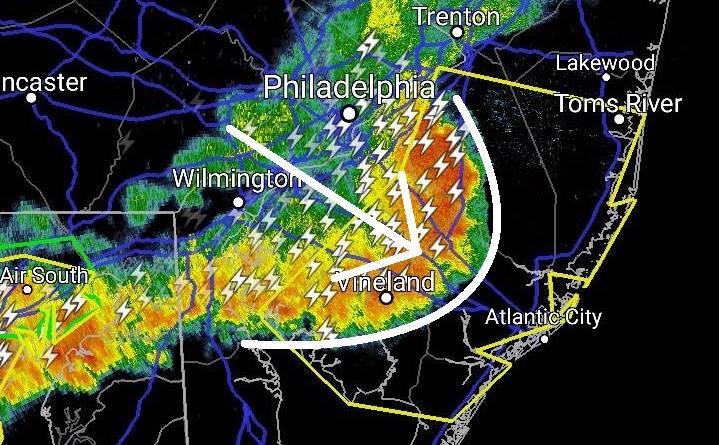
We had some pretty insane weather blow through on Tuesday evening. I saw it first hand while driving to Long Beach Island to visit some relatives in town. The storm front brought high winds and driving rain to the area. The National Weather Service has even declared that there was even a water spout in Brant Beach (which was right where I was driving on the LBI Blvd. southward). Winds gusted to 70-80mph blowing all sorts of debris (and lawn furniture) across the road. I immediately pulled over to where I was protected from the wind. While I sat there I thought of all the osprey nests out on the bay with young in them…

Photo by Ben Wurst
One is better than none! Photo by Ben Wurst

At this time of year almost all nests have young. They range in age from only hatchlings to 4 week old nestlings. Some can be easily blown from shallow or weakly built nests and can be easily blown from the top of nesting platforms. This has happened in the past (in 2012 when we had a “derecho” blow through the area in late June) and almost half the young present were blown from their nests (in Absecon).

To get a better idea of what we experienced, I asked Jonathan Carr, with Weather NJ, what we saw. This would also give me a better idea of what to expect when conducted post-storm surveys. “What we saw in SNJ on Tuesday was a bow echo as evident by radar signature. A macroburst hit SWNJ which generated substantial straight line winds that fueled the system all the way to the coast. In addition, multiple rotation signatures were picked up via velocity analysis which sparked the tornado warnings in perfect alignment from PA through SWNJ and ultimately the Jersey Shore. The NWS officially ruled the incident near Brant Beach a waterspout but little damage was done from such. All damage across SNJ was again, from straight line wind gusts which reached 80mph in several locations. Harvey Cedars actually clocked a 92mph wind gust. I wasn’t surprised given that instability and wind parameters were screaming for this to happen in the prior 24 hours, especially with the cold front trigger moving through. These type of winds are disastrous for any coastal wildlife or nesting grounds with open exposures.”

With that news on the weather front, I knew we’d have young ospreys on the ground. On Wednesday I got my first report from Osprey watchers Ray and Leslee on Cedar Run Dock Rd. They noticed the adults acting funny, who were now on the ground and not on the nest (where they were before the storm). I gave Leslee permission to walk out to the nest. She found two 3 week old young on the ground. I had plans that day so I couldn’t make it there until 9pm. But when I met Leslee and Ray the nestlings were still on the ground. We picked them up and put them back into the nest (and we also fed a good amount of mosquitoes!!)

Four stripes!! Photo by Ben Wurst

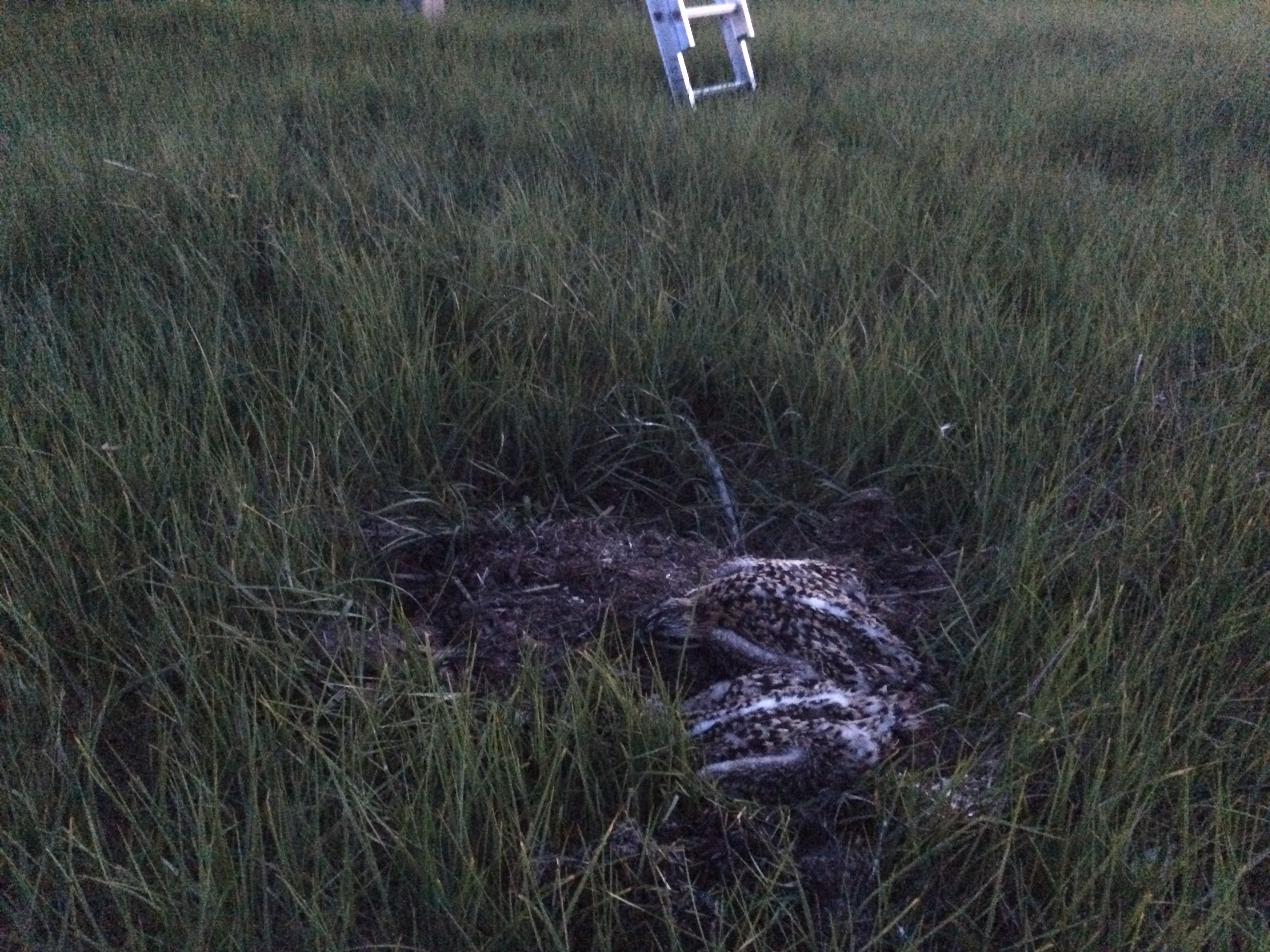
The following day we rallied to get out on our boat to conduct some more “post-storm surveys,” the first of the season. We checked nests from Bonnet Island to Loveladies and Barnegat. A total of 18 active nests were surveyed. At the first nest we checked we found four young (this nest has failed to produce young for the past two years, amazing!)!! The second had two nestlings in the nest and none were found on the ground. GREAT! But, as the clouds moved in the survey took a darker turn… The next nest we checked was empty but had the remains of a very young osprey. Then the next one had two alive in the nest and one dead on the ground (a 14 day old). The next two nests had 2 and 3 young in them and they all looked very healthy. Then at the next nest we saw the whole nest down on the marsh. When we dug through it we found the bodies of two young. They were instantly crushed under the weight of the nest. So sad. The adult female was still sitting on the nest, surely hoping they were found alive. 🙁 It is now too late to get out to other areas to rescue young. I have learned that young are NOT fed when they are grounded. So there is little chance that any young would still be alive if found on the ground. Future surveys will determine how many other areas were affected by the strong storms.

Despite the gloomy outcome, nests in this severely impacted area had overall good results. We counted a total of 27 young from 18 active nests which gives us an average productivity rate of 1.5 young (per active-known-outcome nest). This is almost twice the level needed to sustain the population. Most young were around 17 days old. Only five were banded for future tracking.

It’s too early to tell how the entire population will fare this year. It could be a down year, with reports of no large schools of menhaden that are close to shore. Menhaden (bunker) are one of the most crucial food sources for many coastal species, including osprey.

Photos from the Survey:
Photo by Ben Wurst
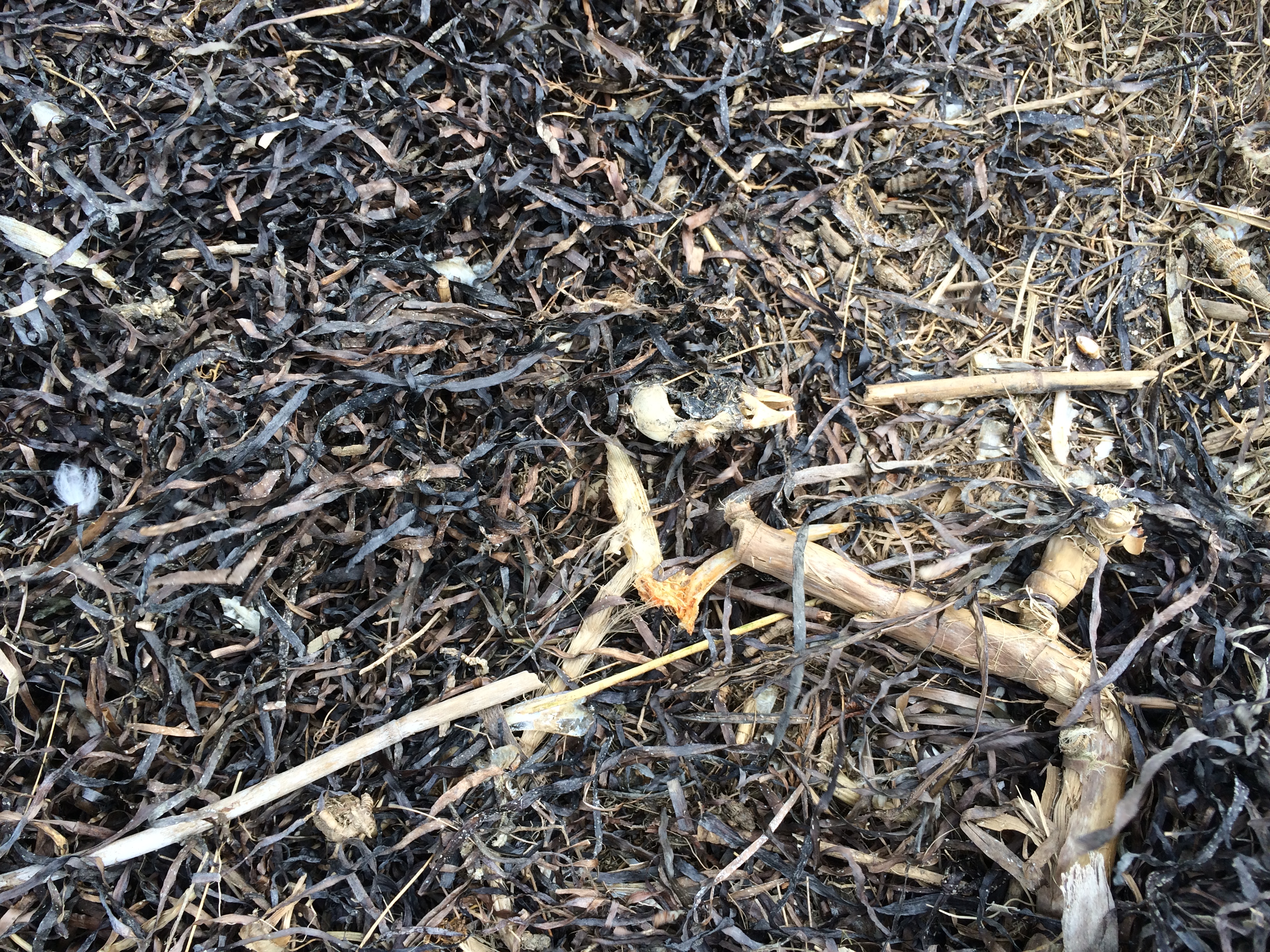
Remains of a young osprey. Photo by Ben Wurst
Photo by Ben Wurst
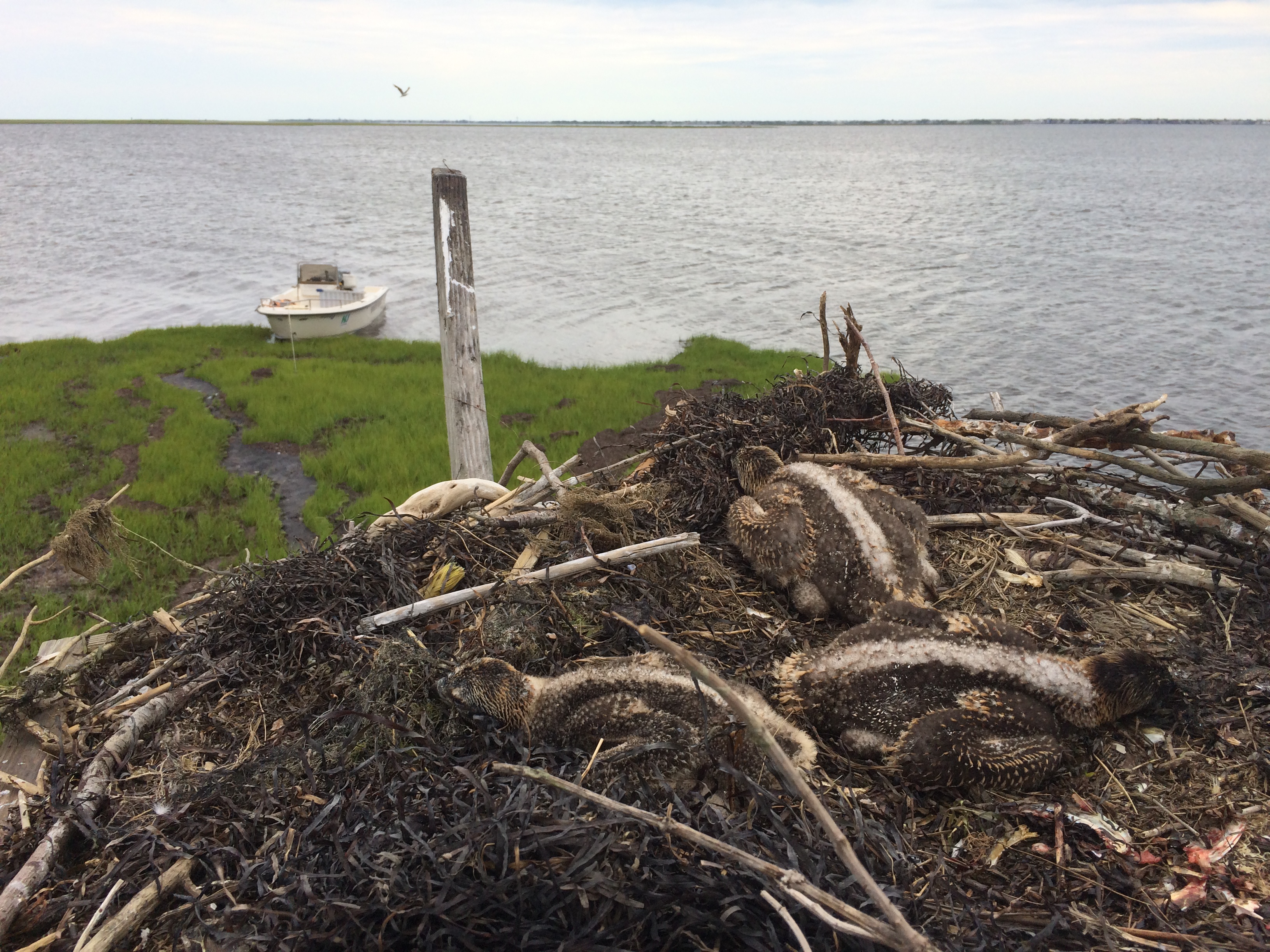
One. Two. Three. All in the nest! Photo by Ben Wurst
Female on her nest. Photo by Ben Wurst
Photo by Ben Wurst
The oldest in this historic nest got a little feisty. Photo by Ben Wurst
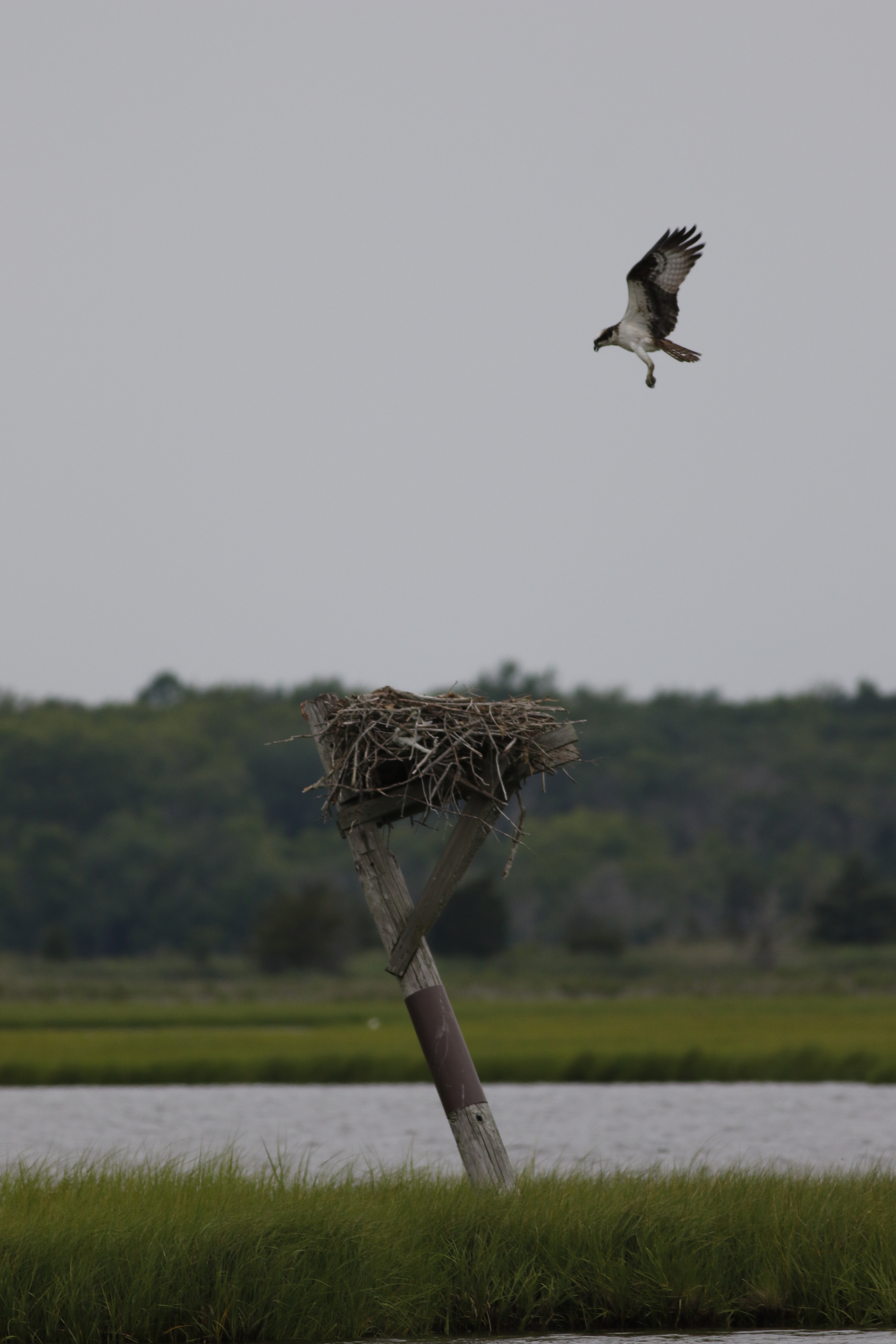
Female hovers over her nest to check on her young (3) after we surveyed her nest. This is one of the oldest nests in NJ. Photo by Ben Wurst.
Photo by Ben Wurst
Young that were found on the ground were decomposing very quickly. We moved them out of sight from the adults. Photo by Ben Wurst
Photo by Ben Wurst
An empty nest off Loveladies. Last year this nest was productive. Photo by Ben Wurst
Photo by Ben Wurst
A week old chick and an egg on a channel marker nest of LBI. Photo by Ben Wurst
Photo by Ben Wurst
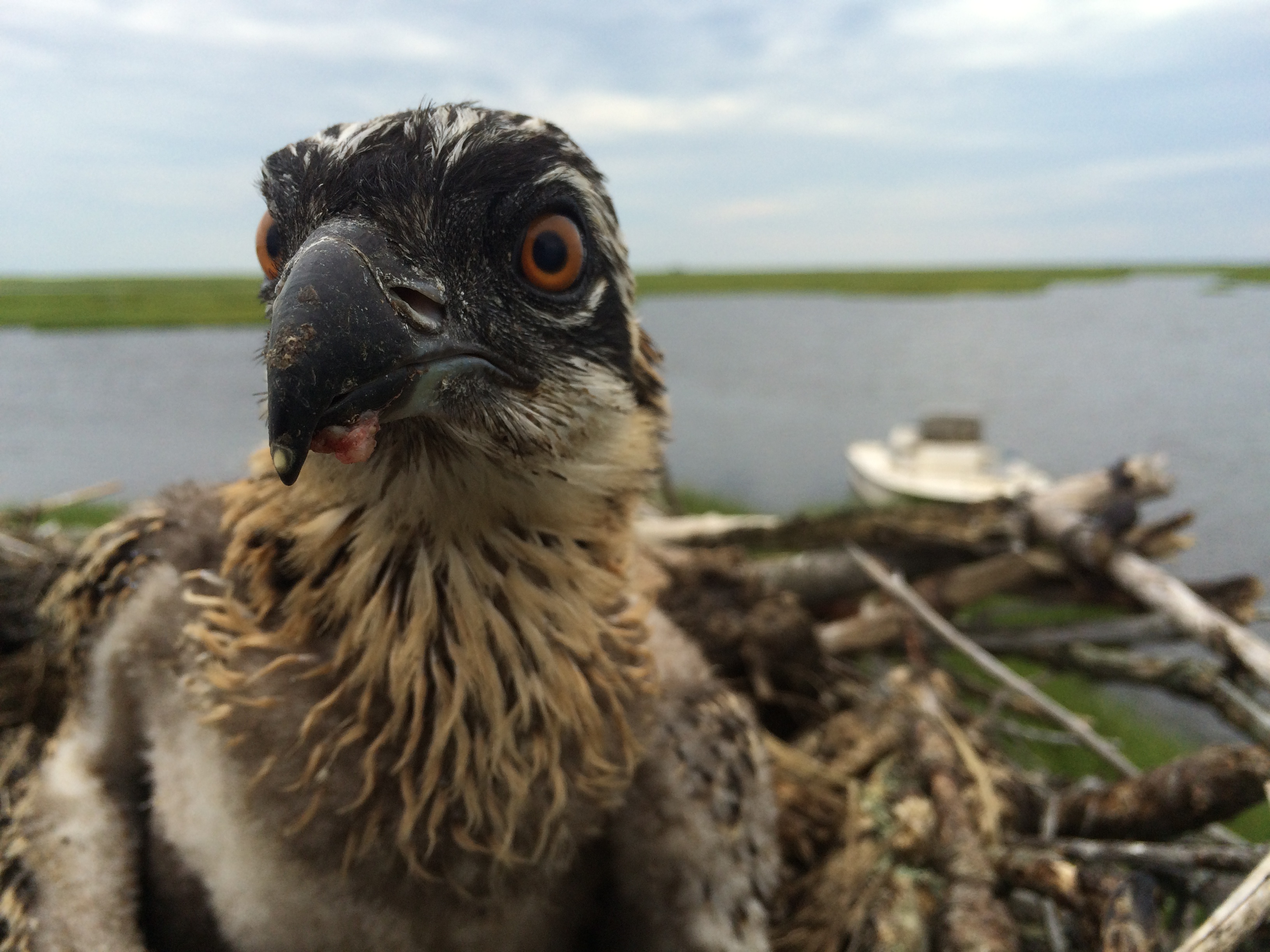
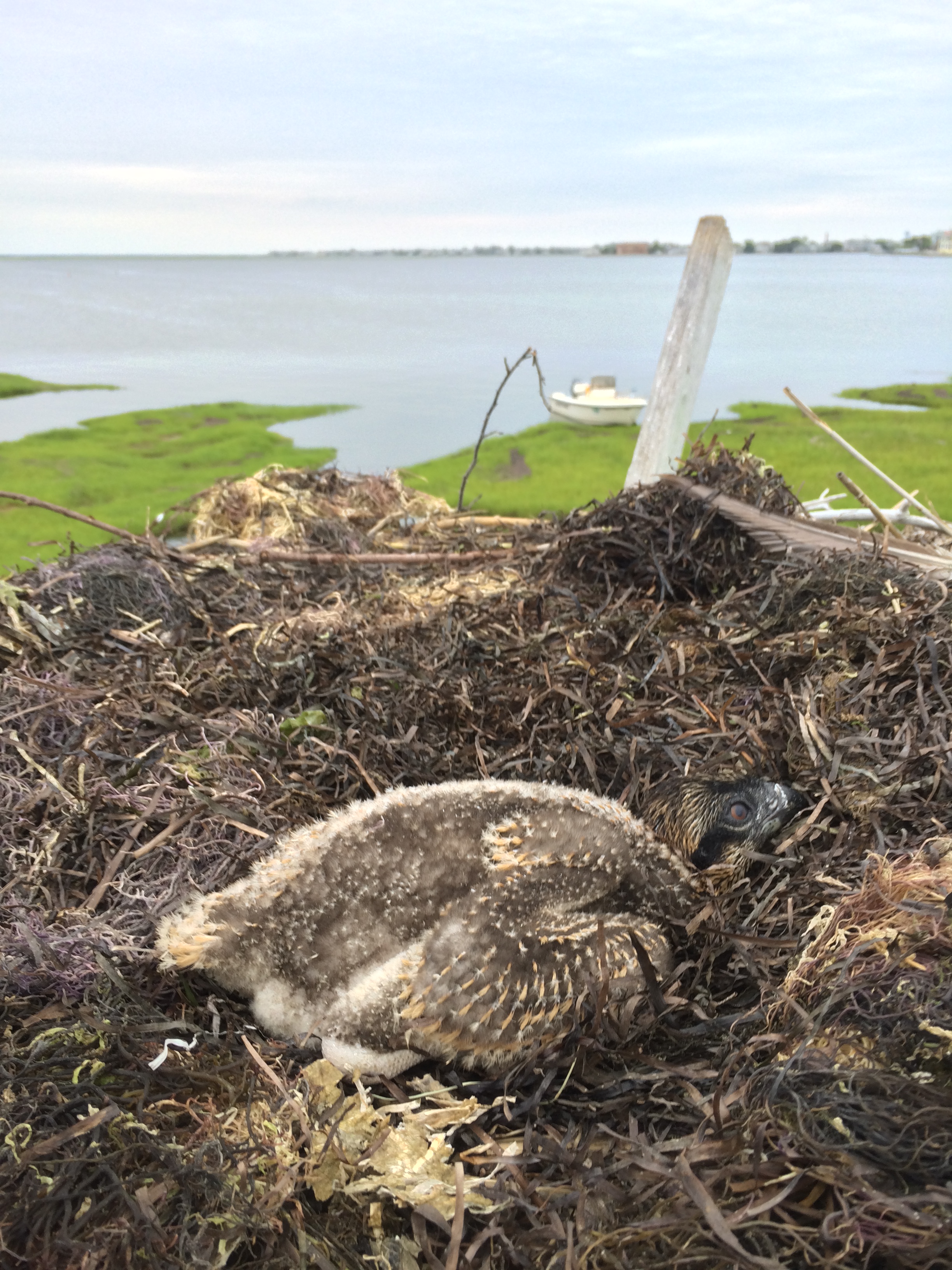
A four week old nestling that was banded with a red auxiliary band for future tracking. Photo by Ben Wurst

Photos from the Field: Successful Year for Bayside State Prison Falcons

Endangered Falcons are Doing Well this Year!

by Ben Wurst, Habitat Program Manager

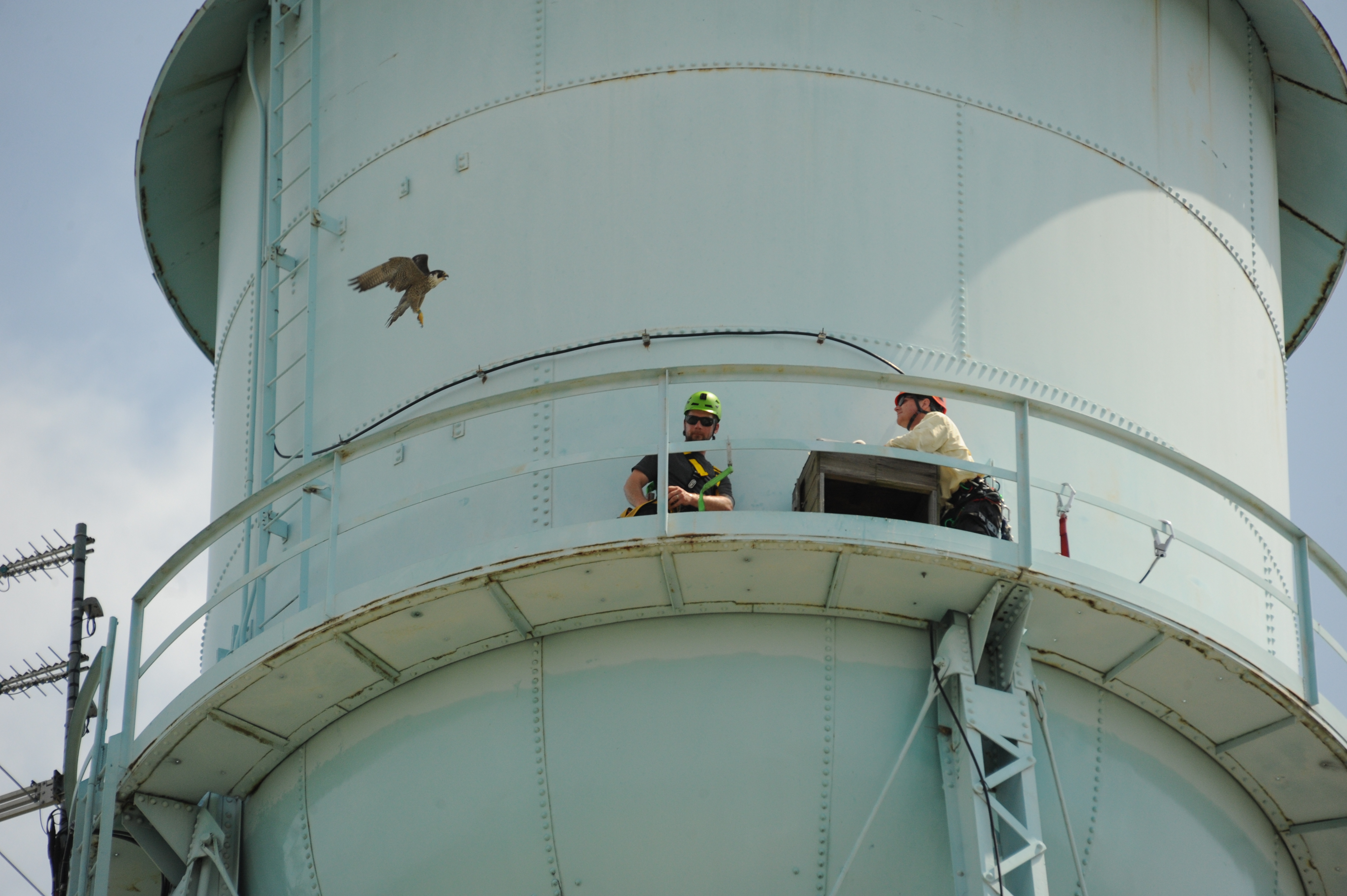
So far this has been a good year for peregrine falcons. Almost all known nest sites have produced young, even the natural nests on the New Jersey Palisades, which are prone to failure from strong winds and driving rain associated with Nor’easters in early spring. One successful site is at Bayside State Prison. The nest there is on top of a 120′ water tower. The pair of falcons nests in a nestbox that was installed several years ago after a old hacking tower was decommissioned on the coastal saltmarshes along the Delaware Bay. For the past two years the site has been active and productive. This year two young eyases were produced (one was produced in 2014). Last week we joined Kathy Clark and John Heilferty with the NJ Fish and Wildlife’s Endangered Species Program to band the two young falcons.

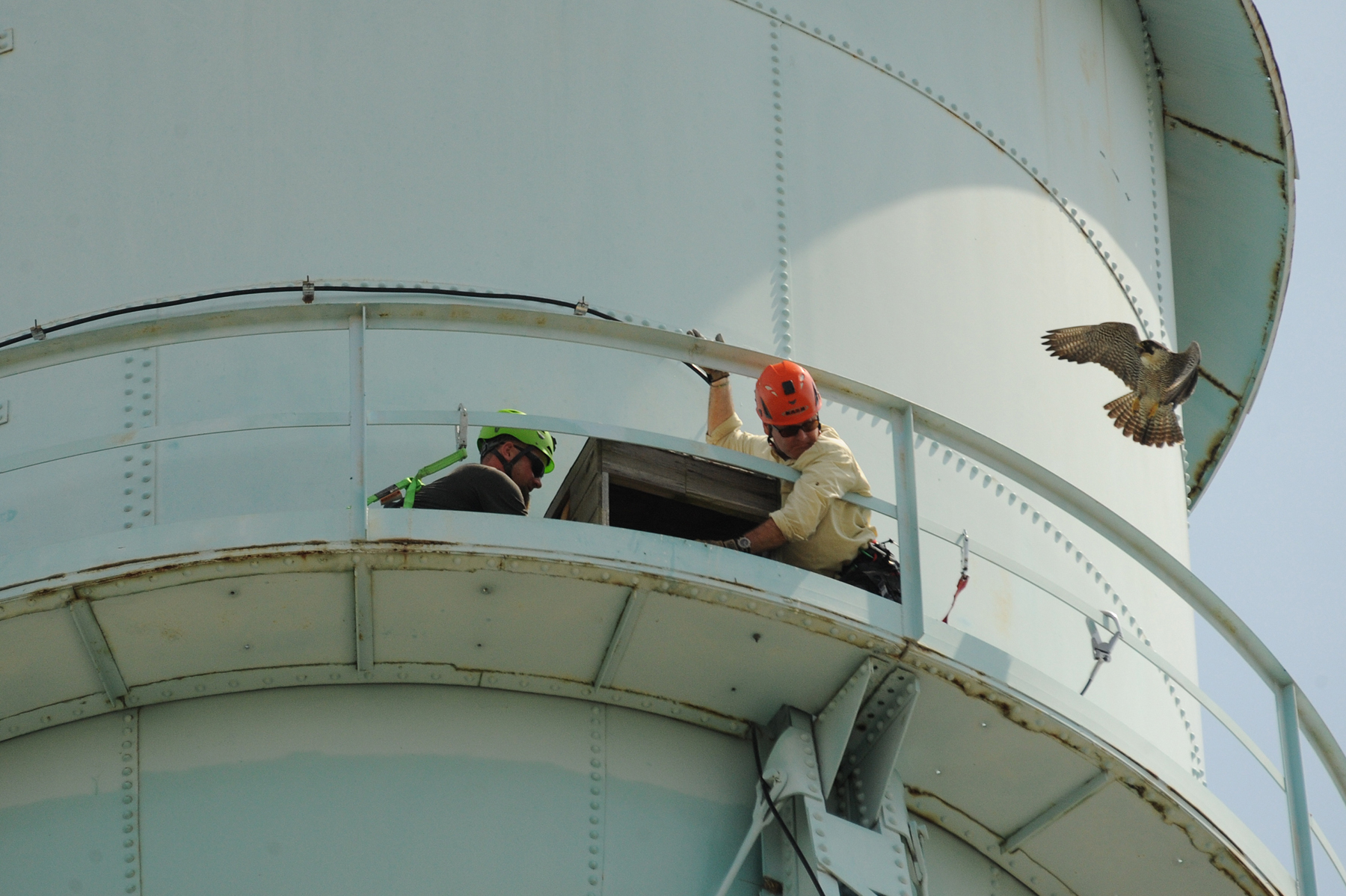
We climbed the 120′ tower to access the nest and band the young. As we climbed the tower the adult female was calm but as we got to the half way point she became aggressive towards us to defend her nest and young. We were wary of her the whole time and spent as little time as possible on the tower while banding the young to minimize the stress to her from constantly flying and dive bombing us, which she did. We were lucky to have a steel railing to protect us (and helmets), as she came very close to us. At times she would perch behind me or John on the railing. Once we were done banding we climbed down and she returned to her nest to find that her young were not harmed.

Banding is a critical tool for avian biologists to learn a lot about birds. For New Jersey falcons we tag them with a black USGS federal band and a bi-color / alpha-numeric band, which allows us to be able to identify each individual bird. It also provides more valuable information including nest success, age, site fidelity, and the turnover rate in the population. At all nest sites in New Jersey, after we have successfully identified the breeding pair, we continually monitor each nest or eyrie until the young are old enough to band (approximately 3-4 weeks old). In 2014 there were 29 active nests in New Jersey (up from 26 in 2013). The core of the population continues to nest on towers and buildings throughout the state.

KEC_7594
Ben W. and John H. climbing the 120′ tower. Photo By Kathy Clark/ENSP
Banding
Ben prepares to band a nestling that John holds. Photo by Kathy Clark/ENSP
Dive bombed!
Dive bombed! Yes, the female came very close to us! Photo by Kathy Clark/ENSP
Two 3.5 week old young. One male; one female. Photo by Ben Wurst
John Heilferty holds a 3.5 week old peregrine falcon as it was banded for future tracking.
John Heilferty, ENSP Biologist holds a 3.5 week old peregrine falcon as it was banded for future tracking.
Ben Wurst climbs down the 150' water tower. Photo by John Heilferty/ENSP.
Ben Wurst climbs down the 120′ water tower. Photo by John Heilferty/ENSP.

Learn more:

2015 Delaware Bay Shorebird Banding Season Comes to a Close

Delaware Bay Shorebird Project Team Finishes 2015 Banding Season

By: Dr. Larry Niles, LJ Niles Associates LLC

All our efforts to help shorebirds on Delaware Bay this year couldn’t have been better rewarded – nearly every red knot left the bay in good condition and in one of the earliest departures in the 19 years of the Project. We counted just over 24,000 knots in our aerial count of the entire Bayshore on May 26th. Just two days later, most had left and we could find only a few hundred, feeding on eggs like human shoppers feed on bargains at a half-price sale. By May 31st, virtually all were gone, along with the ruddy turnstones, sanderlings and semipalmated sandpipers. The beaches had an odd, deserted feel after the frenzy of the preceding days.

Photo by Jan van der Kam from Life on Delaware Bay

A good thing for birds and all those who love birds. The end of the shorebird stopover season also means the end of our shorebird team – at least for another year. All through the week, we lost team members—the North Americans left by car, those from other continents by air. Those who stayed shifted from research to manual labor: cleaning and storing equipment, closing up the rental houses, and reconnecting lost items to their owners.

Photo by Kevin Karlson

Will our project continue? Now in our 19th year of work on the bay, one must recognize the realities of time’s passage. Clive Minton just cleared 80, and the rest of the original team will soon follow. This author, who started at relatively young 44, is now pushing his mid-sixties. Death visited our team this year with the passing of Allan Baker. Surely the rest of us will start “falling off the perch” as Clive is fond of saying.

Allan Baker, the Senior Curator of Ornithology and Head of the Department of Natural History at Toronto’s Royal Ontario Museum suddenly and unexpectedly died in 2014.  His career included many significant achievements including early work that helped build a scientific case that overharvested horseshoe crabs caused the decline of red knot numbers. Photo from Wader Study.
Allan Baker, the Senior Curator of Ornithology and Head of the Department of Natural History at Toronto’s Royal Ontario Museum suddenly and unexpectedly died in 2014. His career included many significant achievements including early work that helped build a scientific case that overharvested horseshoe crabs caused the decline of red knot numbers. Photo from Wader Study.

And yet, all committed to return for a 20th year. I worry over the fundamentals: our funding remains uncertain, the listing of knots as Threatened in the U.S. creates new regulatory hurdles, and N.J. politics seem to get more fractious every minute. Will there be a 20th year of this project?


The answer starts and ends with the willingness of our team to do it again. It starts there because good ideas and projects always seem to find support; I know we will find a way. It ends there because this team provides the best chance of a strong scientific underpinning for protection. Our team includes some of the most important shorebird scientists in the world. At our dinner soirees (generously provided by Jane Galetto’s Citizens United team), Ph.D.’s are as common as empty beer bottles. It’s no surprise that conversation drills deep into conservation biology, behavioral ecology, migration physiology, stopover ecology, virology and many other subjects of interest to all our team, both scientists, old and young, and lovers of good science.


In many ways, the lives of our team members revolve around birds. The Delaware Bay Shorebird Project provides us a meaningful excuse to pull together once more. Our team members love birds, and do everything they can to help them. It’s been that way for 19 years, and it is this commitment that has led to this year’s results.

p180 red knots
This graph plots the percentage of red knots caught between May 26th and May 28th that have achieved at least 180 grams against the year of the catch. The 2015 result is still an estimate.

For the first time in 19 years, red knots left in a condition similar to the lucky ones migrating through before the fishing industry decimated horseshoe crabs in 1997. After that year, the populations of knots, turnstones, semipalmated sandpipers, and sanderlings fell off a cliff. For the last four years, however, the terribly reduced populations of shorebirds have been in rough balance with equally reduced number of horseshoe crabs breeding on the Bay. Consequently, the percentage of knots reaching the threshold weight of 180 g has climbed. (Knots need at least this weight to reach the Arctic and breed successfully.) From a low of just 5% making weight in 2003, they’ve clawed their way upward 30% in 2010, 50% in 2013 and now this year’s 90%.

Fat knot on the scale by Philippe Sitters

One must be cautious about the interpretation of this number but the catch of red knots on which it was based were truly fat birds! One weighed 226 grams, nearly 100 grams higher than its fat free weight. Whatever the figure it was a good season for both birds and the people who love them.

Learn more:

Dr. Larry Niles has led efforts to protect red knots and horseshoe crabs for over 30 years.

Red Knots “Vote with their Wings”

An Update from the 2015 Delaware Bay Shorebird Project Team

By: Dr. Larry Niles, LJ Niles Associates LLC

Clive Minton is fond of saying, “the knots vote with their wings” as a way of saying knots concentrate in the best places for knots. Of course it’s true, animals move to the habitats they find most suitable, nature leaves little room for anything but. Sometimes however, animals use a habitat only because they have little choice — in other words, they are making the best of a bad situation. The job of a good wildlife biologist is to understand the difference. Unfortunately, it’s often not obvious.

Red Knot Photo by: Jan van der Kam


In all the places studied by this author — Tierra del Fuego, the Arctic, and many places in between — knots distinguish themselves as highly selective habitat specialists. There are many practical reasons for this: usually knots occur in flocks and thus require more space than many other species. More importantly, as they put on weight for their incredibly long-distance flights, they often push the limit of safe wing-loading (body weight to wing area). This makes them vulnerable to predators, both real and imagined. They need more flying space, more space for advance warning of a predator’s presence. They demand special roost habitats as well, especially night roosts that are free from disturbance and have good sight distances. Altogether they need more.

Red knots roost on a sandy spit on Egg Island, one of the largest contigous area of marsh in the mid Atlantic.   Half of the bay's shorebird population roost on Egg Island and than feed on the various beaches around Fortescue.
Red knots roost on a sandy spit on Egg Island, one of the largest contigous area of marsh in the mid Atlantic. Half of the bay’s shorebird population roost on Egg Island and then feed on the various beaches around Fortescue.


In Delaware Bay, they need all this, but above all they need good horseshoe crab egg densities. In the mid 2000’s when shorebird numbers were high, the demand for those eggs exceeded the production from the rapidly diminishing crab population. Knots wandered the bay like homeless refugees. Competition for eggs drew tens of thousands of birds to places unused by knots in healthier times.

Mispillion Harbor
Mispillion Harbor


Mispillion Harbor, Delaware, for example, in some years supported much of the knot population in the Bay because it acts like a funnel-trap for crabs. Crabs wandered into the harbor through long stone jetties finding themselves in crab breeding heaven, sandy shoals in a closed space, free from wind-generated waves that normally leave them upside down. The egg-laying frenzy caused eggs to reach epic densities, thus preparing many shorebirds for their onward journey to the Arctic. Tens of thousands of shorebird packed into Mispillion Harbor in densities so high that one could smell ammonia off-gassing from the amount of bird waste.


But for knots, Mispillion left a lot to be desired. The same jetties that protect the inner harbor from wind-driven waves also provide low-flying raptors the cover to pounce on flocks before they can easily react. Fat birds make easy prey for peregrine falcons, who themselves struggle to keep up with the insatiable hunger of rapidly growing chicks.

Photo by:  Jan van der Kam
Photo by: Jan van der Kam


But even as shorebird numbers fell in response to the reduced crab numbers, egg densities improved in other places. Knots reassessed their choices and voted with their wings.


This is why this year’s high count of red knots on the New Jersey side of the Bay are so important.  Two days ago, Mark Peck, Joe Smith and I flew the entire Bay to count knots, ruddy turnstones and sanderlings. We counted over 24,000 knots, with 21,000 of these using the beaches managed by the many groups that take part in shorebird management on the New Jersey shore of Delaware Bay.


I am not saying this is a competition between two states — I’m saying the numbers serve as assurance that all our hard work is paying off. It’s a confirmation that the beach restoration projects, the Shorebird Stewards project, the reTURN the Favor crab rescue project, and more are bearing fruit. These coordinated strategies are led by Conserve Wildlife Foundation of New Jersey, American Littoral Society, Manomet Center for Conservation Sciences,  New Jersey Audubon Society, the Wetlands Institute, Citizens United to Protect the Maurice River, The Nature Conservancy, as well as Downe Township, Maurice River Township, Middle Township and the Division of Fish and Wildlife, New Jersey Department of Environmental Protection. This work is funded by the US Department of Interior, Fish and Wildlife Service, the National Fish and Wildlife Foundation and the Willliam Penn Foundation. Good work all!

Jim May protect Cook Beach as part of  Conserve Wildlife Foundation of NJ's Shorebird Stewardship Project.  Each year the Division of Fish and Wildlife designates beaches important to shorebirds and protects them from disturbance.  The shorebird stewards alert Conservation Officers if people refuse to comply.  But most of thier job is helping people understand the shorebird migration and the needs of shorebirds and crabs
Jim May protects Cook Beach as part of Conserve Wildlife Foundation of New Jersey’s Shorebird Stewards project. Each year, the Division of Fish and Wildlife designates beaches that are most important to shorebirds and protects them from disturbance. The shorebird stewards alert Conservation Officers if people refuse to comply, but most of their job is helping people understand the shorebird migration and the needs of shorebirds and crabs.

We now near the end of the stopover season at Delaware Bay. Three days of southerly winds are proving irresistible for many birds. Nearly two-thirds have left and the rest will be gone in a few days. Thanks to the people who love birds and the residents of the Bay, they leave well-prepared for the next stage of their challenging and inspiring lives.

knots in the air

Learn more:

Dr. Larry Niles has led efforts to protect red knots and horseshoe crabs for over 30 years.


19,077 Red Knots Counted – The Most Seen in New Jersey in a Decade

An Update on the 2015 Delaware Bay Shorebird Project

By: Dr. Larry Niles, LJ Niles Associates LLC

Despite the threatening forecast of a cold drizzle and strong winds, our team persevered to complete the first bay-wide count of this season. On the New Jersey side of Delaware Bay, we counted 19,077 red knots – the most seen in the state in a decade. With Delaware’s shorebird team recording 2,000 knots along their entire shoreline, the total knot count of 21,077 is not far from the 24,000 seasonal maximum of the last three years.


Red knot aerial counts


This is good news in either of two completely different ways. One explanation is that perhaps most of the knots have already come to the bay. If so, they are in good time to make weight and are getting close to an on-time departure for the Arctic. The alternative is that even more will arrive and we will exceed our counts of the recent past. Good weights promise good Arctic production; more knots offer new hope.


Knots in formation heading off to the Arctic (c) Jan van de  Kam
Knots in formation heading off to the Arctic (c) Jan van de Kam


The numbers of ruddy turnstones (12,295) and semipalmated sandpipers (56,788) are also close to the seasonal maxima counts of the recent past, so they too may soon brave the long flight to their Arctic homes. Our cannon-net catches of turnstones, sanderlings and knots point to weights building quickly.


Canon net catch
Canon net catch
Canon net catch
Canon net catch
Canon net catch
Canon net catch

The weather conditions play with our expectations. For the last few days, high westerly winds have generated beach-pounding waves all along the Cape shore. Its north/south orientation is perfectly perpendicular to the strong winds, and the wind-generated waves shut down horseshoe crab spawning. This forces the birds to seek shelter and better egg densities elsewhere.


Right from the start, the disappearance of the shorebirds we had been seeing intrigued us, for a good wildlife mystery gets consumed in this team like a good bottle of beer. Within hours, Mark Peck and Gwen Binsfeld found the knots south of where we would have expected. The knots, turnstones, sanderlings, and semipalmateds were comfortably riding out the wind storm on the vast, sandy intertidal flats in front of Sunray Beach and Villas. We haven’t seen birds gathering in numbers here since the early 2000’s.

Photo of shorebird team by Kevin Karlson (from bottom right: Mark Fields, Stephanie Feigin, Mark Peck, Clive Minton, Angela Watts, Jeannine Parvin, Christophe Buidin, Alinde Fojtik, Dick Veitch, Barrie Watts, Joanna Burger, Arie Manchen, Steve Gates, Phillipe Sitters, Ana Paula Sousa, Reydson Reis, Chege Wa Karuiki, Susan Taylor, Mandy Dey, Peter Fullagar, Deb Carter, Gwen Binsfeld, Nick Smith, Clara Kienzi, Joe Smith, Larry Niles, Humphrey Sitters, Stefanie Jenkinson, Ally Anderson, David Stallneckt, Gerry Binsfeld, Christian Friis, Chris Davey)

But back to the count. We found shorebirds all along the Bayshore with three areas of concentration. The first was the aforementioned Villas flats. The second was in the Pierces Point to Reeds Beach area, with most in the more southerly portion of the sector. “Not-knots” (mostly semipalmated sandpipers) were seen there in big numbers during the boat survey by Yann Rochpault, Christophe Buidin and Tom Baxter. They saw 12,000 shorebirds along this mostly unpopulated shoreline.


Semi palmated sandpipers along shoreline (c)Jan van de Kam


But the real shorebird wonderland of the bay continues to be Egg Island. Few people see this this vast intertidal marsh, and fewer still appreciate its wonder. Egg Island – actually a peninsula – juts miles out into the bay, nearly to the shipping channel. The marsh cradles one of the most diverse bird faunas of the mid-Atlantic. All along its mucky eastern flank, short-billed dowitchers, dunlin, semipalmated sandpipers, black-bellied plovers, and semipalmated plovers comb the eroded banks for crab eggs drifting in the water column from better crab breeding sites. The crabs themselves attempt to breed in the overhanging edges of the spartina marsh, a lost cause; however, because the muck lacks oxygen and the eggs cannot develop. This is bad for crabs but good for shorebirds because most of the eggs end up on the sod banks, easy prey for shorebirds.


birds on sod


But this week, the wonders of Egg Island overwhelmed us. Our team – Humphrey Sitters, Phillipa Sitters and this blog’s author – wove along the shallow shoreline in our intrepid 17-ft Carolina skiff, counting thousands of shorebirds – 8,226 knots, 4,125 ruddy turnstones, 3,000 sanderlings, and 21,000 semipalmated sandpipers. The flocks swirled around the   peninsula’s sandy western shore, alighting, then flying, and then alighting again. It was a shorebird dance that was a wonderful sight for increasingly tired-out shorebird scientists.


Learn more:

Dr. Larry Niles has led efforts to protect red knots and horseshoe crabs for over 30 years.

Photo from the Field: First falcons of 2015

Monitoring for hatching at Peregrine falcon nests

by Ben Wurst, Habitat Program Manager

Four 14 day old peregrine falcon nestlings. Photo by Ben Wurst
Four 14 day old peregrine falcon nestlings. Each spring we visit all known falcon nests to check for hatching. At the time we age the young and then inspect them for any parasites and treat them. Then our final visit is to band the young for future tracking. Photo by Ben Wurst

Photos from the Field: Bald Eagle Aerial Survey

Never Say “No” When You’re Asked to Participate in an Aerial Survey

By: Ben Wurst, Habitat Program Manager

I always feel lucky when my feet leave the ground, by ladder and especially by helicopter. Last week, I joined Kathy Clark, Supervisory Zoologist with the NJ Division of Fish and Wildlife’s Endangered and Nongame Species Program to conduct a short aerial survey of several bald eagle nests over southern New Jersey. The day started by driving to Coyle Field, which is managed by the NJ Forest Fire Service.


I met with pilot John Whimberg and we flew south to Woodbine to pick up Kathy. From there we proceeded south towards the Delaware Bay. We were searching for existing nests to determine if they are active or not and if they had young. Most of these nests were not accessible to the Bald Eagle Project volunteers who watch nests during the nesting season. Here is a summary of what we found:


  • 13 nests checked (searched for an additional 3 nests around Heislerville).
  • We documented 3 chicks in 1 nest, and 2 chicks in 3 nests. (chick ages in the 3 to 4 week range).
  • Six nests had adults sitting close (on eggs or possibly hatchlings).
  • Three nests already failed.


Kathy believes that the failure rate may be a bit higher this year because of the extreme cold weather we had in February, which is when most birds are incubating or have hatchlings. Overall the eagle population has done quite well in recent years, so if there is any reduction in productivity it should not affect the long term trend in the growth of their population.


One of the most amazing things that anyone flying above the ground in New Jersey can see is how much forested land we still have. Many bald eagles nest very close to people and near water. Preserving this habitat is essential to the long term sustainability of the bald eagle population in New Jersey.


We are lucky to have in-kind support from the NJ Forest Fire Service who donated their time and equipment for us to complete this important survey. We thank them for their support of the Bald Eagle Project!

A bird sitting tight means that it is still incubating.
Two young can be seen in this nest!
How many young can you spot in this nest?

Conserve Wildlife Foundation of New Jersey “2014 Annual Report” Released

CWF Releases its First Annual Report Ever Using a Story Map Format: “2014 Annual Report

By David Wheeler, Executive Director

Technology has proven to be vital to Conserve Wildlife Foundation’s work protecting rare wildlife species over the years. Our biologists depend greatly on modern technologies to band, track, and share online the journeys of wildlife. Our webcams broadcast the most intimate behaviors of nesting birds and bats across the web. And we seek out ever-evolving communications technologies to spread the word about the inspiring stories of wildlife, from social media and infographs to e-books and Story Maps. These technologies offer newfound abilities to share complex data on multiple levels, while still incorporating the awe-inspiring photography and videos that bring wildlife’s stories to life.

Conserve Wildlife Foundation of New Jersey is excited to offer our 2014 Annual Report in a unique format that utilizes one of those technologies – Story Maps. In the past year, we have explored the wonders of American oystercatchers with our first Story Map – and now the annual report allows all of our projects to be highlighted in this interactive format.

A screen capture of one of the pages of the CWF 2014 Annual Report Story Map.

Visit the multiple pages within this Story Map to learn about Conserve Wildlife Foundation’s many projects and partnerships in 2014, and the imperiled wildlife species in need of our help. Find examples of the innovative and dedicated leadership of our biologists and volunteers. And take an online journey across the state to learn how our projects made a difference in all corners of New Jersey in 2014 – a great year for wildlife in the Garden State!