As Vice President of Government Relations for New Jersey Audubon, 2017 Women & Wildlife Leadership Award Honoree Kelly Mooij works to promote and secure a legal and regulatory framework that supports habitat conservation, open space preservation, and species protection and recovery in New Jersey. She has dedicated her time and efforts in utilizing the tools of law, policy, and government affairs to protect our state’s wildlife.
Ms. Mooij earned her Juris Doctorate and Master of Studies in Environmental Law, focusing on marine biodiversity and land and water use issues, and has worked for New Jersey Audubon since 2008. Her efforts often center on bringing interested parties together to support efforts to protect the region’s wildlife. In 2012, Ms. Mooij helped lead the formation of the multi-state Coalition for the Delaware River Watershed. This coalition seeks to protect the watershed that provides drinking water for 16 million people, supports hundreds of miles of vital habitat for fish and wildlife, and is critical to the economic well-being of the mid-Atlantic region. Continue reading “NEW JERSEY AUDUBON’S KELLY MOOIJ HONORED FOR LEADERSHIP IN CONSERVATION”
As Director of Education & Outreach for Great Swamp Watershed Association, 2017 Women & Wildlife Education Award Honoree Hazel England has spent 24 years as an enthusiastic environmental educator and naturalist in New Jersey, bringing education programs to students and teachers of all ages about our local ecosystems and habitats. Her work focuses on providing powerful learning experiences for educators, encouraging youths to explore and understand New Jersey’s incredible biodiversity, and partnering with agencies to open up more environmental opportunities for students of all ages.
Since 2004, Ms. England has dedicated herself to developing, coordinating, and implementing a wide variety of educational and stewardship programs and activities at the Great Swamp Watershed Association as the Director of Outreach and Education. She currently focuses on creating programs about water quality and conservation, ranging from curriculum development, to watershed-wide issues, to local resident workshops. Continue reading “GREAT SWAMP WATERSHED ASSOCIATION DIRECTOR HAZEL ENGLAND HONORED FOR EDUCATION EFFORTS”
As Vice President for the Garden Club of New Jersey, 2017 Women & Wildlife Service Award Honoree Jeannie Geremia has followed her passion for protecting pollinators by leading, inspiring, and educating others on the importance of pollination and wildlife habitat gardens for the past decade. She works to engage others in gardening for pollinators, as well as ensuring funding to support these efforts.
One of Ms. Geremia’s most notable accomplishments is her leadership in the designation of the Black Swallowtail Butterfly as the New Jersey State Butterfly. She spoke to many members of the New Jersey State Legislature, and recruited legislators with her enthusiasm and vast knowledge on the species. Her action earned her recognition from both the New Jersey Senate and the General Assembly. Continue reading “DEDICATED VOLUNTEER JEANNIE GEREMIA HONORED FOR HER SERVICE”
A clutch of eight tiny terrapin hatchlings found beneath one of our X-ING signs. photo by Ben Wurst
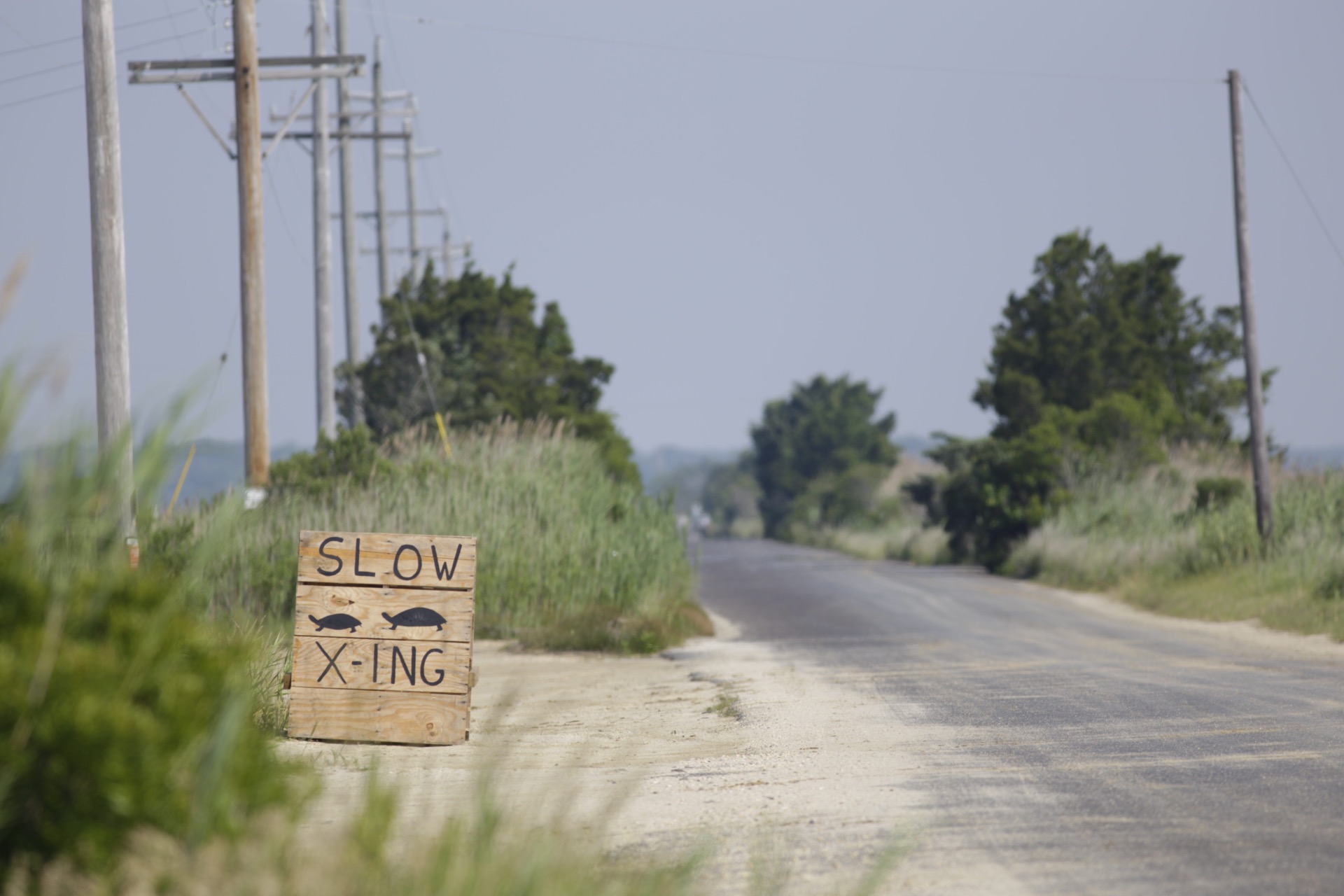
While removing our seasonal (better late than never!) terrapin X-ING signs on Great Bay Blvd. in Little Egg Harbor yesterday, we stumbled upon some tiny northern diamondback terrapin hatchlings. These little guys were hiding or trapped under a very large (and heavy) X-ING sign made from old pallets that someone knocked over (I say guys because they hatched later in the season and it was a very cool August, but some could be girls). At first I didn’t see anything, but upon closer inspection I saw several hatchlings in the vegetation. One, two, three, four, five, six. Then I dug a little with my hand and found two more. The sign had been atop a nest. Continue reading “Photo from the Field”
ACTION ALERT: Support ecological management of the most valuable public resource for our coastal ecosystem and economy
by Ben Wurst, Habitat Program Manager
Menhaden is a common food source for ospreys during their nesting season in New Jersey. Photo by Northside Jim.
The Atlantic States Marine Fisheries Commission is accepting public comment on the establishment of ecological management of Atlantic menhaden (Brevoortia tyrannus), which is a keystone species. Basically, a keystone species is one that plays a large role in the ecosystem where it lives. If a keystone species is lost then the ecosystem would dramatically change or cease to function, causing widespread effects to other species that benefit. In New Jersey, ospreyshave largely benefited from a healthy menhaden population as we’ve had relatively high reproductive rates (more than double what’s needed to sustain population) over the past decade. From 2006 to 2016, the population has grown by 30% and above the pre-DDT, historic milestone of over 500 nesting pairs. Around 82% of the state population of ospreys nests along the Atlantic Coast and we observe menhaden at a huge number of nests during our mid-summer surveys. If menhaden numbers drop, then we will likely see osprey numbers follow suite, as reproductive rates will decline, as they are in the Chesapeake Bay.
We keep track of all re-sightings we receive of NJ (green) banded eagles. This information is important as it lets us know where eagles raised in NJ go after leaving the nest and eventually where they end up nesting. In 2017 we have had NJ banded birds sighted in NJ as well as PA and VT.
On April 15, 2017 Mary Dunham photographed NJ banded D/18 near Lake Como in Belmar, NJ. The female was banded in March 2011 at the Manasquan Reservoir, Monmouth County. She was with another smaller adult, assumed to be a male. While Mary watched a third adult eagle came into the area and the pair chased it away. This is an indicator that D/18 was paired up and perhaps was nesting in the area.
D/18 @ Mary Dunham
In August we received a report that D/18 was sighted once again. This time she was up near the NY- Canada border. We don’t know much about the movements of nesting eagles so we can only speculate why she made such a big move north. Perhaps she went north with a recent fledgling or maybe she was kicked out of the pair by an intruder eagle and headed north?
D/40@ Reid Hoffer
In March we were contacted by Reid Hoffer who monitors an eagle nest along a reservoir in Rockland County NY. He was able to get a photo of a green band, D/40, she was banded May 2011 at Newton Reservoir in Sussex County. Mr. Hoffer reports that unfortunately the pair did not produce any offspring this year.
D/40 & mate at nest in NY@Reid Hoffer
Telemetry
We are also currently tracking three NJ eagle with transmitters attached. The New Jersey Bald Eagle Tracking project shows the movements of all three of these birds as well as their history.
Two of the transmittered birds fledged from Merrill Creek Reservoir in Warren County, NJ. Harmony 2, has spent the last four years in a 100-mile swath of western Connecticut and Massachusetts. She fledged in 2012 making her a 5th year bird and breeding age. We suspect she’ll nest in the same area next season. Haliae fledged in 2013 and has spent the past three years mostly around the Eastern Shore of Maryland. Perhaps she’ll stay in that area to nest? So two birds from the same nest, but one has settled to the north and one to the south.
Nacote, a male from the Galloway nest in Atlantic County, has stayed more “local” to his home area. He’s spent the last three seasons in Atlantic, Cumberland and Cape May Counties. He favors the CMC landfill and local sand pits where other eagles are known to roost and feed.
All this information helps us to locate roost and foraging areas and protect them. It’s also fascinating to know where NJ eagles go after leaving their nest area, especially when they begin nesting. Why do some head north, others south and yet others stay near their “home” range? We don’t know, and that’s ok, it’s what makes them wild!
In this blog series, my goal is to examine the importance of grassland habitat in our state, introduce CWF’s new habitat restoration project, and highlight many of the species of grassland birds our project aims to benefit. So, first I’ll start off with a little background information about grasslands and why we need to preserve, restore and create more of this critical habitat. Continue reading “Grassland birds of New Jersey”
Conserve Wildlife Foundation’s Barnegat Bay ghost crab pots project is featured in this blog story covering a wildlife threat killing millions of marine animals every year. Read the full story here.
Photo by: AFP/NOAA via NewsDeeply Oceans Deeply blog
I would like to take the time to share a noteworthy event from last week, as well as highlight a CWF volunteer who deserves recognition for his dedication to wildlife. CWF received a call last Friday from a concerned citizen about an osprey chick that had fallen from its nest in Avalon. Osprey chicks are extremely vulnerable to summer storms, and are often blown right from their nests in strong winds. The storm that pushed through the area Thursday night had likely blown this chick out of its nest onto the marsh below. This particular nest had just been surveyed on July 6 and had contained three young chicks.
osprey chick down on marsh after severe storms
Often when staff members are not available to respond to calls like this, we rely on our volunteers to represent us. In this case, when CWF volunteer John King got the call, he hooked up his boat and immediately headed out to assess the situation in hopes of making a rescue. When he arrived on the scene, John realized that there were actually three osprey chicks on the ground below the nest; however, two of them were unfortunately already deceased. The parents were also sitting on the ground with the one surviving chick when he arrived. John picked up the chick and examined it for injuries. When he determined it was in good condition, he carried it up a ladder and placed it back into the nest as the parents circled and screamed above him. As he left the site, the parents immediately returned to the nest to check on their chick.
Osprey chick returned to the safety of it’s nest
Even though John was only able to save one of the three chicks, this was still a success story that would not have been possible without the help of a devoted volunteer. The concerned citizens who had called in the emergency watched the whole rescue from across the lagoon and reported back the following day that the chick was sitting up in the nest looking healthy. CWF also greatly appreciates citizens who care enough to observe wildlife responsibly and report wildlife emergencies when necessary.
Adult returns to nesting platform after chick is safely returned to nest.
John King has been volunteering for CWF for many years and has worked on several projects including the Calling Amphibian Project, NJ Tiger Salamander project and the NJ eagle project. He has been very involved with the NJ osprey project, headed by CWF’s Ben Wurst, assisting with osprey surveys during the breeding season and helping to construct and erect nest platforms over the winter. In addition to CWF, John also volunteers with many other conservation organizations and is always happy to lend a hand. Although he is retired, his volunteer work is practically a full time job. I sincerely admire John’s continued enthusiasm and his dedication to wildlife, and I believe the world would be a better place if there were more people like him.
Conserve Wildlife Foundation of NJ thanks you, John!