Water Quality and Amphibians

A Closer Look into the Relationship between Amphibians and Their Habitats

Conserve Wildlife Foundation is excited to celebrate Amphibian Awareness Month during March 2015! Follow us on social media and be sure to check your email (sign up for our list) for weekly stories on the amphibians of the Garden State and our work to protect them. 

By: Kelly Triece, Wildlife Biologist

Wood Frog Eggs © Kelly Triece

Amphibians are unique group in the animal kingdom, they have porous skin! This permeable skin allows water and air to pass directly pass into their body without filtering through their stomach.

 
While their permeable skin and soft eggs give amphibians an advantage to take in more oxygen, it also makes them more susceptible to pollutants. Amphibians therefore can serve as “canaries in the coal mine” for water quality. Biologists throughout the world are concerned about the health of amphibians because their health can be linked to the health of the environment they live in.


Water pollutants, such as, road salts, pesticides, metals and other sources of runoff from agriculture and cities can have negative effects on overall health and reproduction of these critters. Water quality degradation has been linked to physical malformations in amphibians and may also reduce their ability to fight off pathogens, leading to reduced reproduction and mortality. These issues linked with water quality and amphibians may also have a larger implication of the health of the ecosystem, including human health.

 
Therefore, it is important that populations of amphibians and other wildlife are carefully monitored and protected. In order to protect our water quality in and around our homes it is important to limit sidewalk salts, garden fertilizers and pesticides as much as possible. Make sure to follow label instructions and application rates. Amphibians are also beneficial as they eat insects, including agricultural pests and serve as food to other wildlife. They have also been an important role in research and medicine. Each day, consider taking small steps in your own house to help the amphibians that call the Garden State home.


Learn more:


Kelly Triece is a Wildlife Biologist for Conserve Wildlife Foundation of New Jersey.


Conserve Wildlife Foundation of New Jersey “2014 Annual Report” Released

CWF Releases its First Annual Report Ever Using a Story Map Format: “2014 Annual Report

By David Wheeler, Executive Director

Technology has proven to be vital to Conserve Wildlife Foundation’s work protecting rare wildlife species over the years. Our biologists depend greatly on modern technologies to band, track, and share online the journeys of wildlife. Our webcams broadcast the most intimate behaviors of nesting birds and bats across the web. And we seek out ever-evolving communications technologies to spread the word about the inspiring stories of wildlife, from social media and infographs to e-books and Story Maps. These technologies offer newfound abilities to share complex data on multiple levels, while still incorporating the awe-inspiring photography and videos that bring wildlife’s stories to life.

Conserve Wildlife Foundation of New Jersey is excited to offer our 2014 Annual Report in a unique format that utilizes one of those technologies – Story Maps. In the past year, we have explored the wonders of American oystercatchers with our first Story Map – and now the annual report allows all of our projects to be highlighted in this interactive format.

A screen capture of one of the pages of the CWF 2014 Annual Report Story Map.

Visit the multiple pages within this Story Map to learn about Conserve Wildlife Foundation’s many projects and partnerships in 2014, and the imperiled wildlife species in need of our help. Find examples of the innovative and dedicated leadership of our biologists and volunteers. And take an online journey across the state to learn how our projects made a difference in all corners of New Jersey in 2014 – a great year for wildlife in the Garden State!


Road Closed: Salamander Crossing

Road Closures Help Amphibians Migrate to Vernal Pools to Breed

Conserve Wildlife Foundation is excited to celebrate Amphibian Awareness Month during March 2015! Follow us on social media and be sure to check your email (sign up for our list) for weekly stories on the amphibians of the Garden State and our work to protect them. 

By: Lindsay McNamara, Communications Coordinator

Yellow Spotted Salamander © Lindsay McNamara


On the night of March 14, Conserve Wildlife Foundation Communications Coordinator Lindsay McNamara attended the first closure of Beekman Road this season. Beekman Road, in East Brunswick, New Jersey, is closed to traffic about two or three nights for six to twelve hours each spring by Friends of the East Brunswick Environmental Commission (Friends of EBEC). Friends of EBEC organizes these road closures to maintain local biodiversity.


In the woods on either side of Beekman Road, vernal pool habitat exists. Vernal pools are temporary woodland ponds that fill with water during the winter and spring and dry out in the summer. These vernal pools are extremely important for a number of amphibians in the area. Spotted salamanders, wood frogs, green frogs, spring peepers, Fowlers toads and chorus frogs all rely on the vernal pools for breeding.


Some amphibians, like spotted salamanders and wood frogs are entirely dependent on the vernal pools for breeding. They leave their winter hibernation spots in upland forests and migrate (often in large groups) to the vernal pools. Research suggests that these species follow the same migratory paths each year, often traveling distances of as much as 1,000 feet from their hibernation spots.


At the vernal pool, mating occurs, eggs are deposited by the females, and the adults leave the habitat and venture to the surrounding woods. The adults spend their summer in these wooded areas before slowly retreating back to their winter hibernation areas, and the natural cycle begins again.


Unfortunately, the migrating amphibians need to cross Beekman Road to get from their hibernating spots to their vernal pool breeding grounds. Road kills during this journey significantly reduce salamander and frog populations and can lead to local extinctions at breeding ponds.


Friends of the East Brunswick Environmental Commission has worked together with a number of partners to close Beekman Road to traffic during nights when amphibian migration is extremely likely. These road closures help protect migrating salamanders and frogs as they move across Beekman Road to their breeding vernal pools.


Friends of EBEC consider a number of variables before they decided to close the road. A wide range of factors trigger salamander migration including the amount and timing of rainfall, the date, the temperature of the air, the temperature of the ground, the availability of open water on the vernal pools, the depth the salamanders are migrating, soil moisture and many others. Interestingly, studies have shown that males typically migrate first and arrive at the vernal pools before the females. It seems females need a higher average air temperature to stimulate their movement than the males.


Volunteers are encouraged to come on these rainy nights to help the amphibians cross the road. Bring your friends, your family and don’t forget a flashlight, to the next road closure of the season! Updates are posted on the Friends of the East Brunswick Environmental Commission’s blog.


These road closures are a great way to protect local biodiversity and educate New Jersey residents about wildlife in their state. Conserve Wildlife Foundation, in partnership with the New Jersey Division of Fish & Wildlife’s Endangered and Nongame Species Program, lead a number of Amphibian Crossing volunteer programs across New Jersey. Join us!


Learn more:


Lindsay McNamara is the Communications Coordinator for Conserve Wildlife Foundation of New Jersey.

Ranavirus Impacting New Jersey Amphibians

Emerging Disease Known to Affect Amphibians, Reptiles and Fish

Conserve Wildlife Foundation is excited to celebrate Amphibian Awareness Month during March 2015! Follow us on social media and be sure to check your email (sign up for our list) for weekly stories on the amphibians of the Garden State and our work to protect them. 

By: Kelly Triece, Wildlife Biologist

Picture1
Wood frog and egg masses at a vernal pool in northern New Jersey © Kelly Triece


While human diseases such as Ebola and the zombie apocalypse virus have made recent headlines in the news and on our TV screens, there is a virus that is also affecting our local amphibian population. This emerging disease known as Ranavirus, has become increasingly common in the U.S., including New Jersey.


This virus has been known to affect amphibians, reptiles and fish. It is of great concern because it can kill nearly 100% of amphibian larvae (tadpoles) within just a few days once a population is infected. Ranavirus causes skin ulcerations and organ hemorrhaging, and is especially threatening to larvae, specifically wood frogs (Lithobates sylvaticus). Transmission of the disease can be spread direct contact, waterborne exposure, contaminated soil, and ingestion of infected tissues.


While the virus has been known to cause major die-offs all over the world, little information on the timing, extent, and frequency of the disease outbreaks is known in the Mid-Atlantic U.S.. In order to gain more information, a multi-state survey has been underway since 2013. The project is led by Scott Smith of the Maryland Department of Natural Resources. Conserve Wildlife Foundation staff biologists are doing a large amount of New Jersey’s field surveillance with support from the New Jersey Division of Fish and Wildlife Endangered and Nongame Species Program (ENSP).

Netting tadpoles ©MacKenzie Hall

As part of this project, in 2013, breeding ponds throughout the New Jersey were sampled for prevalence of Ranavirus. Thirty larvae from each study pond were captured by dip net, physically examined, euthanized, and preserved for screening and other analyses at the labs of Montclair State University and/or the National Wildlife Health Center. Results determined that about half of these ponds tested positive for Ranavirus.


In 2014, Ranavirus-positive sites were re-sampled for presence of the disease. At about 25% of the sites, disease symptoms and/or dead tadpoles were found, though no mass die-offs were observed. Investigations are still ongoing to further determine the impact of Ranavirus on amphibian populations as well as potential environmental factors that may be associated with the disease.


Learn more:


Kelly Triece is a Wildlife Biologist for Conserve Wildlife Foundation of New Jersey.

Photos From the Field: Little Brown Bats in Hibernia Mine

Data Collected for White-nose Syndrome Research

By: Stephanie Feigin, Wildlife Ecologist 

This week, Conserve Wildlife Foundation’s Wildlife Ecologist Stephanie Feigin went into Hibernia Mine with New Jersey Division of Fish & Wildlife Endangered Species and Nongame Program (ENSP) Biologist MacKenzie Hall and John Gumbs with BATS Research Center. The group collected data for important research studies on the fungus responsible for White-nose Syndrome (Pseudogymnoascus destructans) and White-nose Syndrome itself. The data will be used in a UC Santa Cruz University study led by Dr. Winifred Frick, as well as a Rutgers University study led by 2014 Women & Wildlife Education Award Winner Dr. Brooke Maslo.

Hibernia Mine (c) Stephanie Feigin
Hibernia Mine Entrence (c) Stephanie Feigin
Hibernia Mine Entrance (c) Stephanie Feigin
Hibernia Mine Entrance from Inside Cave (c) Stephanie Feigin
Stalagmites in Hibernia Mine (c) Stephanie Feigin
Little Brown Bats (c) Stephanie Feigin
Little Brown being swabbed for study (c) Stephanie Feigin
Little Brown Bat (c) Stephanie Feigin
ENSP Biologist MacKenzie Hall with Little Brown Bat (c) Stephanie Feigin
Little Brown Bats (c) Stephanie Feigin
Little Brown Bat (c) Stephanie Feigin
Little Brown Bat shows significant signs of White Nose Syndrome on wings and nose (c) Stephanie Feigin
CWF Wildlife Ecologist Stephanie Feigin holding Little Brown Bat (c) Stephanie Feigin

Learn more:


Stephanie Feigin is a Wildlife Ecologist for the Conserve Wildlife Foundation of New Jersey.


New Jersey’s Elusive and Endangered “Tiger”

Studying the New Jersey Endangered Eastern Tiger Salamander

Conserve Wildlife Foundation is excited to celebrate Amphibian Awareness Month during March 2015! Follow us on social media and be sure to check your email (sign up for our list) for weekly stories on the amphibians of the Garden State and our work to protect them. 

By: Larissa Smith, Wildlife Biologist/Volunteer Manager

TS egg mass @ Pat Sutton
Tiger Salamander egg mass @ Pat Sutton

This week, Conserve Wildlife Foundation, New Jersey Division of Fish & Wildlife Endangered and Nongame Species Program (ENSP), U.S. Fish and Wildlife Service biologists and dedicated trained volunteers surveyed a known Eastern Tiger Salamander breeding vernal pool complex. Tiger Salamanders emerge from their underground burrows in the early winter to breed and lay egg masses in the pools. By March, the adults have returned to their burrows.


Biologists and volunteers go out to pools during the winter months to survey for egg masses to determine if the pools are being used by Tiger Salamanders. The cold winter made getting out to pools difficult due to the ice cover, so now that it is warming up we hoped to still be able to find egg masses that hadn’t yet hatched.

Surveying for TS egg masses
Surveying for Tiger Salamander egg masses


One hundred sixty egg masses were found in the largest pool, some the of eggs had already hatched but others were still intact. Tiger Salamander larvae was seen along with the larvae of the Marbled Salamander. Vernal pools are breeding grounds for many species which is why it is so important to protect them.


Marbled Salamander larvae @ Pat Sutton


In New Jersey, there are only 15 known Tiger Salamander breeding pools in the southern most part of the state. Tiger Salamanders themselves are targeted by collectors for the pet trade which is why their breeding locations are kept a secret. Their habitat is declining due to habitat loss and fragmentation, development, pollution, changes in hydrology, and climate change.


To see what biologists are doing to protect them visit:

Larissa Smith is a Wildlife Biologist and the Volunteer Manager for Conserve Wildlife Foundation of New Jersey.

Jersey’s Newest Frog: The “Chuckling” Atlantic Coast Leopard Frog

“Chucks” and Occasional Groans of New Species Caught on Video by Former CWF Biologist

Conserve Wildlife Foundation is excited to celebrate Amphibian Awareness Month during March 2015! Follow us on social media and be sure to check your email (sign up for our list) for weekly stories on the amphibians of the Garden State and our work to protect them. 

By: Lindsay McNamara, Communications Coordinator

Photo: New Jersey Division of Fish and Wildlife

Remember back in late October of 2014 when word quickly spread about a new frog species in New Jersey? The Atlantic Coast leopard frog is mint-gray to light olive green with medium to dark spots. The frog has been found along the Delaware River and Bayshore, along Atlantic Ocean coastline, in the Meadowlands and on Staten Island.


Did you know this Jersey frog groans and makes cough-like sounds or “chucks” rather than typical croaking sounds? Listen closely while you watch the video, the sounds originally caught on film by former Conserve Wildlife Foundation biologist Brian Zarate, below to hear the Atlantic Coast leopard frog’s distinctive call:


Although other leopard frog species, like the southern leopard frog and northern leopard frog, have been recognized and found in New Jersey’s wetlands for some time, researchers only recently gained the ability to use technology such as DNA and digital bioacoustic analysis to present thorough evidence that the Atlantic Coast leopard frog was a unique species.


In March 2003, CWF Biologist Brian Zarate and other scientists volunteered to survey salamanders at the Great Swamp National Wildlife Refuge in Morris County, New Jersey. As the biologists gathered in the parking lot, they heard an unfamiliar sounding frog. The group captured the frog and took photos, reasoning that it wasn’t the common southern leopard frog, and that might be a northern leopard frog released into the wild.


Zarate, now a zoologist with the state’s Division of Fish and Wildlife, moved on to other projects, but in 2007 he checked in on the strange frogs. He heard them near the same Great Swamp parking lot. He posted a video of the frog on YouTube.


Four years later, the group returned to Great Swamp, and found the strange frog there and in several other places too. Through the partnership of Zarate, Jeremy Feinberg, a Rutgers doctoral candidate, and Eric Kiviat, a collaborator with Hudsonia Ltd., and the implementation of new technology, it was proven that the strange frog was indeed a different species of leopard frog, the Atlantic Coast leopard frog.


Starting this spring, Endangered & Nongame Species Program biologists, including Zarate, will begin a two-year project mapping the potential range of the Atlantic Coast leopard frog. Biologists and volunteers alike will comb New Jersey’s wetlands in search of evidence of the frog and collect data on its habitat preferences.


Looking to report a possible sighting of an Atlantic Coast Leopard Frog? Contact Brian Zarate at brian.zarate@dep.state.nj.us.


Learn more:


Lindsay McNamara is the Communications Coordinator for Conserve Wildlife Foundation of New Jersey.


Terrapin Harvest Closed in New Jersey Waters

NJDEP Commissioner issues Administrative Order to close remainder of terrapin season

by Ben Wurst, Habitat Program Manager

The harvest of terrapins from New Jersey waters is now banned! Photo by Ben Wurst

Northern diamondback terrapins can no longer be harvested from New Jersey waters. Yesterday NJ Department of Environmental Protection Commissioner Bob Martin signed an Administrative Order closing the remainder of the commercial harvest season.

“People who live in coastal communities or visit the shore have long treasured the diamondback terrapin,” Commissioner Martin said. “Unfortunately, due to significantly increased harvesting, more needs to be done to ensure the species remains a viable part of our coastal ecosystem.”

Terrapins have long been an under-served species in New Jersey. In the past there have been many unknowns with regards to their commercial harvest from Nov. 1 to March 31. No permits. No bag limits. No reporting. All while the pet and food trade in Asia is rapidly growing. It wasn’t until last year when a federal permit was filed to export terrapins to Asia which brought more scrutiny to their harvest. The incident found that a total of 3,500 individuals were harvested from NJ waters in 2014! Then in late December, NJ Division of Fish and Wildlife Conservation Officers caught fishermen who illegally harvested 800 terrapins (which were all released) on Absecon Bay!!

CWF is the project leader for the development of a regional, multi-state strategy for Northern diamondbacks aimed at achieving long-term sustainability for terrapins throughout the Northern and Mid Atlantic Region (35 partners/8 states).

This is a step in the right direction for terrapins. Next is changing their classification from a games species to a non-game species so they can get the protection they need. We applaud NJDEP and the NJ Fish & Wildlife COs who have helped this amazing and unique species of turtle!

SNOWstorm at Island Beach State Park

Snowy Owls in Seaside Park, New Jersey

By: Guest Blogger Eric Chandler, Wildlife & Nature Photographer

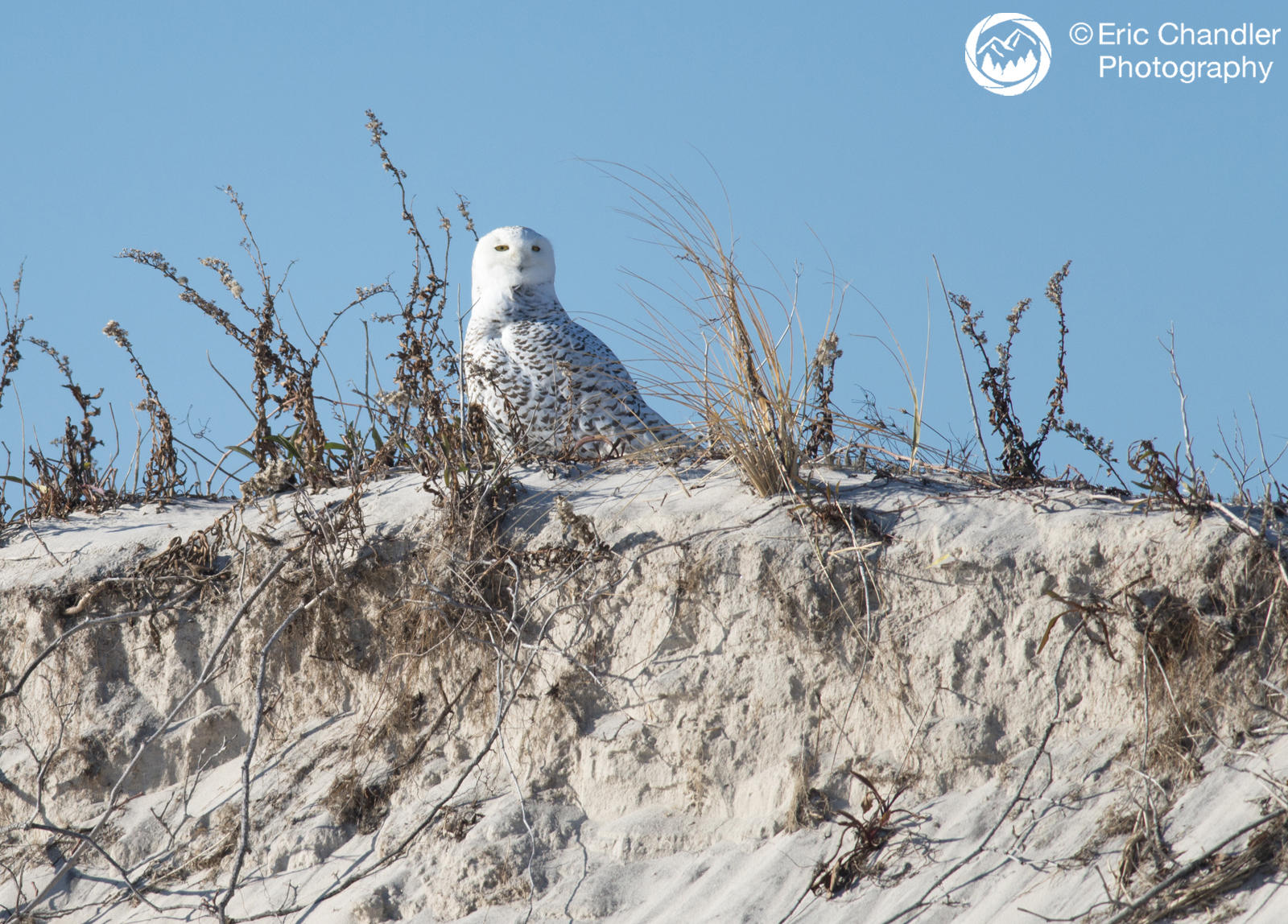
16457352488_13dd57d925_o

Why do snowy owls from the Arctic migrate to New Jersey? I was determined to photograph these beautiful creatures, as well as research why snowy owls return to Island Beach State Park (IBSP) every year.


The migratory snowy owl population has been spotted all along the coast of New Jersey. Popular hangouts include Sandy Hook, Island Beach State Park, Long Beach Island and even further south as all the Atlantic City. Snowy owls have also been spotted as south as North Carolina.


Unlike other raptors, snowy owls spend the majority of their time sitting, as they hunt for prey from the ground. Their unique ability to rotate their head up to 270 degrees allows them to sit in one spot and scan large land areas for prey. The sand dunes at Island Beach State Park provide owls with an opportunity to scan for prey from a seated position, while elevated. Extreme winds are also present on ISBP; the offshore and onshore winds produce some pretty wicked combinations, which give snowy owls that at home feel.


The only real threat to snowy owls at IBSP is human disturbance. Like all raptors, it is illegal to hunt or trap snowy owls. Even though they aren’t hunted with rifles, they are hunted by photographers, who may step on dunes. I can’t express how many times I’ve watched snowy owls take off due to people getting too close. I’m thankful that they still return instead of finding a new migration home. Occasionally, helicopters fly overhead and the owls just watch them in confusion.

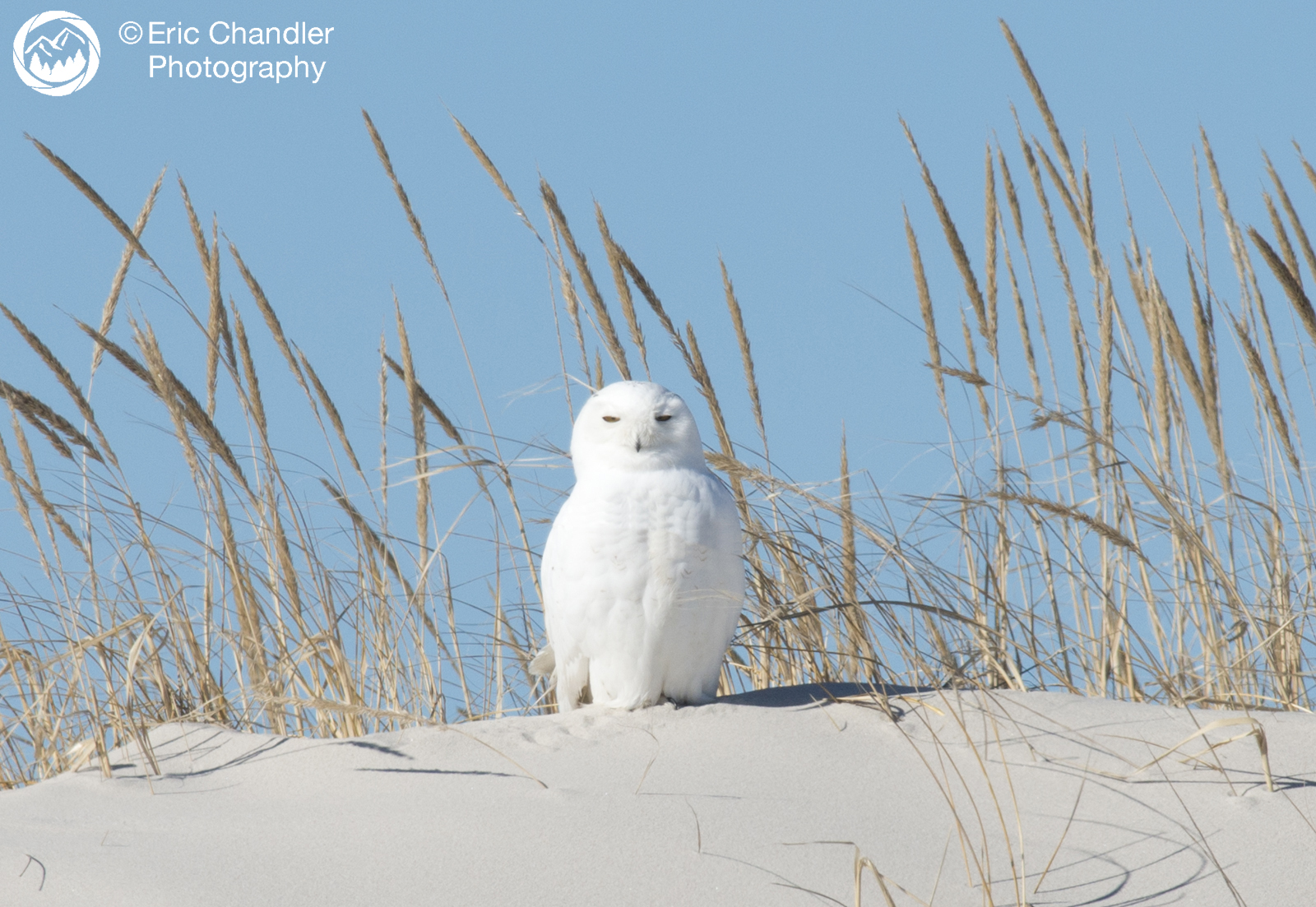
16458749439_88cf955d1d_o

Don’t be fooled by the size of snowy owls; these birds have wingspans up to five feet and reach up to two feet tall. With such great size, snowy owls are able to hunt ducks, geese, and even large waterfowl if need be. Small rodents such as lemmings and hares are their favorite, they consume over 1,600 lemmings a year! IBSP features a wide variety of prey on their local menu such as squirrels, mice and small birds. Unfortunately, in the three seasons I’ve spent studying and photographing snowy owls, I have yet to witness a snowy owl eat. Snowy owls are diurnal, which means they are active during both the day and night. It never clicked in my head, but if you think about it, during many months in the arctic there are 24 hours of sunlight, which explains why they are diurnal. During migrations, they mostly hunt late in the day.


Over the past three seasons of photographing the female snowy owl, I never spotted a male, until this year! To my knowledge, this is the first year the male has been spotted at IBSP. The female is very beautiful, with dark markings throughout her pure white feathers, and bright, cat-like yellow eyes. I could photograph her for days. As I was packing up after photographing the female one afternoon, I saw a massive heard of photographers with their bazooka lenses. They must have spotted something pretty important, so I had to see. Could there be two female snowy owls? Once I arrived, I could not believe my eyes, a pure white snowy owl. Now, I love using the term majestic when it comes to wildlife, it’s a very powerful adjective. This male snowy owl surpasses that adjective for sure. It’s so hard to put into words how beautiful this creature is when seeing it right before your eyes, in order to appreciate its beauty. From his ability to spin his head up to 270 degrees, to seeing him squint his yellow eyes at you. His beauty almost demands to have his photograph taken. The stunning glow of the solid white plumage reflecting off the sunlight was a sight to see. I believe he enjoyed the paparazzi coverage; he wasn’t disturbed at all and sat with us for hours. For weeks after that day, every photographer that I bumped into and had not seen him since.


On an early Sunday morning, after shooting the female owl for three-four hours with about twenty photographers, I decided to venture a little bit and search for the male. If you’re not familiar with Island Beach State Park, it is a narrow, 10-mile barrier island with only one road. It’s very easy to get in the car and drive from parking lot to parking lot, but your chances of missing the wildlife are extremely high (many people also acquire a driving on the beach permit.) For me, I love being out in sub 20 degree temperatures, admiring the peaceful empty beach and watching groups of ocean birds play tag with each other. After four miles of walking, hoping to spot the male owl, all of a sudden this huge white bird starts flying towards me. He literally landed on top of a dune right in front of me! I spent the remainder of my day with him and captured some the best photographs of my career.

16022625514_7377959710_o

Underneath multiple layers with the cold wind blowing in my face on a gorgeous beach without a cloud in the sky, the sun to my back, a prime photography setting, and not a person within miles of my view, this was my sanctuary. If you want to capture the award winning photograph, you must learn patience and be respectful of the wildlife. Don’t chase after wildlife, they will come to you when the time is right. If you didn’t get your opportunity today, you will in the future.


So, now we know why this pair of snowy owls enjoys migrating to Island Beach State Park each year. They have plenty of mammals and birds to prey upon, elevated sand dunes to hunt from with almost no threat from larger predators. A few years ago, there was a eruption of snowy owls that traveled the coastline. Researches said this rare abundance of snowy owls usually occurs every 30-40 years! This was due to a large population of lemmings in the Arctic, prior to migration seasons. I find it very interesting that in Paleolithic caves in France, drawings of snowy owls were created over 40,000 years ago. That makes them the one of the oldest recognizable bird species show in in pre-historical art in the world.


From drawings in a cave, to photographs that I capture, it’s pretty awesome to share the appreciation of snowy owls from thousands of years ago. They are beautiful creatures and I look forward to their return each winter. Snowy owls migrate back to their homes in the tundra in late March, early April. With only a few months left, get out there and search for snowy owls at your local beach, but please be sure to respect the wildlife, and stay off the dunes!


Eric Chandler is a Wildlife & Nature Photographer based in New Jersey.

Eric reports that roughly three-four weeks ago the pair of Snowy Owls mentioned in this post left Island Beach State Park. Recent reports of large amounts of snowy owls in Northern New York have led Eric to believe that the owls are heading back home!


Photos from the Field: Peregrine Falcon Nestbox Installation in Trenton

Meeting our goals…we can only hope!

by Ben Wurst, Habitat Program Manager

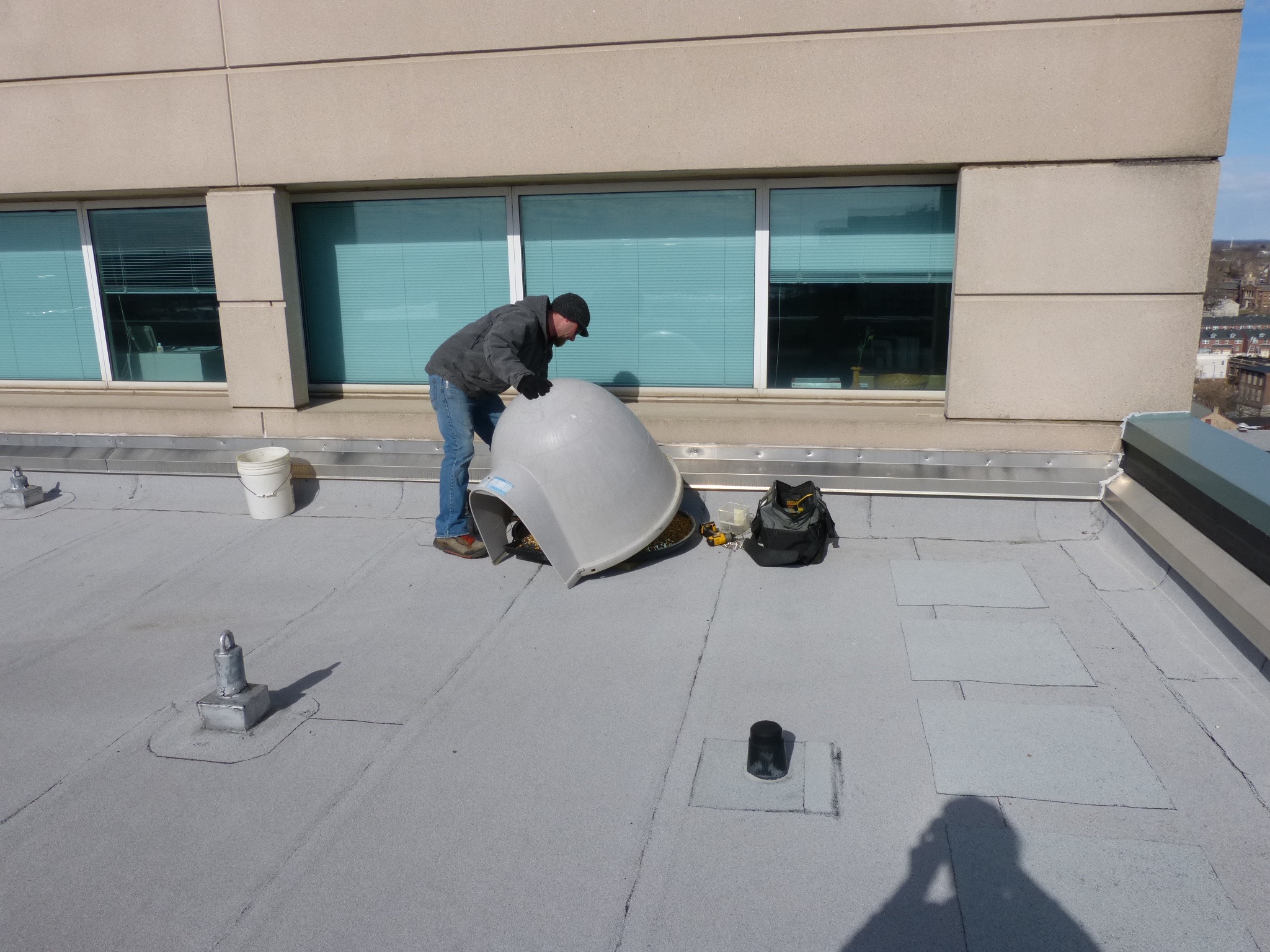
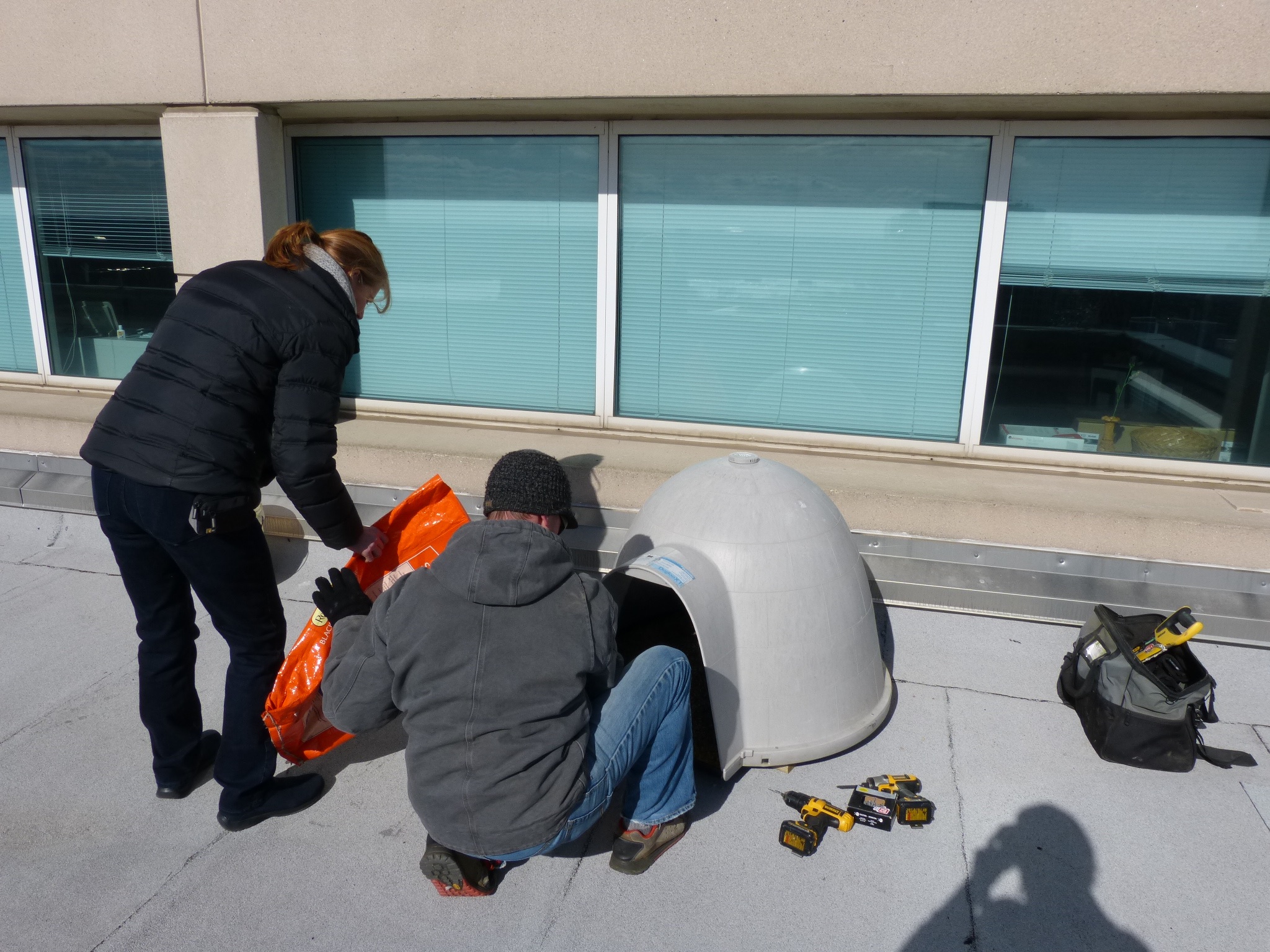
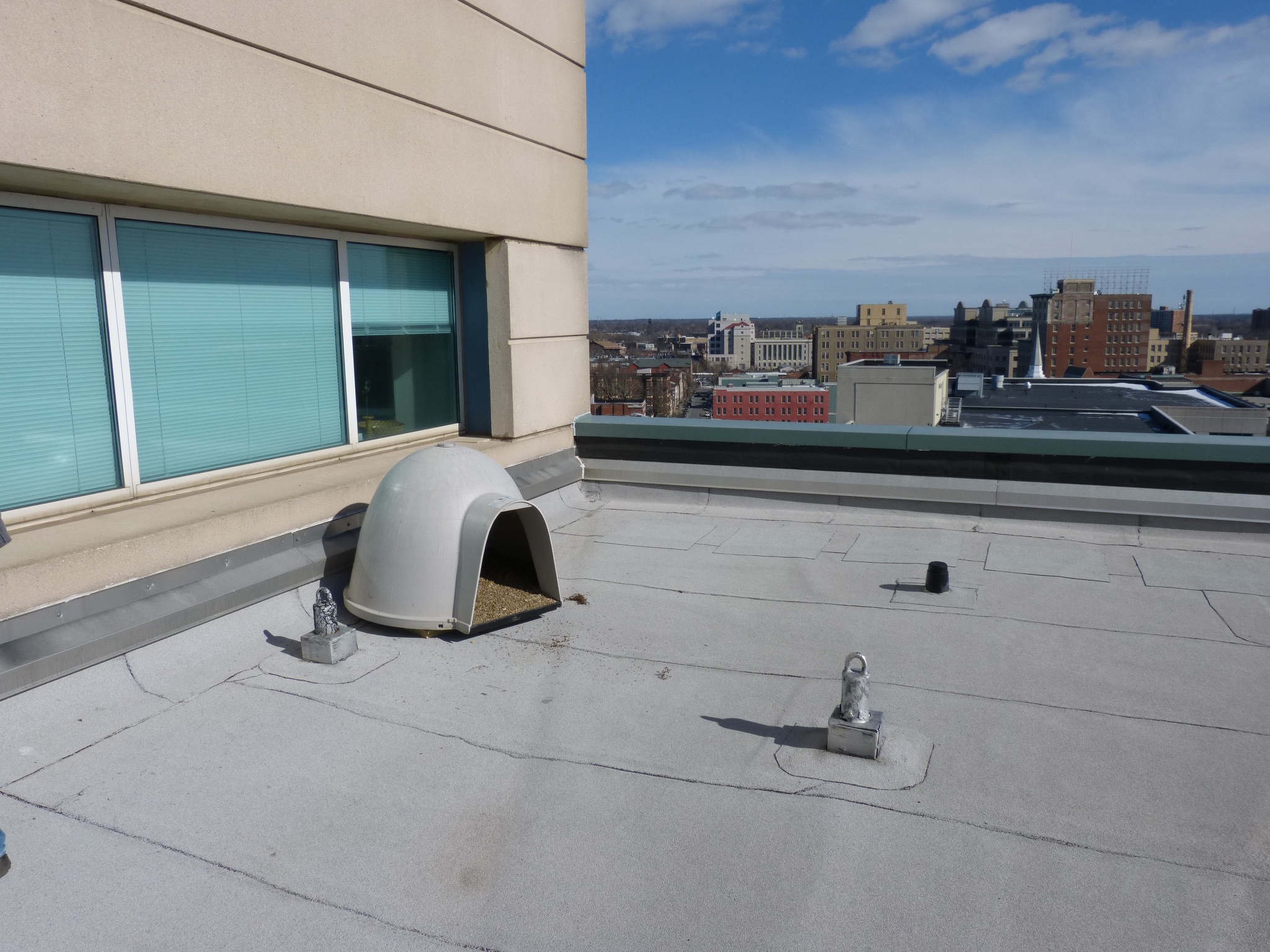
In 1993-94 six young peregrine falcons were released at 20 West State Street (Mary G. Roebling Building) in Trenton to help bolster the population of urban nesting falcons in the area. Currently the closest nest is 20 miles away at the Tacony-Palmyra Bridge (where they also have a camera at the nest). Twenty years later and we may finally get some nesting falcons in Trenton! It all started when Jean Bickal, a worker in the building, noticed a falcon that often perched on the building ledges. From there Kathy Clark, a Zoologist with New Jersey Division of Fish & Wildlife made a site visit and took measurements to see if we could fit a nestbox (dog igloo) out a window on the 10th floor, which also had a roof on it. It appeared one would fit so we setup a date to install the new nestbox.


Cities and urban areas actually provide suitable habitat for falcons. Urban areas usually have lots of ledges under bridges or on buildings for them to nest, and abundant prey, in the form of pigeons and other songbirds. In New Jersey we have three other pairs that nest on buildings in Jersey City, Elizabeth, and Atlantic City, plus pairs that nest on the Tacony-Palmyra, Walt Whitman, Betsy Ross, and Burlington-Bristol Bridges.


On February 5th we helped install a new nestbox on top of a roof at 20 W. State St. We’re hoping that the falcon seen that day will find a mate and use the nestbox to raise young. Fingers crossed that we get some good news soon!


Learn more:

First, we had to fit this "Dog Igloo" out the window. © Jean Bickal
After getting all our gear up to the 10th floor, we first had to fit this “Dog Igloo” out the window…  © Jean Bickal
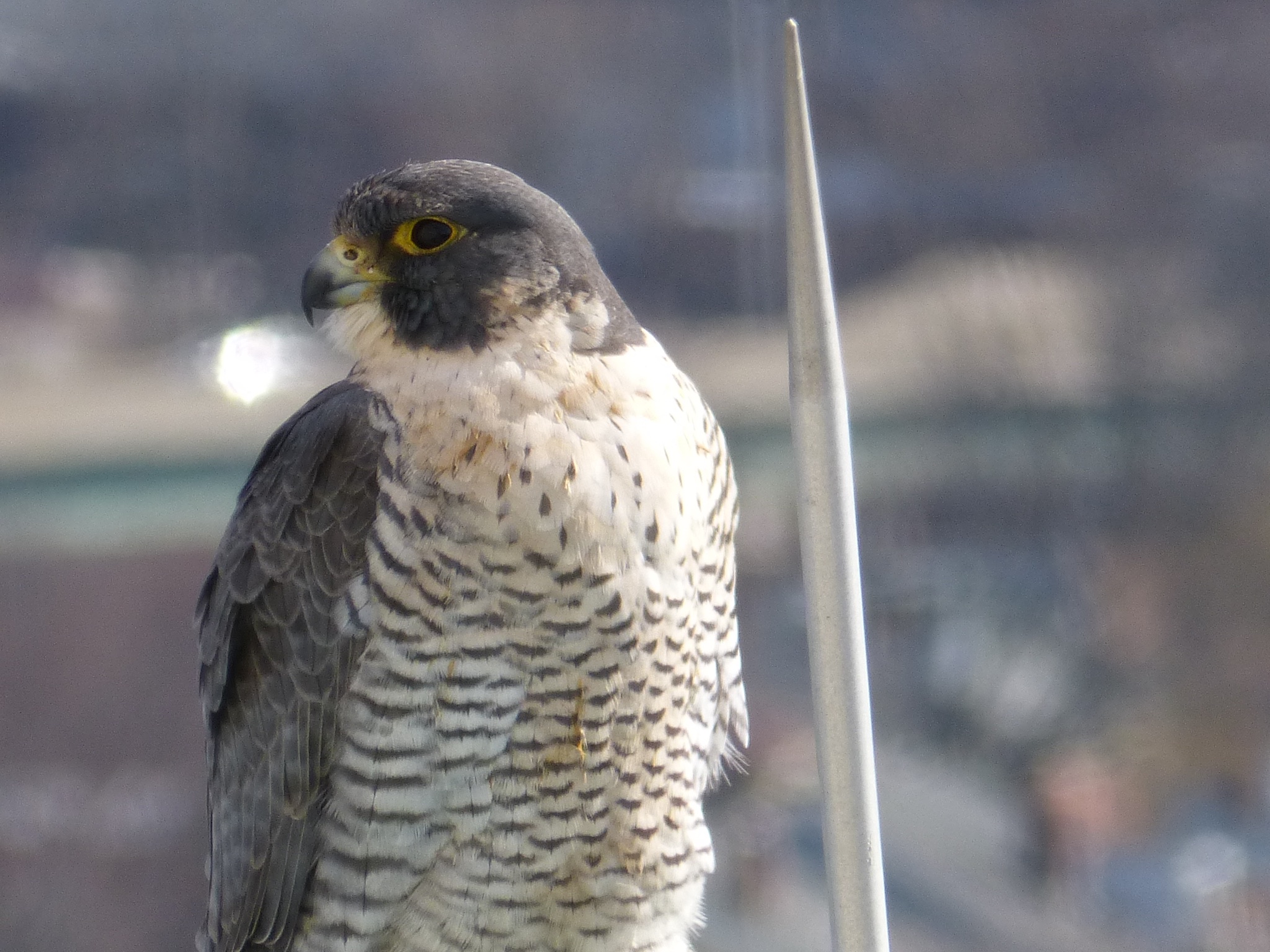
When we got here a female peregrine falcon was perched on the ledge of the 10th floor roof! © Jean Bickal
We spotted this beautiful young female peregrine falcon on the ledge! © Jean Bickal
 © Jean Bickal
After fitting the nestbox through the window we carried it over to where it would be installed, all as the falcon watched us! © Jean Bickal
Kathy Clark, ENSP Zoologist determines the best location for the nestbox while the adult female peregrine falcon watches us.  © Jean Bickal
Kathy Clark, ENSP Zoologist determines the best location for the nestbox. We moved slowly to not spook the falcon. © Jean Bickal
What a beauty! © Jean Bickal
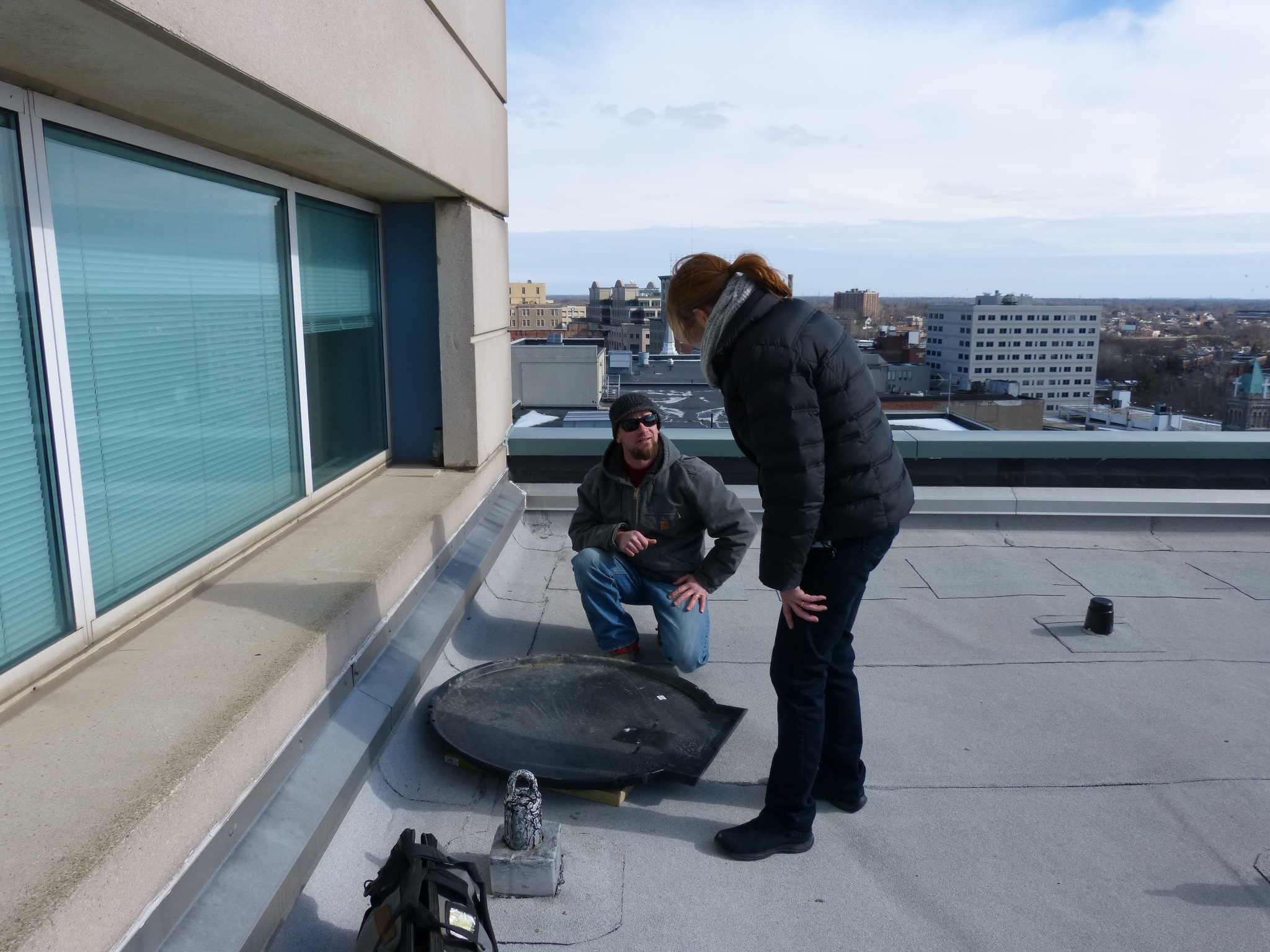
Ben and Kathy discuss mounting and placement options. © Jean Bickal
Ben attaches the base of the igloo to some wood to weigh it down. © Jean Bickal
Then gravel is added.  © Jean Bickal
Then gravel is added. © Jean Bickal
The top is installed and Ben mounts it to the base. © Jean Bickal
Can never have too much gravel! © Jean Bickal
While installing the box she perched on a nearby roof top. © Jean Bickal
The finished product! © Jean Bickal

Ben Wurst is the Habitat Program Manager for Conserve Wildlife Foundation of New Jersey.