“This is the best field trip ever!” shouted the fifth grader at the edge of the bay. Many of her Newark classmates agreed.
Brooke Sambol with Ann Street School Students
On a Thursday in June, fifth graders from Ann Street School of Newark came to Island Beach State Park for a day of nature education and fun! Sponsored by PSEG the program was part of Conserve Wildlife Foundation’s WILDCHILD urban initiative, which seeks to make the experience of and knowledge about nature accessible to children from urban environments.
The park is situated on roughly 3,000 acres of barrier island in Seaside Park, New Jersey. Its access to the ocean and Barnegat Bay, as well as the surrounding maritime thicket, makes it a prime location for aquatic and coastal education.
Ann Street School Students looking at a horsehoe crab
The program allowed the children to venture the bay and search for sea creatures like blue claw crabs and silversides while seining, hear a talk on ospreys given by CWF’s Maria Grace, examine bones and shells of the animals that live in the region, and visit the park’s nature center.
Students from Ann Street School at Island Beach State Park
As a CWF intern working in Island Beach State Park, it’s truly a joy to experience the natural beauty of the Jersey Shore along with the kids, and to help contribute to an environmental understanding for children who might not ordinarily have the opportunity. The excitement and happiness was evident on their faces when they got to examine up close the critters of the bay. Their willingness to participate in activities and answer questions about horseshoe crabs and moon snails was a testament to just how fun caring for the environment can be.
The day proved to be a great success! The children from Ann Street School got to experience and enjoy the natural beauty of Island Beach State Park, and we all learned more about this unique ecosystem from each other and from the land, itself.
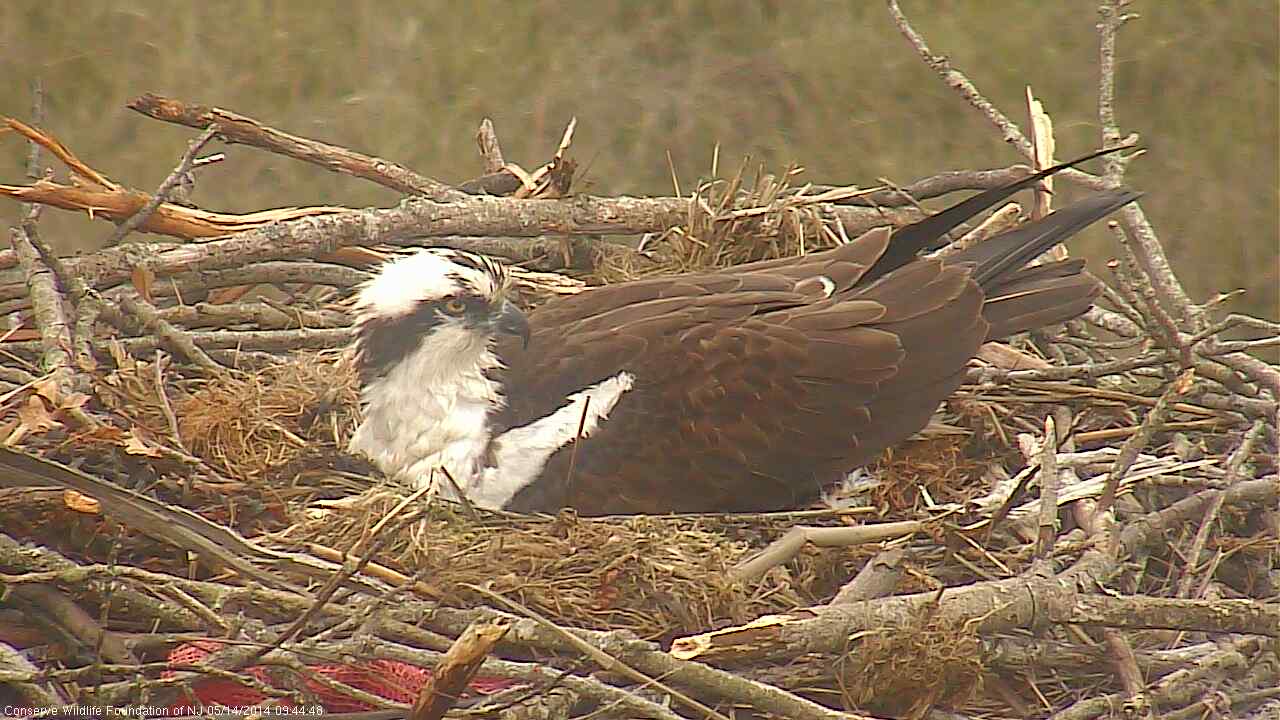
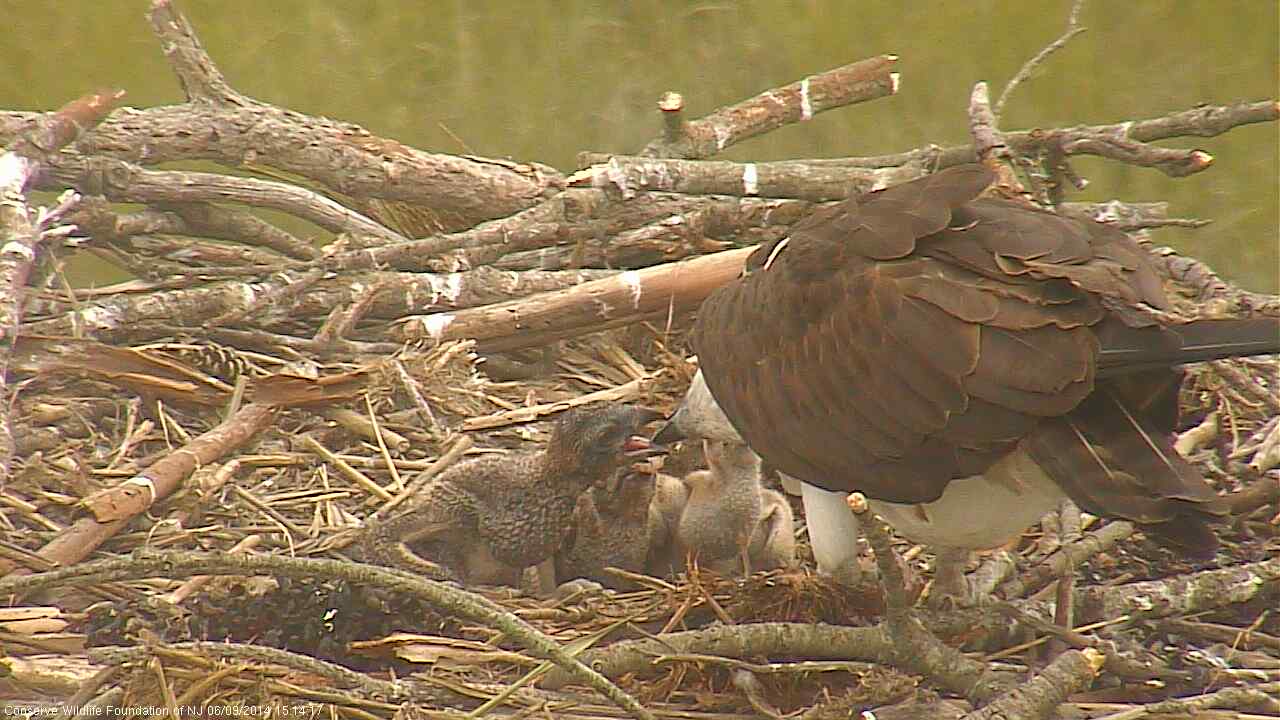
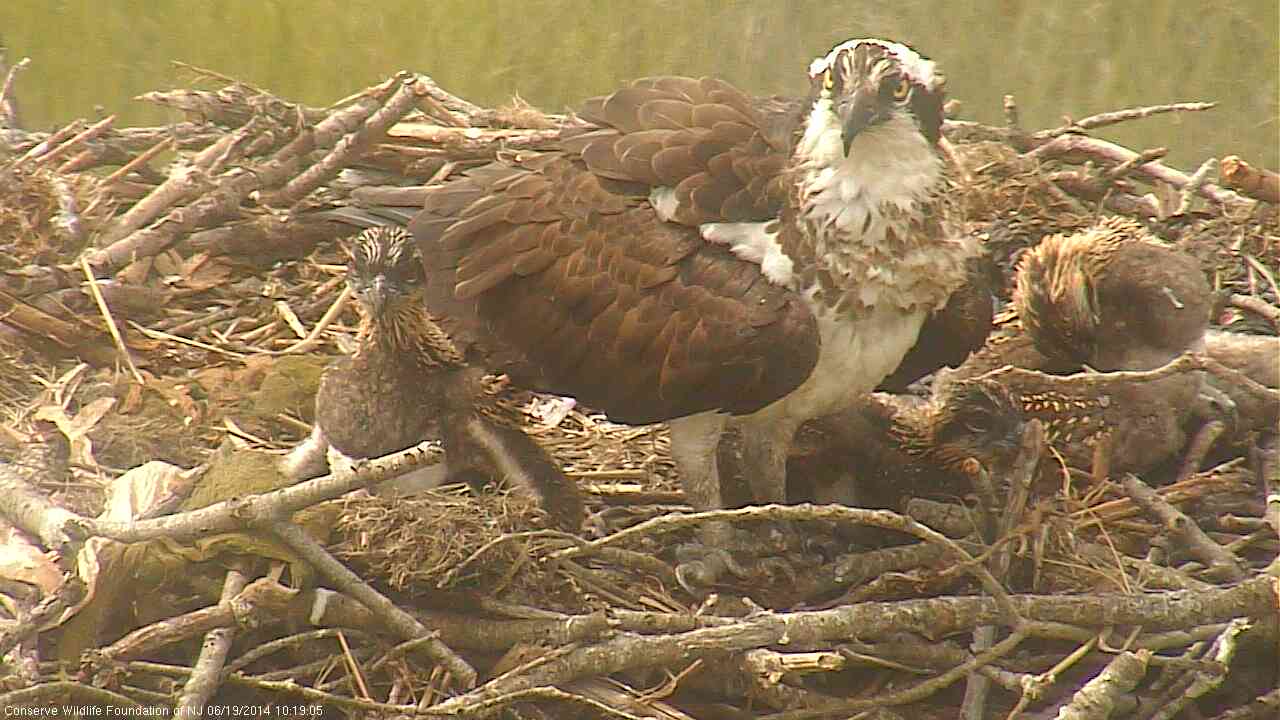
First egg was laid on April 19.They were incubated for 38 days, which is slightly more than the average of 35 days in NJ.The first two eggs hatched on May 29th, and the third on June 1.5-7 days old. Sleepy…Feeding time is non-stop with ospreys!Downy and body feathers start to emerge at 14 days old.Today marks 21 days old (for the oldest two young). They’re now very active in the nest and like to check out all the cool nesting material mom & dad used in the nest.
Middlesex County winner Gabrielle Bailey learned about the short-eared owl.
Trenton, New Jersey – Conserve Wildlife Foundation of New Jersey (CWF) honored 21 fifth grader students from every county in the state for their award-winning artwork and essay on the state’s endangered and threatened species. The 11th annual Species on the Edge contest drew over 2,000 entries from throughout the state.
Students were asked to draw or paint one of New Jersey’s 83 at risk species and write a personal essay about how the animal became endangered and what we can do to help protect it.
“Each one of these exceptionally talented students has told a personal and compelling story that illustrates just how important it is to protect the at-risk wildlife that calls New Jersey home,” says David Wheeler, Executive Director of Conserve Wildlife Foundation of New Jersey (CWF). “Their vivid, inspiring artwork reveals the singular biodiversity that New Jersey offers and how our youngest generation can utilize their creativity to connect with the world around them.”
The winners were honored at an awards ceremony this week held at the New Jersey Education Association in Trenton, New Jersey. Contest sponsors include the New Jersey Education Association, PSE&G, GAF, Atlantic City Electric, Church & Dwight, and ShopRite Supermarkets.
This year’s entries ranged from the Golden-winged warbler, a state threatened songbird, to the Bog turtle, a federally endangered reptile, to the Bobcat, a state endangered mammal. Other animals profiled by the winning fifth graders included birds such as the Piping plover, amphibians like the Pine Barrens treefrog and insects such as the Silver-bordered fritillary butterfly. The winners include:
Jordyn Robinson, Sicklerville, Atlantic County
Ariela Alfonso, Rivervale, Bergen County
Ava Vaughn, Lumberton, Burlington County
Mansi Patel, Bellmawr, Camden County
Dominic Vitiello, Cape May Court House, Cape May County
Maritza Trejo, Port Norris, Cumberland County
Claryssa Martinez, Newark, Essex County
Anna Kilpatrick, Mantua, Gloucester County
Marena Faltas, Jersey City, Hudson County
Megan Eastman, Stockton, Hunterdon County
Sophia Phelan, Laurenceville, Mercer County
Gabrielle R. Bailey, Princeton Junction, Middlesex County
Trevor Crochet, Monmouth Beach, Monmouth County
Terrence Obuah, Hackettstown, Morris County
Caden Schroeder, Jackson, Ocean County
Daniel A. Midence, Clifton, Passaic County
Lauren Radi, Somerville, Somerset County
Logan Hanley, Lafayette, Sussex County
Olivia Qiu, Roselle Park, Union County
Marigold Green, Blairstown, Warren County
For more information about Species on the Edge, visit here.
Three eggs have hatched at the Osprey Cam nest at Forsythe NWR in Oceanville.
It’s been a hectic spring (to say the least). I’ve been swamped with field work since early April. Time has been flying by!!
The osprey pair nesting at the nest with our Osprey Cam on it has successfully hatched three young. The eggs hatched at ~37 days and in the order they were laid. Ospreys exhibit asyncronous hatching, which helps make sure that only the strongest young survive to fledge. In years with a good supply of fish then all young will survive. When there is harsh weather or a lack of prey (fish) then the oldest and strongest will survive, this is often called natural selection. The last two catches, from the male, have been very large white perch. There has been so much food that the young all get their fill. Sometimes the runt won’t get fed right away, but if he peeps a lot and begs for food, then he will get his share too.
Regarding the trash in the nest:
We are watching the plastic in the nest and will take action if necessary to remove it. Our policy is only to act when a bird is in a life threatening situation. Us entering a nest creates disturbance which might cause even more harm (more so when a bird is potentially entangled). Extreme care (and patience) must be taken in these types of situations. Trust us. We’d LOVE to not see the trash in the nest, BUT this is a teachable moment for all who are watching the Osprey Cam. Please share our post on social media and encourage your friends to pick up the next piece of litter they see or to not release balloons! If we all act, then we can all make a difference!
With Memorial Day Weekend upon us, summer is unofficially here for New Jerseyans. That means plenty of tourists enjoying shore, sand, surf, and sun – but it also means other types of annual summer visitors to our coast: bottlenose dolphins, sea turtles, and whales. However, what may be inspiring sightings from a healthy distance can become tragic encounters when marine animals become stranded or entangled in nets.
This story marks the fourth of five blog stories spotlighting New Jersey’s marine mammals and sea turtles – and educating people how to help animals in need, rather than make a bad situation worse.
Part 1, on Monday, revealed the bottlenose dolphin die-off striking the Eastern Seaboard. Part 2, on Tuesday, featured a Question-and-Answer on the dolphin mortality event with NOAA’s MendyGarron. Part 3, yesterday looked at how people can safely help stranded marine mammals without making the mistake of being a “hero”. And Part 5, tomorrow, will reveal the importance of reporting sightings – both for live or dead marine mammals.
MARINE MAMMAL & SEA TURTLE WEEK: Sea turtles navigate a dangerous path, from entanglements to cold-stunning
By Sara DeAngelo, Conservation Intern
Over 100 first responders along the coast of New Jersey attended Conserve Wildlife Foundation’s marine mammal stranding workshops this past month. Speakers and interactive discussions educated the first responders on how to handle a marine mammal or sea turtle stranding.
The term “stranding” is used for sea turtles and marine mammals that are found along the beach dead or alive. Their death or injury may be resulting from a predator, parasites, pollution, entanglement, etc. In most stranding cases, the cause of the animal stranding itself is unknown. Determining the cause of the animal stranding will help us understand what is going on in the ocean that may be harmful to certain populations.
Sea turtles, however, face a unique set of challenges. We have four species of sea turtles that may be found in New Jersey waters during the summer. Loggerheads are the most common, while green sea turtles and Atlantic leatherbacks – massive creatures weighing as much as a small car – are less frequently seen but not uncommon. Kemp’s Ridley sea turtles are the rarest visitors.
Most of these sea turtles come to New Jersey during the summer months and enjoy the warmer waters. Yet when our seasons change and the waters cool, some sea turtles may lag behind rather than returning south for warmer waters. These turtles can face “cold stunning”.
In colder waters, sea turtles do not have the capability of warming their own bodies. If a turtle is cold stunned, it looks as if it is dead because its heart rate decreases, it becomes lethargic, circulation decreases, and it may be in shock or have pneumonia.
This condition can even result in a common mistake of a passerby or first responder believing a turtle is dead, when it is actually just “cold-stunned”. Unless the sea turtle clearly looks like it has been dead for a while, it is best to report the turtle to a marine mammal and sea turtle stranding hotline.
A green sea turtle. Photo by Cordell Brown.
Sea turtles can also get entangled in fishing nets. At the Conserve Wildlife Foundation workshops this month, first responders were informed to, upon sighting of an entangled or stranded animal, immediately call the Marine Mammal Stranding Center located in Brigantine, NJ, by calling 1-609-266-0538. They could also contact NOAA’s Northeast Region Marine Mammal and Sea Turtle Stranding and Entanglement Hotline by calling 1-866-755-6622.
Boaters who encounter an entangled sea turtle should try to remain near the turtle until help arrives if possible. On shifting seas, it could be hard for the expert responding to the call to locate the animal without the initial person spotting it standing by to direct them there.
One warning was made very clear in the workshop: boaters should never get into the water with a sea turtle or stranded marine mammal. It is extremely dangerous for both the responder and for the animal.
Should the sea turtle be on the beach itself, other tips are helpful for the first responders. While waiting for the trained rescue staff, the first responders were urged to secure the scene, try to keep people at least 100 feet away, and not to touch the animal. Keeping curious beachgoers distant from the animal will minimize stressing out the animal even more. The responders were told that calling the local police department may help enforce the directions to keep back from the animal.
A Kemp’s ridley turtle. Photo courtesy of Jenkinson’s Aquarium.
With Memorial Day Weekend upon us, summer is unofficially here for New Jerseyans. That means plenty of tourists enjoying shore, sand, surf, and sun – but it also means other types of annual summer visitors to our coast: bottlenose dolphins, sea turtles, and whales. However, what may be inspiring sightings from a healthy distance can become tragic encounters when marine animals become stranded or entangled in nets.
This story marks the third of five blog stories spotlighting New Jersey’s marine mammals and sea turtles – and educating people how to help animals in need, rather than make a bad situation worse.
Part 1, on Monday, revealed the bottlenose dolphin die-off striking the Eastern Seaboard. Part 2, yesterday, featured a Question-and-Answer on the dolphin mortality event with NOAA’s Mendy Garron. Part 4, tomorrow, will investigate the fascinating condition of cold-stunned sea turtles. And Part 5, on Friday, will reveal the importance of reporting sightings – both for live or dead marine mammals.
MARINE MAMMAL & SEA TURTLE WEEK: Encounter a stranded marine mammal? Here’s how to help (Hint: Don’t try to be a hero!)
By Jennifer Dexter, Conservation Intern
Last year, over 150 marine mammal strandings occurred in New Jersey, ranging from humpback whales to harbor seals.
In order to better prepare first responders and the general public for such incidents, Conserve Wildlife Foundation of NJ hosted the NJ Marine Mammal Stranding Workshop. For me, the biggest take home message I retained from attending this workshop was a clear one: “Don’t be the hero!”
Keeping people and their pets away from stranded marine mammals is for their safety as well as the animal’s. Photo by Mike Davenport.
Everyone has good intentions when they attempt to ”rescue” a marine mammal stranded on the beach, but often you may be doing more harm than good. Usually, there is a good reason why the animal washed ashore, whether it be injuries or illness at fault. If you simply return the animal to the ocean, it’s likely that they will just become stranded again.
The same goes for animals in danger at sea, such as a turtle entangled in fishing nets. DO NOT go all gung-ho by jumping in the water in attempt to cut the turtle free, as you are putting the animal and yourself in danger.
Close human interaction will put the already stressed animal in defense mode. Sea turtles, such as the leatherback, can weigh more than 1,000 pounds and one thrash of their flipper can leave a human severely injured. In addition, a human can just as easily become entangled in the netting so it’s best to remain on your boat, safe out of harm’s way.
The best and most helpful thing a witness can do in New Jersey is to immediately call the Brigantine Marine Mammal Stranding Center (609-266-0538) and provide the following information: description of the animal, photograph from a distance, location, and description of any injuries.
Most importantly, do not touch, feed, pour water on, or cover the animal. Stand by until a MMSC staff member or local police is dispatched. From that point on, it will be up to the MMSC and the authorities to assess what measures need to be taken based on the animal’s needs. You can walk away knowing you did the right thing – and helped the animal as much as you could.
With Memorial Day Weekend upon us, summer is unofficially here for New Jerseyans. That means plenty of tourists enjoying shore, sand, surf, and sun – but it also means other types of annual summer visitors to our coast: bottlenose dolphins, sea turtles, and whales. However, what may be inspiring sightings from a healthy distance can become tragic encounters when marine animals become stranded or entangled in nets.
This story marks the first of five blog stories spotlighting New Jersey’s marine mammals and sea turtles – and educating people how to help animals in need, rather than make a bad situation worse.
Part 2, on Tuesday, will feature a Question-and-Answer on the dolphin mortality event with NOAA’s Mendy Garron. Part 3, on Wednesday, will look at how people can safely help stranded wildlife. Part 4, on Thursday, will investigate the fascinating condition of cold-stunned sea turtles. And Part 5, on Friday, will reveal the importance of reporting sightings – both for live or dead marine mammals.
MARINE MAMMAL & SEA TURTLE WEEK: Dolphin die-off kills over 1,000 bottlenose dolphins along Atlantic coast
By David Wheeler, Executive Director of Conserve Wildlife Foundation of New Jersey
At least 136 bottlenose dolphins became stranded in New Jersey over the past year. Most of the strandings were fatal, and many dolphins showed lesions and other infections. Over 1,200 dolphins have stranded along the entire Eastern seaboard – a situation bleak enough that the National Oceanic and Atmospheric Association (NOAA) declared an Unusual Mortality Event.
Bottlenose dolphin. Photo by Cordell Brown.
The cause is Cetacean morbillivirus. About half of coastal migratory bottlenose dolphins are affected, leading to this stock’s federal classification as ‘Depleted’ under the Marine Mammal Protection Act. Bottlenose dolphins were already considered species of special concern in New Jersey, and this only further threatens their population.
In stark contrast with the 136 dolphins stranded in New Jersey since last July 1, the average number of strandings in the state for a given year is 10.
The last major morbillivirus mortality event among bottlenose dolphins occurred in 1987-88, which ultimately helped lead the U.S. Congress to establish the Marine Mammal Health and Stranding Response Program.
The dolphin virus was among the issues discussed atConserve Wildlife Foundation’s inaugural marine mammal stranding workshops last month at Monmouth University and Richard Stockton College.
Speakers at our recent stranding response workshops led interactive discussions to educate first responders on how to handle marine mammal and sea turtle strandings. Jen Zebrowski from Jenkinson’s Aquarium educated responders on how to identify some 13 species of marine mammals and 5 sea turtles they might encounter on the New Jersey coast. Mendy Garron, Kate Sampson and Scott Doyle from NOAA explained what a responder should do once they encounter the animal, how to make the situation safe, and the legal obligations facing first responders with a stranding.
Now we enter this summer hoping that cetacean morbillivirus will not claim nearly as many dolphins this year. Keep your fingers crossed!
Jen Zebrowski from Jenkinson’s Aquarium providing an overview of NJ’s marine mammal & sea turtle species at CWF’s recent stranding response workshop at Stockton College. Photo by Stephanie Feigin.
Conserve Wildlife Foundation’s inaugural Barnegat Bay Business Forum brought together a diverse mix of businesses, government representatives, and conservation advocates to discuss how to strengthen the watershed’s recovery. An article by the Asbury Park Press captures many of the challenges faced by the Barnegat Bay.
“Absolutely anyone can be a birder.” says Ben Kingsley in the new movie, A Birder’s Guide to Everything, directed by Rob Meyer, a coming of age comedy about teenage bird watchers.
This main-stream movie is an important public engagement tool to raise awareness for the conservation of birds and to hopefully excite some people into picking up a set of binoculars and start the addicting hobby of bird watching.
The Fledging Birders Institute will be hosting a special screening and meet the director event on Thursday, April 24th at the AMC Deptford 8 Theatre in Deptford, NJ beginning at 6:30 pm.
More info, and to purchase tickets, can be found here.
Catching some morning sun!Empire state buildingThe female outside of the nestbox.View from the pinhole camera inside the nestbox.100% zoomed in at 40xNap time!!







 “Absolutely anyone can be a birder.” says Ben Kingsley in the new movie,


