A Second Chance At Life

CWF Biologist and Volunteers Find Foster Home for Osprey Chick

by Meghan Kolk, Volunteer

On July 6, I had the opportunity to participate in an osprey banding project with Larissa Smith (Wildlife Biologist/Volunteer Manager) and her husband Matt, who have been banding ospreys for many years. I was thrilled that Larissa invited me to tag along because I knew that it would be an amazing experience, but I had no idea it would be a day that I would never forget. I was expecting to get some good pictures and maybe even get to hold an osprey, but we came upon a situation that would make the day so much more rewarding.

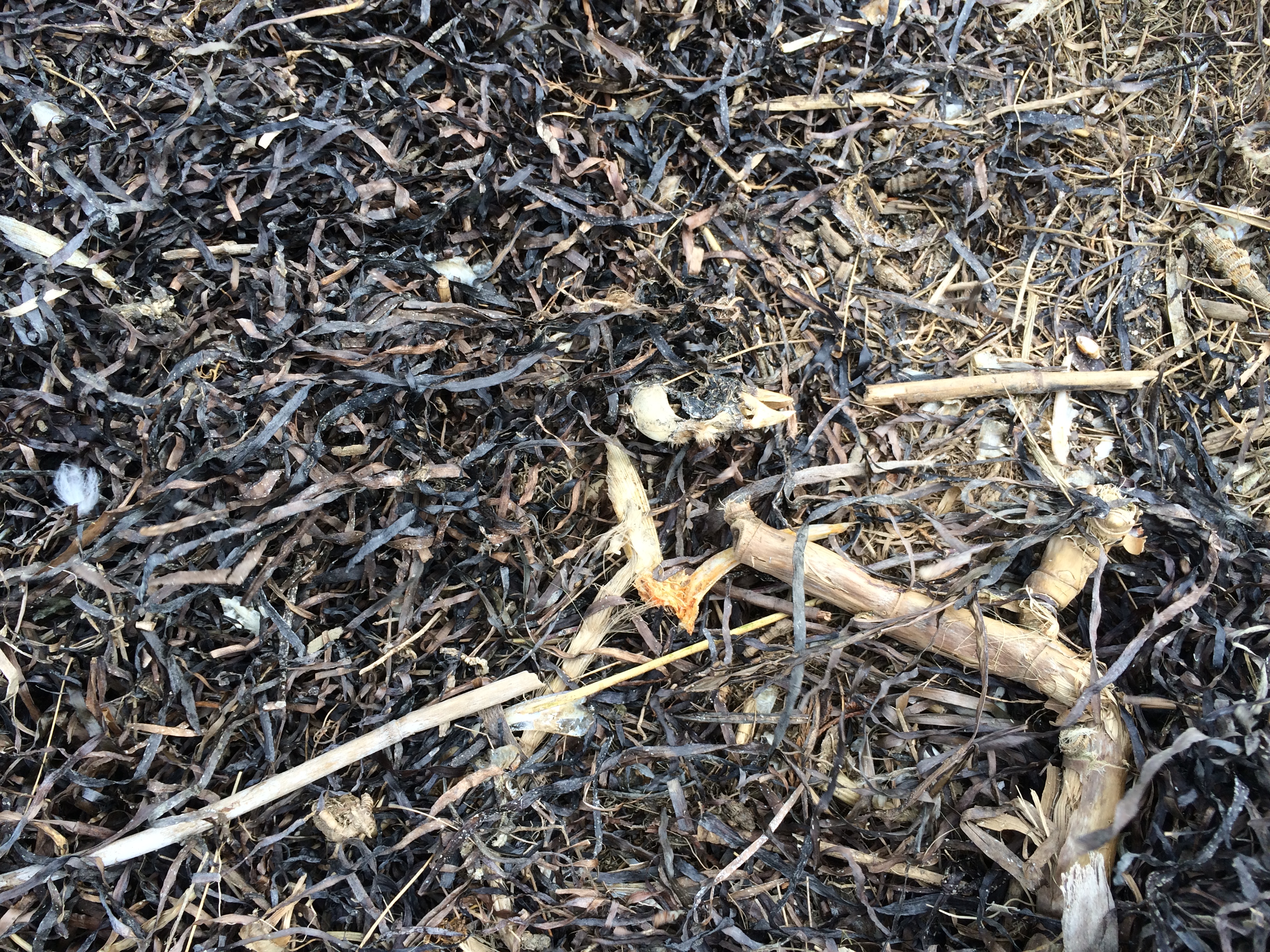
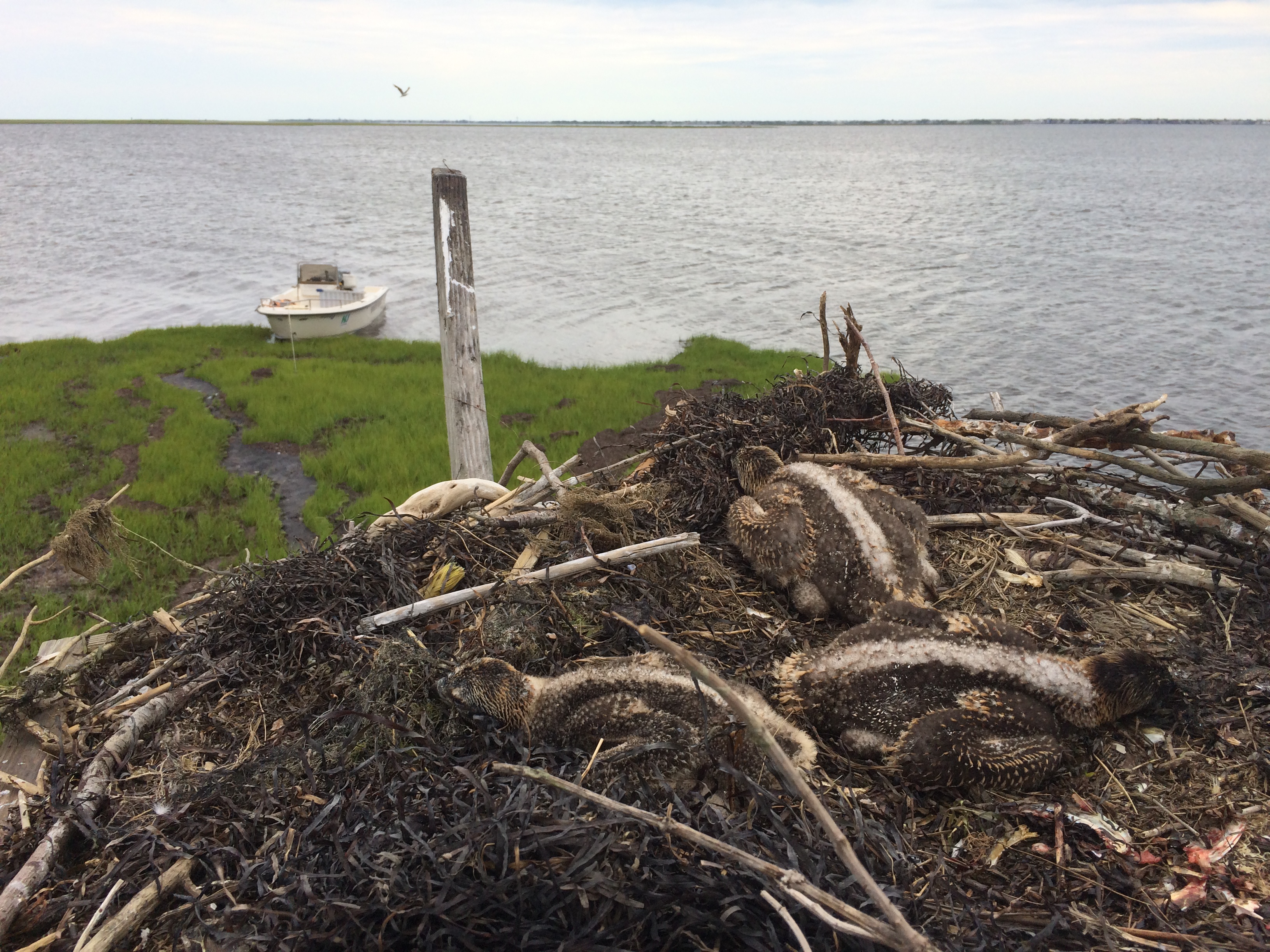
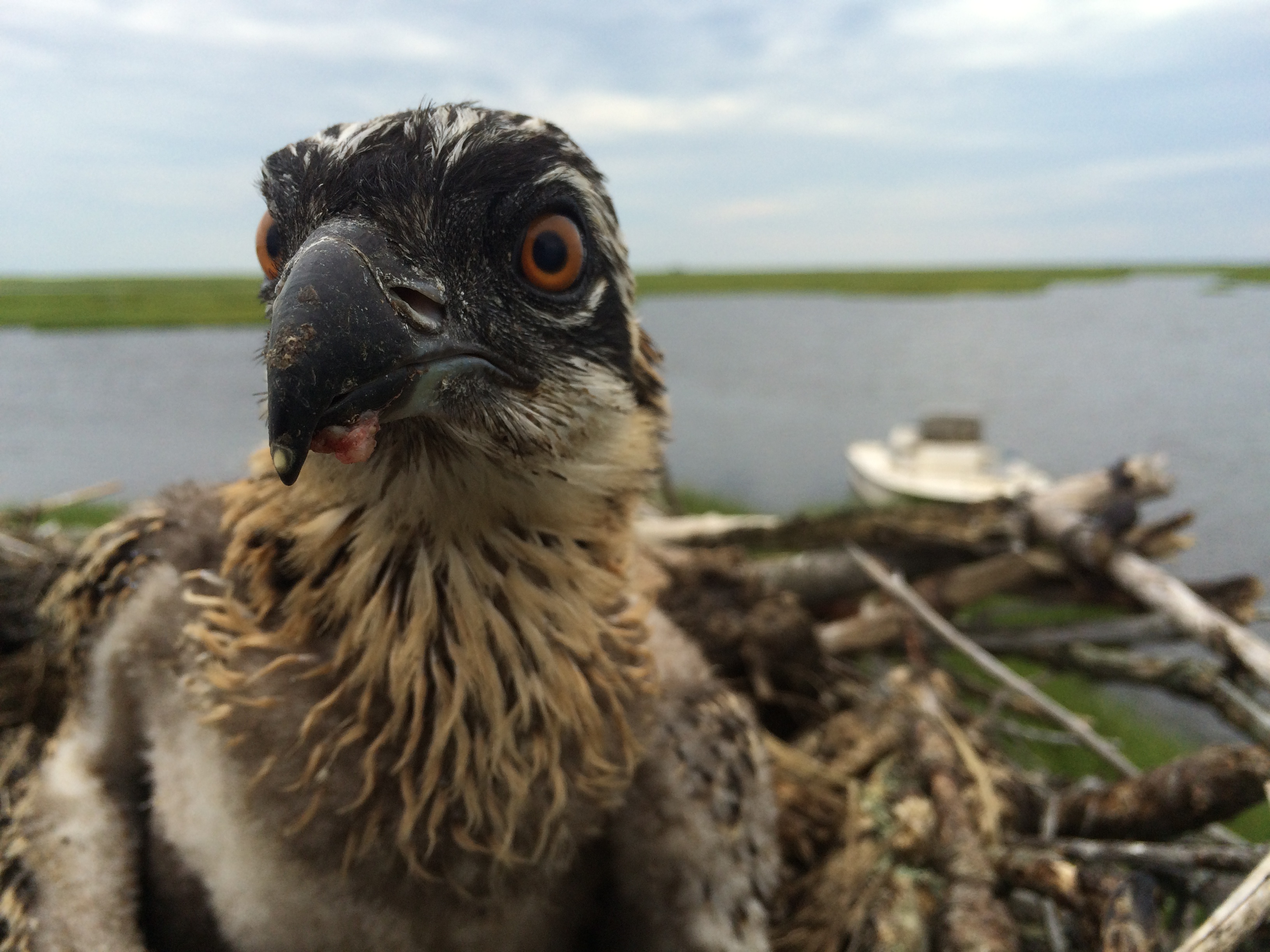
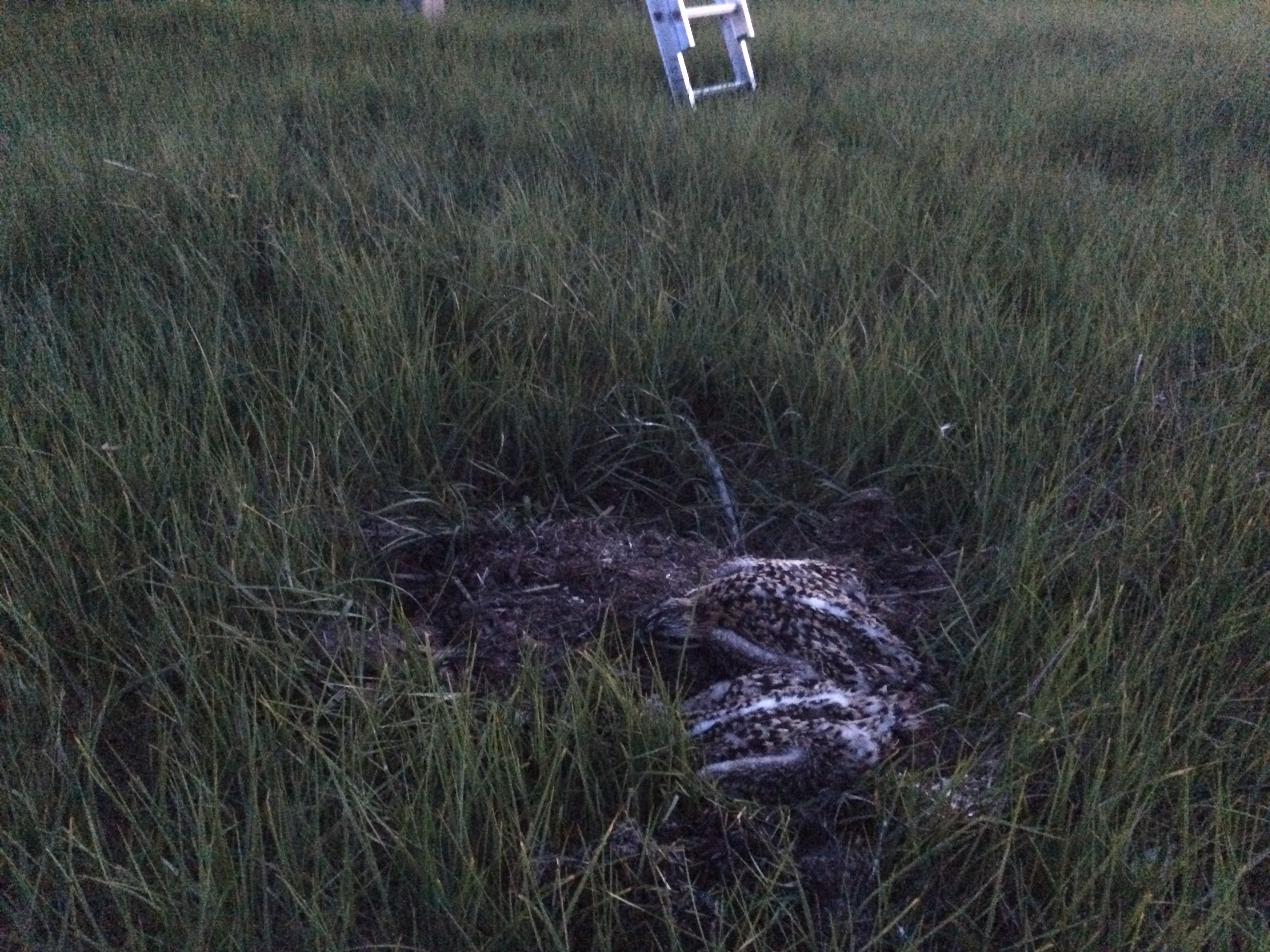
osprey chick found on ground July 6th, 2015, Avalon @ M. Kolk
Osprey chick found on ground July 6, 2015, Avalon Photo by M. Kolk

About half way through the day as Matt approached an osprey nest and got ready to climb up, he noticed a young osprey chick lying on the ground below the nest. It appeared weak and dehydrated, but uninjured. The nest above contained two older and larger chicks, and it became evident to us that the young runt was most likely pushed out of the nest by it’s competitive siblings. Our first thought was to put the chick back in the nest, however we knew that it would ultimately suffer the same fate, especially in it’s weakened condition. Our second thought was to take it to a rehabilitation facility, but since it did not appear to be injured we thought it would be best to keep it in the wild if possible. This brought us to our third option…find a foster home.


Meghan with chick@ L. Smith
Meghan with chick Photo by L. Smith

We offered the chick some much needed water and carried it back to the boat. I had the pleasure of holding and comforting our chick on the boat ride as we searched for the perfect nest. We came upon an empty nest holding three eggs which never hatched. The parents were lingering nearby and still seemed interested in parenting. We decided to give it a try. I was really enjoying my time with the chick and quickly grew attached, but I knew we had to get it into the care of some adults as soon as possible. Reluctantly, I climbed the ladder and placed the chick into it’s new home and said goodbye. We got back in the boat and watched from a distance to observe how the adults reacted.

Meghan placing chick into foster nest@ M. Tribulski
Meghan placing chick into foster nest Photo by M. Tribulski


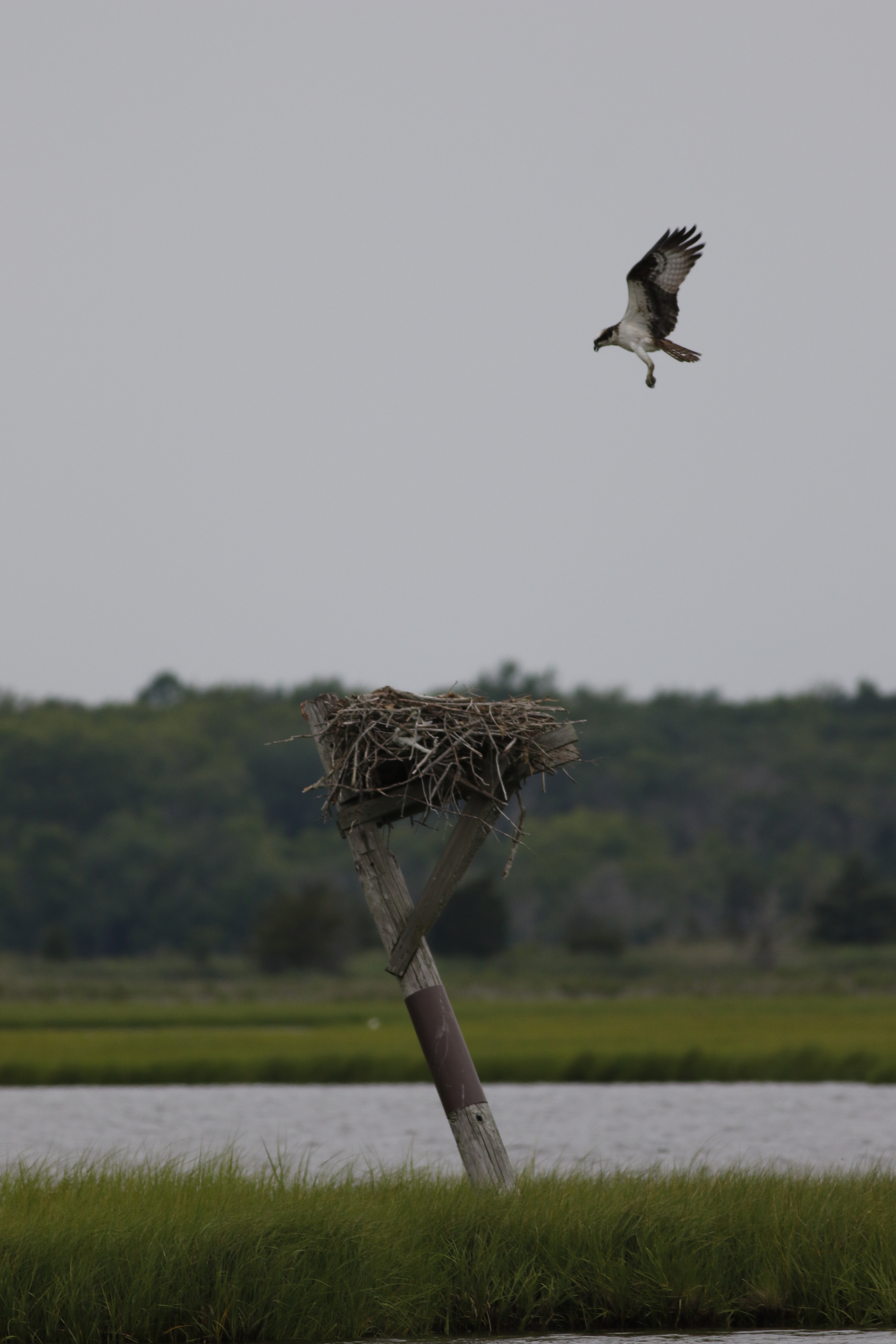
One adult circled the nest many times observing from a distance. After several minutes it landed on the edge of the nest to get a closer look. I can just imagine the surprise and confusion it must have felt, but I was hoping that it was happy to see the little bundle of joy. After a few more minutes the partner joined in the nest, and we continued on with our banding to give them a little time to adjust.


Before finishing for the day, we went back to check on the nest. We were relieved to see both foster parents in the nest, and already protecting their adopted chick by swooping at us as we got close. It seemed as though they had already accepted the chick as their own.


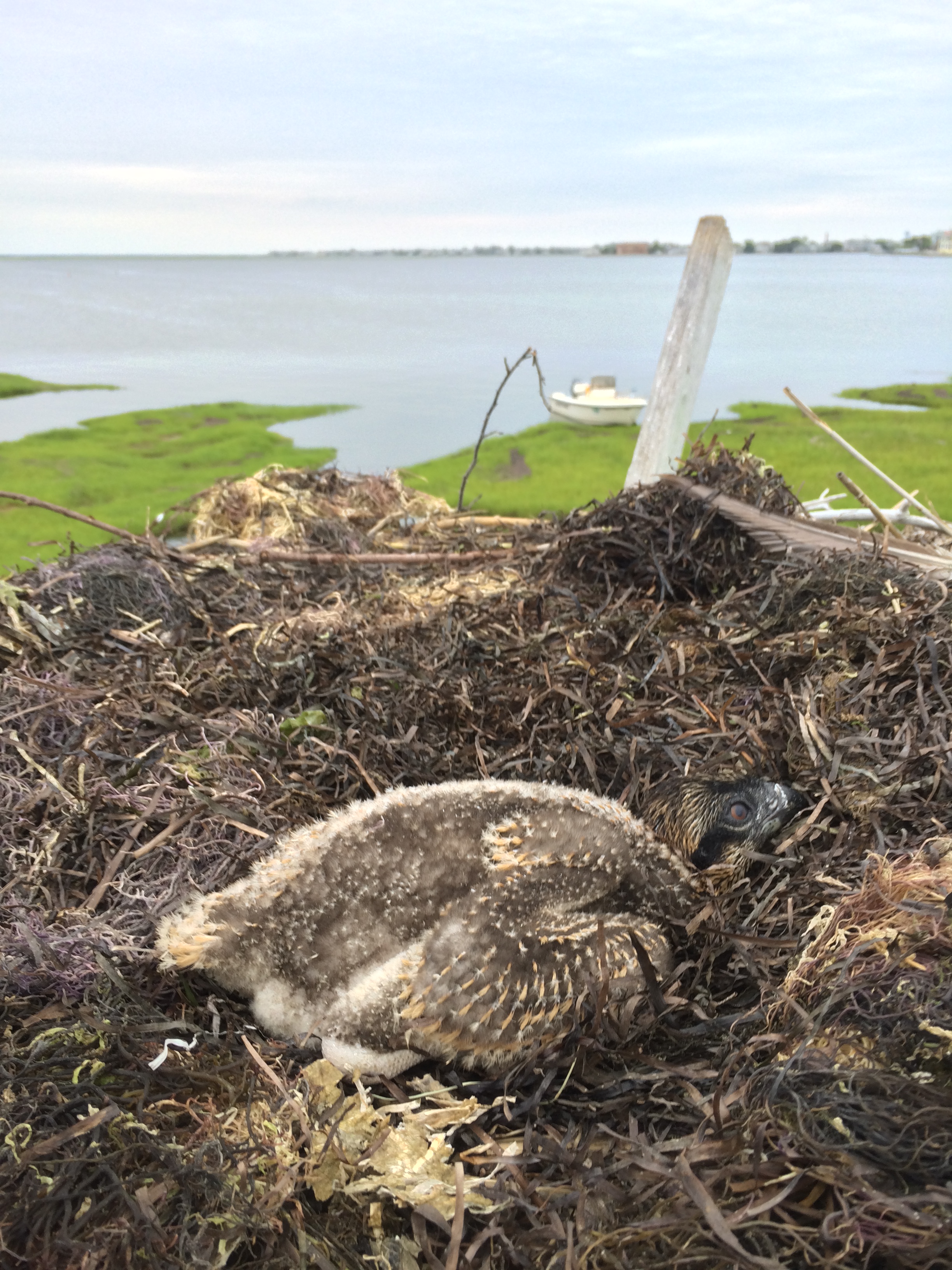
Two days later Matt went back to the nest to check on the foster family. The chick looked stronger and had a full crop. This made it clear that the parents were feeding it since the crop was completely empty on the day we found it. About three weeks later, at the end of July, he checked on the nest once more and found our foster chick in good health and growing. I was so elated to hear the news and to know that our rescue mission was a success and this wonderful bird got a second chance at life.

Chick in foster nest July 29th, 2015 @ M. Tribulski
Chick in foster nest July 29, 2015 Photo by M. Tribulski

This experience was so rewarding for me because even though we had to intervene, we were able to let the natural instinct of the osprey take over to raise this abandoned chick in need. I now have an even greater respect for ospreys because they will care for young that are not their own. This is an important characteristic for a threatened species to have in order to keep the population growing.


This particular chick experienced both the competitive instincts of it’s siblings fighting for survival, and also the protective instincts of it’s foster parents who put all of their energy into raising it. I feel so thankful to have been a part of this success story, and it reinforces all the reasons that I will continue to be a volunteer. Being able to make a difference even to just one individual is all the reward I need.


Learn more:


Meghan Kolk is a Volunteer for the Conserve Wildlife Foundation of New Jersey.

Project RedBand continues on Barnegat Bay

92 Ospreys Enlisted in Citizen Science Based Re-sighting Project

by Ben Wurst, Habitat Program Manager

A young osprey was banded with a color auxiliary band: 76/C for future tracking at a nest on Long Beach Island.
A young osprey named “Danny” was banded with a color auxiliary band 76/C for future tracking at a nest on Long Beach Island. Photo by Northside Jim.

This is the critical time of year for monitoring our nesting ospreys. Each year biologists and specially trained volunteers, aka Osprey Banders, conduct ground surveys by boat to monitor the state population. They visit or survey the most densely populated colonies of nesting ospreys: Sandy Hook, Barnegat Bay, Great Bay, Absecon, Ventnor-Margate-Ocean City, Great Egg Harbor Watershed, Sea Isle, Avalon-Stone Harbor, Wildwood, Maurice River, and parts of the Delaware Bay. These surveys have been conducted since the early 1970s when ospreys were not so common, with only 50 pairs in 1973.


Their recovery has been quite remarkable. With an estimated 600 nesting pairs throughout the state, our ospreys are in a much better position today. Why put so much time and effort into monitoring a seemingly healthy population? Even though their population is much larger than it was decades ago, ospreys still face a variety of threats that jeopardize their ultimate survival. It’s commonly known that ospreys face very high mortality rates in their first year of life. Before even leaving the nest their young are so vulnerable. They can fall or be blown out of the nest, predated by raccoons, crows, or eagles, killed by their own siblings, or die from starvation. After they fledge, then they need to learn to find and catch prey and avoid power lines and wind turbines. Then they need to learn to migrate south and avoid being shot in the process. Once they find a suitable wintering site, then they remain in the same area for the next two years. Then they return to their natal areas to find a suitable nest site and start their own osprey family!


Today, we need your help! We cannot reach all active nests in New Jersey. There is still plenty of time to help us keep track of the state population. Citizens are encouraged to submit sightings of activity at osprey nests on Osprey Watch, a global osprey watching community. In 2013 all of the known locations for osprey nests was released on Osprey Watch’s website. As a partner with Osprey Watch, we share and use the data collected to help determine the overall health of the population, which is summarized in our annual report.


To help engage our Osprey Watchers, we started Project RedBand, a citizen science based osprey re-sighting project. This is year two of the project. So far we’ve deployed 92 red bands (out of 100) on young produced at nests on Barnegat Bay (62 in 2014 and 30 in 2015). The young that were banded last year will start to return to New Jersey in 2016. Usually young adults return later than older adults, so the red banded birds might not be seen until May or June. That’s when they’ll find areas with high prey availability and suitable nest sites. Usually males don’t stray far from their natal areas but females do. With these red bands, we hope to learn a little more about where our ospreys are dispersing to and at the same time engaging our coastal communities in osprey conservation.


Learn more:


Ben Wurst is the Habitat Program Manager for Conserve Wildlife Foundation of New Jersey.
Impacts from Severe Weather minimal

Nesting ospreys fared well from June 23rd storms on B. Bay

by Ben Wurst, Habitat Program Manager

We had some pretty insane weather blow through on Tuesday evening. I saw it first hand while driving to Long Beach Island to visit some relatives in town. The storm front brought high winds and driving rain to the area. The National Weather Service has even declared that there was even a water spout in Brant Beach (which was right where I was driving on the LBI Blvd. southward). Winds gusted to 70-80mph blowing all sorts of debris (and lawn furniture) across the road. I immediately pulled over to where I was protected from the wind. While I sat there I thought of all the osprey nests out on the bay with young in them…

Photo by Ben Wurst
One is better than none! Photo by Ben Wurst

At this time of year almost all nests have young. They range in age from only hatchlings to 4 week old nestlings. Some can be easily blown from shallow or weakly built nests and can be easily blown from the top of nesting platforms. This has happened in the past (in 2012 when we had a “derecho” blow through the area in late June) and almost half the young present were blown from their nests (in Absecon).

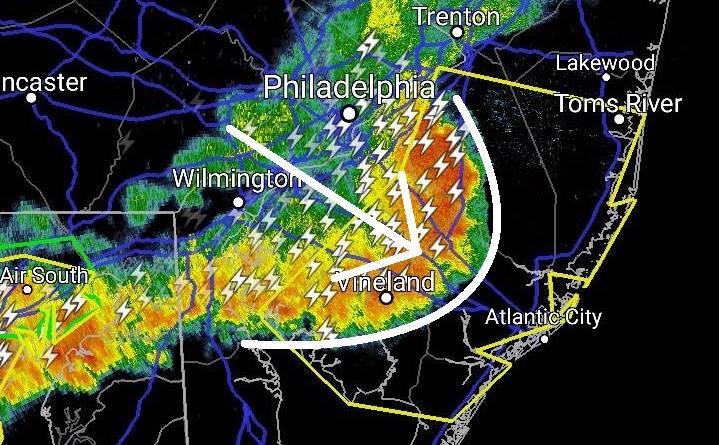
To get a better idea of what we experienced, I asked Jonathan Carr, with Weather NJ, what we saw. This would also give me a better idea of what to expect when conducted post-storm surveys. “What we saw in SNJ on Tuesday was a bow echo as evident by radar signature. A macroburst hit SWNJ which generated substantial straight line winds that fueled the system all the way to the coast. In addition, multiple rotation signatures were picked up via velocity analysis which sparked the tornado warnings in perfect alignment from PA through SWNJ and ultimately the Jersey Shore. The NWS officially ruled the incident near Brant Beach a waterspout but little damage was done from such. All damage across SNJ was again, from straight line wind gusts which reached 80mph in several locations. Harvey Cedars actually clocked a 92mph wind gust. I wasn’t surprised given that instability and wind parameters were screaming for this to happen in the prior 24 hours, especially with the cold front trigger moving through. These type of winds are disastrous for any coastal wildlife or nesting grounds with open exposures.”

With that news on the weather front, I knew we’d have young ospreys on the ground. On Wednesday I got my first report from Osprey watchers Ray and Leslee on Cedar Run Dock Rd. They noticed the adults acting funny, who were now on the ground and not on the nest (where they were before the storm). I gave Leslee permission to walk out to the nest. She found two 3 week old young on the ground. I had plans that day so I couldn’t make it there until 9pm. But when I met Leslee and Ray the nestlings were still on the ground. We picked them up and put them back into the nest (and we also fed a good amount of mosquitoes!!)

Four stripes!! Photo by Ben Wurst

The following day we rallied to get out on our boat to conduct some more “post-storm surveys,” the first of the season. We checked nests from Bonnet Island to Loveladies and Barnegat. A total of 18 active nests were surveyed. At the first nest we checked we found four young (this nest has failed to produce young for the past two years, amazing!)!! The second had two nestlings in the nest and none were found on the ground. GREAT! But, as the clouds moved in the survey took a darker turn… The next nest we checked was empty but had the remains of a very young osprey. Then the next one had two alive in the nest and one dead on the ground (a 14 day old). The next two nests had 2 and 3 young in them and they all looked very healthy. Then at the next nest we saw the whole nest down on the marsh. When we dug through it we found the bodies of two young. They were instantly crushed under the weight of the nest. So sad. The adult female was still sitting on the nest, surely hoping they were found alive. 🙁 It is now too late to get out to other areas to rescue young. I have learned that young are NOT fed when they are grounded. So there is little chance that any young would still be alive if found on the ground. Future surveys will determine how many other areas were affected by the strong storms.

Despite the gloomy outcome, nests in this severely impacted area had overall good results. We counted a total of 27 young from 18 active nests which gives us an average productivity rate of 1.5 young (per active-known-outcome nest). This is almost twice the level needed to sustain the population. Most young were around 17 days old. Only five were banded for future tracking.

It’s too early to tell how the entire population will fare this year. It could be a down year, with reports of no large schools of menhaden that are close to shore. Menhaden (bunker) are one of the most crucial food sources for many coastal species, including osprey.

Photos from the Survey:
Photo by Ben Wurst
Remains of a young osprey. Photo by Ben Wurst
Photo by Ben Wurst
One. Two. Three. All in the nest! Photo by Ben Wurst
Female on her nest. Photo by Ben Wurst
Photo by Ben Wurst
The oldest in this historic nest got a little feisty. Photo by Ben Wurst
Female hovers over her nest to check on her young (3) after we surveyed her nest. This is one of the oldest nests in NJ. Photo by Ben Wurst.
Photo by Ben Wurst
Young that were found on the ground were decomposing very quickly. We moved them out of sight from the adults. Photo by Ben Wurst
Photo by Ben Wurst
An empty nest off Loveladies. Last year this nest was productive. Photo by Ben Wurst
Photo by Ben Wurst
A week old chick and an egg on a channel marker nest of LBI. Photo by Ben Wurst
Photo by Ben Wurst
A four week old nestling that was banded with a red auxiliary band for future tracking. Photo by Ben Wurst

Twins! Two osprey eggs hatch overnight!

by Ben Wurst, Habitat Program Manager

Overnight two osprey eggs hatched at the Osprey Cam nest inside Edwin B. Forsythe NWR in Oceanville on day 40 of incubation. Ospreys exhibit asynchronous hatching or they hatch in the order they are laid. This ensures that the oldest and strongest young survive if there would ever be a shortage of prey. The third egg should hatch within the next 2 days.

You can tell when osprey eggs hatch by the behavior of the sitting adult. They sit higher, with their wings down and they are a bit more concerned with the young that sit beneath them. Young are born semi-altricial which means that they are downy and can open their eyes, but they require very close parental care.

Two osprey eggs hatched overnight on May 25-26th at Forsythe NWR in Oceanville.

Conserve Wildlife Foundation of New Jersey “2014 Annual Report” Released

CWF Releases its First Annual Report Ever Using a Story Map Format: “2014 Annual Report

By David Wheeler, Executive Director

Technology has proven to be vital to Conserve Wildlife Foundation’s work protecting rare wildlife species over the years. Our biologists depend greatly on modern technologies to band, track, and share online the journeys of wildlife. Our webcams broadcast the most intimate behaviors of nesting birds and bats across the web. And we seek out ever-evolving communications technologies to spread the word about the inspiring stories of wildlife, from social media and infographs to e-books and Story Maps. These technologies offer newfound abilities to share complex data on multiple levels, while still incorporating the awe-inspiring photography and videos that bring wildlife’s stories to life.

Conserve Wildlife Foundation of New Jersey is excited to offer our 2014 Annual Report in a unique format that utilizes one of those technologies – Story Maps. In the past year, we have explored the wonders of American oystercatchers with our first Story Map – and now the annual report allows all of our projects to be highlighted in this interactive format.

A screen capture of one of the pages of the CWF 2014 Annual Report Story Map.

Visit the multiple pages within this Story Map to learn about Conserve Wildlife Foundation’s many projects and partnerships in 2014, and the imperiled wildlife species in need of our help. Find examples of the innovative and dedicated leadership of our biologists and volunteers. And take an online journey across the state to learn how our projects made a difference in all corners of New Jersey in 2014 – a great year for wildlife in the Garden State!


New Jersey Ospreys Banded for Scientific Study at All Time High

Conserve Wildlife Foundation of New Jersey Releases Results of 2014 Osprey Report

By: Lindsay McNamara, Communications Coordinator

Three Osprey Young Wearing Red Bands. Photo by Ben Wurst.

Conserve Wildlife Foundation of New Jersey (CWF) today released the 2014 Osprey Project Report, highlighting the number of nesting pairs, active nests and nest productivity for the raptors throughout New Jersey with data collected by New Jersey Department of Environmental Protection Division of Fish and Wildlife biologists, CWFNJ biologists and dedicated volunteers. A new all-time high number of young osprey were banded for future tracking.


“The comeback of these magnificent birds continues to inspire us, especially in combination with the parallel recoveries of bald eagles and peregrine falcons,” said David Wheeler, CWF Executive Director. “Ospreys depend on a strong fish population and healthy waters, so they are a strong indicator of our recovering coastal and inland waters in New Jersey.”


To keep track of the health of New Jersey’s osprey population, biologists and volunteers conduct surveys each year. These surveys focus on the most densely populated colonies of nesting ospreys in New Jersey. From the Meadowlands to Cape May and along Delaware Bay, a sample of each area is recorded. The data is used to determine the health of the population. While surveys are conducted, osprey nestlings are also banded with United States Geological Survey (USGS) bird bands for future tracking.


2014 Report Highlights:

  • In 2014, 420 active osprey nests were recorded. A total of 25 new nests were recorded this year.
  • With this data and last year’s census, the overall 2014 population is estimated at 567 pairs, up from 542 pairs in 2013.
  • 339 known-outcome nests fledged an average of 2.02 young per active nest, which is a slight increase from 1.92 in 2013.
  • A total of 526 young, a new all-time high, were banded by volunteers and staff with USGS leg bands for future tracking.


This season, weather conditions and prey availability were favorable for ospreys. Temperatures and precipitation were both average this summer. A common item in New Jersey osprey diet continues to be Atlantic Menhaden. The productivity of the ospreys is dependent on the health and abundance of coastal fisheries.


To help engage citizen scientists for the first time in over 20 years, young ospreys have been marked with an auxiliary color band in New Jersey. The new band, which is a red anodized aluminum rivet band, bears an alpha-numeric code. This coded band allows birders, osprey watchers and wildlife photographers the ability to identify individual birds. This new project, “Project RedBand” is focused on ospreys that nest in the Barnegat Bay watershed from Point Pleasant to Little Egg Harbor.


“The use of the auxiliary ‘red bands’ will help us learn a lot about the ecology of ospreys nesting on Barnegat Bay,” stated CWF Habitat Program Manager Ben Wurst. “Project RedBand will also help us engage local communities in osprey conservation and management by encouraging citizens to report re-sightings of banded birds. We are hopeful that this project will instill in New Jersey residents a long lasting appreciation for birds of prey and the habitat they require to survive.”


Learn More:

Lindsay McNamara is the Communications Coordinator for Conserve Wildlife Foundation of New Jersey.


Project RedBand: 04/C from LBI to Trinidad and Tobago!

Auxiliary bands help link Barnegat Bay ospreys to their wintering grounds

by Ben Wurst, Habitat Program Manager

04/C was banded at a nest on LBI and re-sighted on the island of Trinidad and Tobago by Nicholas Hassanali.

When I started work on Monday morning I got some amazing news (at least for an osprey lover). One of the young ospreys that I banded on Barnegat Bay was re-sighted on the Caribbean island of Trinidad and Tobago!! To top that cake, the osprey was photographed to confirm its sighting. YES!! Nicholas Hassanali took the above photo and enlarged the red band to read the alpha-numeric code which reads “04/C.” I looked up in my banding records and saw that 04/C was produced at a nest behind the Long Beach Island Foundation for Arts & Sciences in Loveladies, Long Beach Island.

04/C after being banded. He was around 4 weeks old on July 7, 2014.

I banded him (I can tell its a male by the size of the band on its leg and the lack of a brown necklace of feathers on its breast) on July 7th with a CWF donor Bill C. We ventured to four nests by kayak. This was the first survey where I started to deploy the red auxiliary bands on young ospreys. I remember that it was a pleasant day. Not too hot or windy. As we made our way from one sheltered nest on a lagoon to another out on the bay we felt the winds kick up from the south making paddling difficult (especially when you’re towing another kayak with a ladder on top!).

125-A-032: 04/C's nest.
125-A-032: 04/C’s nest.

We decided to return to Bill’s house and take my truck to survey the next two nests, since we could walk to them from a side street. We walked out to one nest and found that it failed, i.e. no young were produced. Then we proceeded onto the next, 04/C’s nest. I remember climbing up the ladder to band the young and did not get a chance to take any better photos because I had to be on my way soon. While up there I remember the male dropped a fish (bunker) and Bill got it and we put it back into the nest. One thing that I will not forget about this day is the smell of smoke and burning plastic. I found out later that day that a lawyer’s office in Ship Bottom was on fire when we were out surveying these nests. Luckily no one was hurt in the fire!

I personally cannot wait to get more reports of our red banded ospreys. The young that were banded this year will not return until 2016 and even then they might not return until the late spring/early summer and will not breed. At least I know that there are people out there watching and admiring our ospreys! As Nick said in a comment on his photo on Flickr, “ I have a great love for Ospreys.” 🙂

Conservation of the Osprey: Slideshow

Edwin B. Forsythe NWR osprey family. © Tom Sangemino

Ospreys are clearly one of the highlights while visiting the Wildlife Drive at Edwin B. Forsythe National Wildlife Refuge in Oceanville. Visitors are given a glimpse into the lives of these fascinating birds through the placement of their man-made nesting platforms along the Drive. One photographer, Tom Sangemino documented their nesting season from beginning to end and created a wonderful slideshow. Within the slideshow Tom also chose to educate people about the restoration of ospreys in New Jersey and ways that you can get involved to help their continued success!


Partnership is key!

CWF provides assistance for recovery of osprey in Illinois

by Ben Wurst, Habitat Program Manager

Osprey 11D takes flight for the first time at Lake Shelbyville. Illinois Department of Natural Resources photo.

Besides working to protect and manage New Jersey’s osprey, we also consult with organizations throughout the country to assist with other ongoing recovery projects. One particular project is in Ilinois. Here the osprey is listed as endangered and recovery has been slow. Last year a long-term recovery project was started and we provided assistance by mapping suitable nest platform locations along the Kankakee River at the Exelon Generation/Dresdan Station (SW of Chicago). The recovery project has a huge amount of support and partners. This was how our osprey recovery project was so successful in the 1980s, by partnering with many different organizations. We provided technical guidance on platform construction and installation to Michael Campbell (System Engineer at Exelon). Michael led the hack box construction effort and assisted with building/installing nesting platforms at the Dresdan Station. A total of ten young ospreys were successfully hacked this year. The young were collected at Joint Base Langley-Eustis in Virginia and driven to IL. Michael was awarded for his efforts to help the osprey recover in Illinois and we are honored that he chose Conserve Widlife Foundation as a receipent for a $3,750 grant! Thank you!

Looking to help make a difference? We provide recources for you to help our ospreys in New Jersey. We offer technical assistance to private consulting firms, individuals, school groups, environmental commissions, Boy Scouts, Girl Scouts, and anyone else who is interested in constructing and installing osprey nesting structures.

In New Jersey, we work with the NJ Division of Fish and Wildlife to help manage and monitor a very large database of existing nesting structures. We can help you choose the most suitable location to place a platform so it will not negatively impact any other species that live in the coastal area of the state. We can provide maps, platform plans (see link below), and in some cases an actual platform. Please do not hesitate to contact us for more information or if you have a question.