92 Ospreys Enlisted in Citizen Science Based Re-sighting Project
by Ben Wurst, Habitat Program Manager
A young osprey named “Danny” was banded with a color auxiliary band 76/C for future tracking at a nest on Long Beach Island. Photo by Northside Jim.
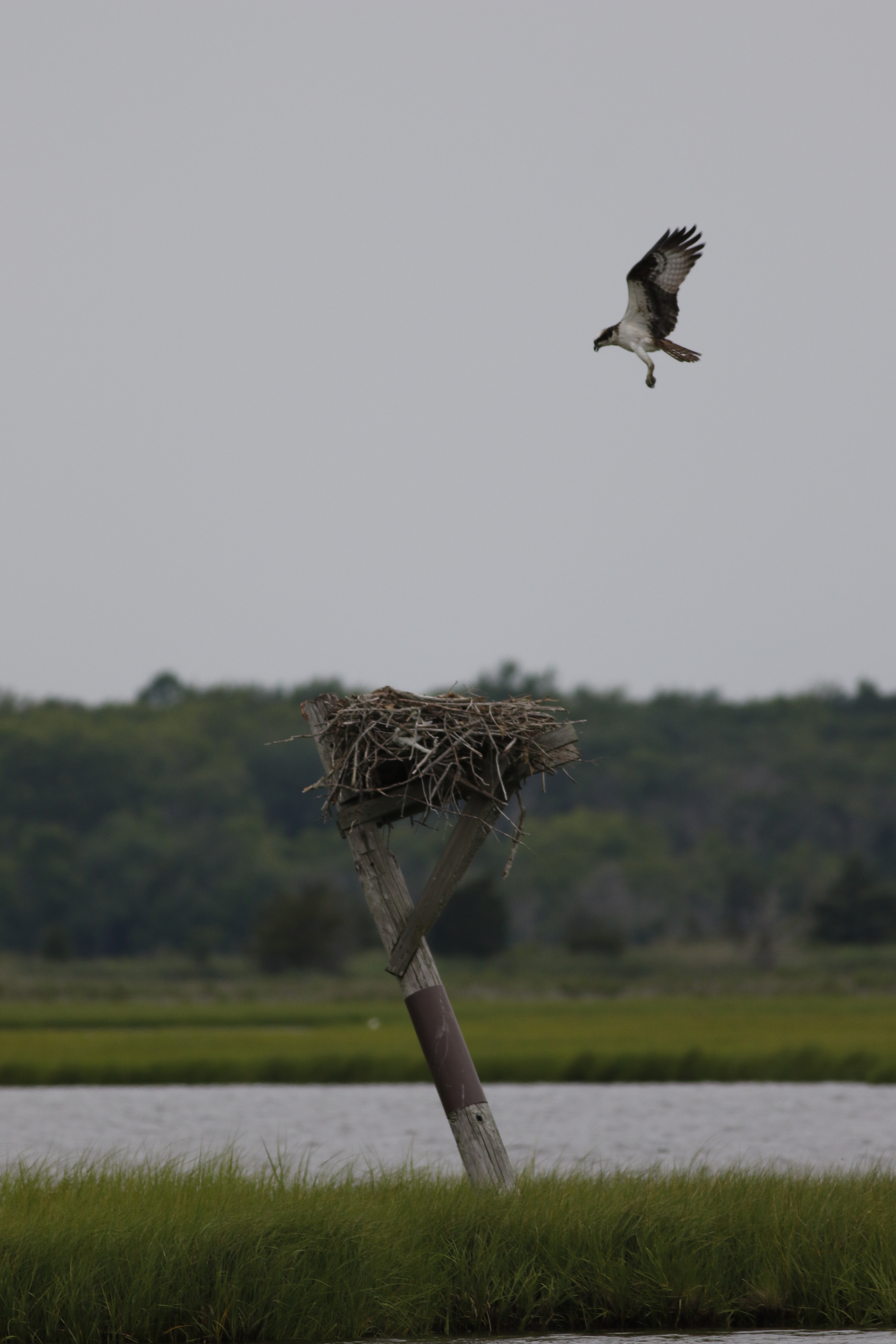
This is the critical time of year for monitoring our nesting ospreys. Each year biologists and specially trained volunteers, aka Osprey Banders, conduct ground surveys by boat to monitor the state population. They visit or survey the most densely populated colonies of nesting ospreys: Sandy Hook, Barnegat Bay, Great Bay, Absecon, Ventnor-Margate-Ocean City, Great Egg Harbor Watershed, Sea Isle, Avalon-Stone Harbor, Wildwood, Maurice River, and parts of the Delaware Bay. These surveys have been conducted since the early 1970s when ospreys were not so common, with only 50 pairs in 1973.
Their recovery has been quite remarkable. With an estimated 600 nesting pairs throughout the state, our ospreys are in a much better position today. Why put so much time and effort into monitoring a seemingly healthy population? Even though their population is much larger than it was decades ago, ospreys still face a variety of threats that jeopardize their ultimate survival. It’s commonly known that ospreys face very high mortality rates in their first year of life. Before even leaving the nest their young are so vulnerable. They can fall or be blown out of the nest, predated by raccoons, crows, or eagles, killed by their own siblings, or die from starvation. After they fledge, then they need to learn to find and catch prey and avoid power lines and wind turbines. Then they need to learn to migrate south and avoid being shot in the process. Once they find a suitable wintering site, then they remain in the same area for the next two years. Then they return to their natal areas to find a suitable nest site and start their own osprey family!
Today, we need your help! We cannot reach all active nests in New Jersey. There is still plenty of time to help us keep track of the state population. Citizens are encouraged to submit sightings of activity at osprey nests on Osprey Watch, a global osprey watching community. In 2013 all of the known locations for osprey nests was released on Osprey Watch’s website. As a partner with Osprey Watch, we share and use the data collected to help determine the overall health of the population, which is summarized in our annual report.
To help engage our Osprey Watchers, we started Project RedBand, a citizen science based osprey re-sighting project. This is year two of the project. So far we’ve deployed 92 red bands (out of 100) on young produced at nests on Barnegat Bay (62 in 2014 and 30 in 2015). The young that were banded last year will start to return to New Jersey in 2016. Usually young adults return later than older adults, so the red banded birds might not be seen until May or June. That’s when they’ll find areas with high prey availability and suitable nest sites. Usually males don’t stray far from their natal areas but females do. With these red bands, we hope to learn a little more about where our ospreys are dispersing to and at the same time engaging our coastal communities in osprey conservation.
Searching for a Small, Dark Bird at Night, in the Dark
By: Alfred Breed, Field Technician
The nighttime view while listening for black rails in the marsh. Shown are the datasheet and speaker that plays the various calls. Photo courtesy of Tom Reed.
Shhhhhhhh. Be very, very quiet. Sit perfectly still. Listen. When you are searching at night in the dark for the black rail, the rarest and MOST secretive of the secretive marsh birds, your best sense to use for detection is hearing.
The black rail is a small, darkly-colored marsh bird whose numbers are believed to have declined precipitously in the past few decades, primarily due to habitat loss (when their preferred high marsh habitat was filled and developed), as well as sea-level rise and the loss of salt hay farms (in New Jersey). The breeding population is likely extirpated from both Connecticut and New York, while its continued stability here in New Jersey is in question. Its conservation status varies by state, with full protection as an endangered species in New Jersey and some other states, and only the cursory protection of the Migratory Bird Treaty Act of 1918 in other, mostly southern states. Even in states where they are not listed as threatened or endangered, black rails are rarely seen because of low abundance, their secretive habits, and the inaccessibility of their preferred habitat.
Because of both its rarity and extremely secretive nature, the detailed habits of black rails are little known. Furthermore, historic and current population numbers critical to establishing its conservation status are not well understood. It is thought that they mostly feed during daylight hours, quietly traversing the marsh mud in search of seeds and invertebrate prey, thus remaining largely undetected beneath the dense grass mat. But during the breeding season they call, quite loudly, to each other at night.
This habit, nocturnal vocalization, is what we hope to use to determine the continued presence of black rail here in our coastal marshes, and eventually their abundance and other critical biological information. As part of a cooperative effort by the Conserve Wildlife Foundation of New Jersey, the New Jersey Division of Fish and Wildlife, and New Jersey Audubon Society, staff and volunteers are conducting surveys at points throughout the black rail’s potential breeding range in New Jersey and other states. One purpose of such research is to collect and analyze data in order to establish sound, effective, science-based species management plans coordinated across the species’ entire range.
Underway during daylight hours to check-ride deploy an acoustic recording unit that also “listens” for black rails.
The current phase of the black rail project requires me to transport by boat four expert bird-by-ear surveyors, capable of identifying birds common to the coastal marsh habitat from their song alone, at night. I bring each “listener” to ten randomly selected points within suitable high marsh habitat at the proper tide and during the designated survey period between 10:30 PM and 3 AM. Each 10-point survey route is repeated three times across a six-week period from May-July. Surveyors record all of the identifiable species they hear as well as the direction and estimated distance of the calls from each survey point.
The survey consists of two minutes of passive listening followed by several recorded black rail vocalizations broadcast from a very loud speaker that are interspersed with short silences in order to listen for any response. The black rail calls are followed by calls from Virginia and clapper rails, as they will also sometimes elicit a response from our quarry. Surveys are conducted with winds below 12 mph and in little to no precipitation in order for the sound to carry to both human and bird ears. Absolute silence is critical in order not to miss any of the more distant calls that pierce the darkness. The scrape of a boot on the deck, the crinkle of a snack wrapper, or a sudden sneeze has the potential to drown out the sound of a distant call. Discussions about species, direction and distance are held in a quiet whisper.
CWF field technician Alfred Breed, the intrepid nocturnal boat pilot for the Black Rail survey project. Photo courtesy of Tom Reed.
This season, our four survey routes encompassed appropriate habitat areas of several of the tributaries to the Great Egg Harbor Bay watershed. In our quiet and isolated marsh stream we are joined only by the birds we hear, many fireflies and less benign insects, spring peepers, croaking bullfrogs, and the occasional splash of a startled muskrat. Periodic traffic noise from the roads that encircle Great Egg Harbor Bay are a reminder that it is difficult to entirely escape civilization here in New Jersey. But listening to the marsh at night, while boating up a narrow isolated tributary that snakes its way toward the transition from marsh to upland, definitely allows for a sense of quiet communion with nature. Because of its extensive lighting, the BL England power plant in Beesley’s Point is truly a bejeweled wonder to behold at night from almost anywhere in the watershed, and the light pollution that emanates from the Atlantic City sky line can be actually quite helpful for nighttime navigation.
As far as this season is concerned, all of the hoped for data was successfully collected from each point during the survey periods, with only one survey transect interrupted by an un-forecast pop-up lightning storm that required a quick race back to the safety of the boat ramp. With the surveys now completed, we look forward to sharing the results when they are available for release.
This is the first of hopefully many seasons of data collection of this type. As each season’s final results are collected and analyzed, we hope to focus our survey efforts from geographically random points within appropriate habitat, to the areas of repeated detection, and to eventually be able to achieve our long term goal: namely a science-based understanding of the black rail population in our state that informs a viable and effective species management plan.
As a result of my participation in this study with four expert surveyors, for three survey nights each, at 10 points per night, and 10 minutes per point, I have had the privilege of intently listening for over 20 solid hours to our nighttime native secretive marsh bird songs in the presence of experts who can teach me what it is we’ve heard. Although I was only able to master a few of the calls with which I was not already familiar, it has truly been a pleasure and a valuable learning experience accompanying these experts into the field. I can’t wait to do it again next season!
The Conserve Wildlife Foundation and New Jersey Division of Fish and Wildlife wish to thank Alf for the excellent logistical, navigation, and boat handling skills he brought to this project. Just as we could not conduct the survey without our observer’s expert ears, we would be equally lost without Alf’s expertise on the water. Thank you, Alf!
Native Species Habitat Bill Passes in the Assembly
By: McKenzie Cloutier, Special Events and Fundraising Intern
Golden-winged warbler. Photograph by Evan Madlinger
Of great interest to New Jersey homeowners, the Garden State’s General Assembly recently passed a native species habitat bill. This bill, pending further action in the Senate, encourages homeowners to create and maintain more wildlife-friendly yards. In hopes of creating more livable habitats for New Jersey’s wildlife, this bill includes a certificate program that promotes the growth of native plant species in landowners’ yards.
Under the provisions of this bill, landowners would be encouraged to grow and preserve native plant species that provide natural habitats for New Jersey’s other important species. In addition, this bill would also defend certified landowners against any municipal ordinances. For example, the bill would defend a landowner from an ordinance that calls for the removal of certain native plants or “weeds.”
The native species habitat bill not only benefits New Jersey’s wildlife, but homeowners as well, by reducing maintenance and chemical treatment costs. Under this program, yards will require less mowing and maintenance, and pesticide use is discouraged. With such changes, landowners could experience significant reductions in their usual yard maintenance costs, while helping to conserve local wildlife.
The native species habitat bill encourages New Jersey residents to become active participants in the preservation of wildlife. At the Conserve Wildlife Foundation, we encourage landowners to create wildlife-friendly backyards, and we are involved in helping private landowners to do so. Our wildlife biologist Kelly Triece works in partnership with United States Department of Agriculture’s Natural Resource Conservation Service (USDA-NRCS) to assist private landowners in managing existing cropland, forestland, and pastureland to best meet wildlife habitat needs or in establishing new wildlife habitat areas. Depending on the goal of the landowner, these programs can either help create or preserve pollinator, woodland, wetland and grassland habitats for many different wildlife species.
In particular, CWF biologists work with forest landowners to enhance young forest habitats on private lands. Young forest habitats are imperative for many birds, especially the Golden-winged warbler, a species of particular concern in New Jersey. The open canopy of a young forest also provides food such as berries, insects and small mammals to newly fledged birds, wild turkey, ruffed grouse, reptiles, black bears, bobcats, and butterflies.
Since 2008, CWF, NRCS and other partners have collaborated with landowners to create or restore over 225 acres of Golden-winged warbler habitat in New Jersey!
Want to get involved and help conserve wildlife on your property? Here are ten tips on how to create a wildlife-friendly habitat in your own backyard:
Allow native plants to grow.
Create a brush pile for ground nesting birds or small mammals such as chipmunks or mice.
Install a pond to benefit birds, frogs, salamanders, and aquatic vegetation.
Create a meadow for wildlife by choosing not to mow a section of your yard.
Plants trees and shrubs to provide food and cover for wildlife.
Buy a bird bath.
Remove invasive or non-native plants.
Refrain from using pesticides. Try composting!
Hang bird feeders.
Obtain a bird house.
Visit our website for more tips on how to create a wildlife-friendly backyard.
McKenzie Cloutier is the Special Events and Fundraising Intern for Conserve Wildlife Foundation of New Jersey.
New Jersey Banded Bird and Mate Raise Three Chicks in Pennsylvania
By: Larissa Smith, Wildlife Biologist
We have been following the story of “Jersey Girl,” a New Jersey banded bird, who nests in Montgomery County, Pennsylvania. This was her fourth season at this nesting location. In 2014, the pair lost two chicks due to a severe winter storm, so it was good news when nest observer Linda Oughton reported that the pair raised and fledged three chicks during the 2015 season. Two weeks after the chicks fledged, the nest collapsed due to wind and rain. So, we will have to wait and see if they rebuild in the same nest tree or move to a new location next season.
Linda sent some photos from the 2015 nesting season.
Notice the small intruder in front of the nest Photo: L. OughtonLinda reports that she has seen fish, squirrels, Canada geese, rabbits, turtle, chickens, and a ground hog brought to the nest. Photo: L. OughtonPhoto: L. Oughton
An update on the 2015 Piping Plover Chick Mortality study
By: Emily Heiser, Biological Assistant
Summer is once again flying by and we find ourselves more than halfway through the beach nesting bird season. New Jersey’s piping plovers are almost done incubating their nests and most already have chicks running around!
Two and a half week old piping plover chick, in hand for mid development “check-up” on weight and wing growth.
I would argue that there is nothing cuter than a piping plover chick. Covered in downy feathers, they simply look like little cotton balls with toothpicks for legs. Piping plover chicks are precocial, which means they hatch in an advanced state and are able to feed themselves almost immediately. The adults stay with their young to protect them from predators until they are able to fly, which takes about 25-35 days.
New Jersey plovers have a very difficult time getting their chicks to that 25-day mark. Unfortunately, chicks perish for various reasons. Determining the causes of chick loss in is the main driver behind the New Jersey piping plover chick mortality study being conducted by the State University of New York – College of Environmental Science and Forestry this year.
Just hatched piping plover chicks sporting their color bands, which will help researchers track them.
Michelle Stantial and I have been visiting sites up and down the coast to check on the status of the study broods. To date, we have been able to band 46 chicks from 14 different broods.
The small color bands that we place on the upper legs of the chicks help us to identify each chick as an individual and also helps us know which individual was lost. Every five to seven days we recapture the chicks to weigh and measure them. We hope to correlate chick growth to habitat quality and likelihood of survival. Some exciting preliminary observations have already been made between the sites!
Plover chicks all hatch at around the same weight. During incubation, the embryo gets all of its food from an egg sac. The chicks weigh around six to seven grams when they hatch. Over the next five days, growth rates begin to spike.
CWF Biological Assistant Emily Heiser places newly hatched piping plover chicks back into nest bowl after banding.
By simply looking at some of the chick weights, you can determine where foraging quality is likely going to be greatest. Lower weights could also be attributed to human disturbance levels. Chicks disturbed on a regular basis, may not be able to spend as much time foraging as chicks that are not disturbed as often.
One of the true highlights of this season has been overseeing so many chicks across all of our study sites! Twenty-seven of our study chicks have made it to fledge so far. There is nothing quite so satisfying as watching them spread their wings for the first time. It never ceases to bring a smile to my face as their tiny feet pitter-patter across the sand (and my heart), their perfect wings open up, and suddenly…lift off!
There is still some time left in the season for some more tiny miracles to happen on our beaches, so keep your fingers crossed and send them lots of luck as they finish up their breeding season here in New Jersey!
New Video Highlights Diane Cook’s Eagle Banding Experience and Classroom
By: Kathleen Wadiak, Wildlife Conservation Intern
This year, Conserve Wildlife Foundation of New Jersey and Duke Farms worked together to organize a contest in which educators could submit lesson plans based on the Duke Farms EagleCam, a webcam providing a live stream of a bald eagle nest. The winner, computer literacy teacher Diane Cook, had the opportunity to assist biologists in banding the eagle chicks from a nest in Hunterdon County. The new video showcasing Diane gives an up close and personal view into her story and her experience!
Diane has been incorporating the EagleCam into her lessons since the cam first went online in 2008, helping to inspire a respect for the animals and environment in her students from kindergarten to fourth grade. Diane also teaches her students about internet safety, web forums, and writing.
The Duke Farms EagleCam allows educators to connect their lessons to important environmental issues in a way that is interesting to their students. Teachers like Diane Cook are making a difference by encouraging children to care about their impact on local ecosystems and wildlife.
Did you know barrier island beach makes up approximately 2% of the Edwin B. Forsythe National Wildlife Refuge? This area is the most productive for beach nesting birds. The federally threatened piping plover and other species such as least tern, black skimmer, and a species of special concern, the American oystercatcher, nest on Holgate Beach. The refuge closes the Holgate unit from April 1st to September 1st every year to provide undisturbed nesting habitat for these important species.
Not only is it important to protect nesting habitat for the birds, but it is also important to provide education opportunities to the public. Each summer, the refuge relies on volunteers during the summer months to talk to the public about the beach closure and bird management, and answer any general questions about Forsythe Refuge.
This year, Conserve Wildlife Foundation of New Jersey partnered with the refuge to assist in the collection of nesting data. “In the past, refuge staff has done all the beach nesting bird monitoring,” said Refuge Manager Virginia Rettig. “This year we are very excited to be working with our partners to monitor the population status of these birds. The work they are doing, combined with the data they collect, will improve our understanding of beach nesting birds on Forsythe Refuge.”
CWF Field Technician Jesse Amesbury tracking piping plovers at Holgate with his scope.
“Holgate provides highly suitable undisturbed natural habitat for at-risk beach nesting birds, especially piping plover – a rarity along the otherwise highly developed and recreated New Jersey Coast,” said Todd Pover, CWF Beach Nesting Bird Project Manager. “Maximizing productivity at this site is a high priority for regional and range-wide recovery efforts.”
Edwin B. Forsythe National Wildlife Refuge protects more than 47,000 acres of sensitive wetlands, marshes, and coastal habitats along the New Jersey shore. It is one of the most important habitats for migrating waterfowl and shorebirds east of the Mississippi River.
Nesting ospreys fared well from June 23rd storms on B. Bay
by Ben Wurst, Habitat Program Manager
We had some pretty insane weather blow through on Tuesday evening. I saw it first hand while driving to Long Beach Island to visit some relatives in town. The storm front brought high winds and driving rain to the area. The National Weather Service has even declared that there was even a water spout in Brant Beach (which was right where I was driving on the LBI Blvd. southward). Winds gusted to 70-80mph blowing all sorts of debris (and lawn furniture) across the road. I immediately pulled over to where I was protected from the wind. While I sat there I thought of all the osprey nests out on the bay with young in them…
One is better than none! Photo by Ben Wurst
At this time of year almost all nests have young. They range in age from only hatchlings to 4 week old nestlings. Some can be easily blown from shallow or weakly built nests and can be easily blown from the top of nesting platforms. This has happened in the past (in 2012 when we had a “derecho” blow through the area in late June) and almost half the young present were blown from their nests (in Absecon).
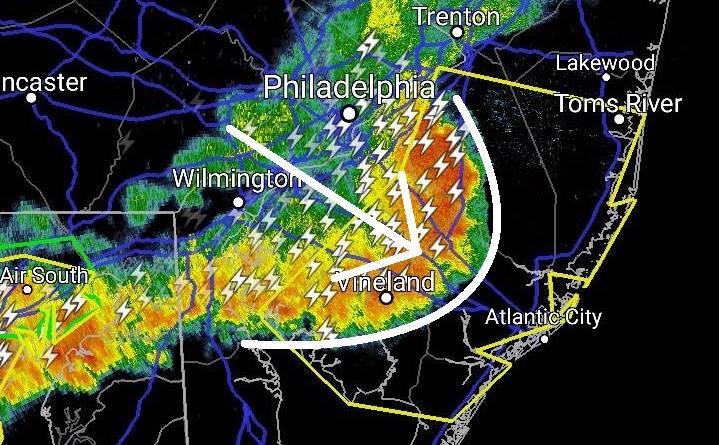
To get a better idea of what we experienced, I asked Jonathan Carr, with Weather NJ, what we saw. This would also give me a better idea of what to expect when conducted post-storm surveys. “What we saw in SNJ on Tuesday was a bow echo as evident by radar signature. A macroburst hit SWNJ which generated substantial straight line winds that fueled the system all the way to the coast. In addition, multiple rotation signatures were picked up via velocity analysis which sparked the tornado warnings in perfect alignment from PA through SWNJ and ultimately the Jersey Shore. The NWS officially ruled the incident near Brant Beach a waterspout but little damage was done from such. All damage across SNJ was again, from straight line wind gusts which reached 80mph in several locations. Harvey Cedars actually clocked a 92mph wind gust. I wasn’t surprised given that instability and wind parameters were screaming for this to happen in the prior 24 hours, especially with the cold front trigger moving through. These type of winds are disastrous for any coastal wildlife or nesting grounds with open exposures.”
With that news on the weather front, I knew we’d have young ospreys on the ground. On Wednesday I got my first report from Osprey watchers Ray and Leslee on Cedar Run Dock Rd. They noticed the adults acting funny, who were now on the ground and not on the nest (where they were before the storm). I gave Leslee permission to walk out to the nest. She found two 3 week old young on the ground. I had plans that day so I couldn’t make it there until 9pm. But when I met Leslee and Ray the nestlings were still on the ground. We picked them up and put them back into the nest (and we also fed a good amount of mosquitoes!!)
Four stripes!! Photo by Ben Wurst
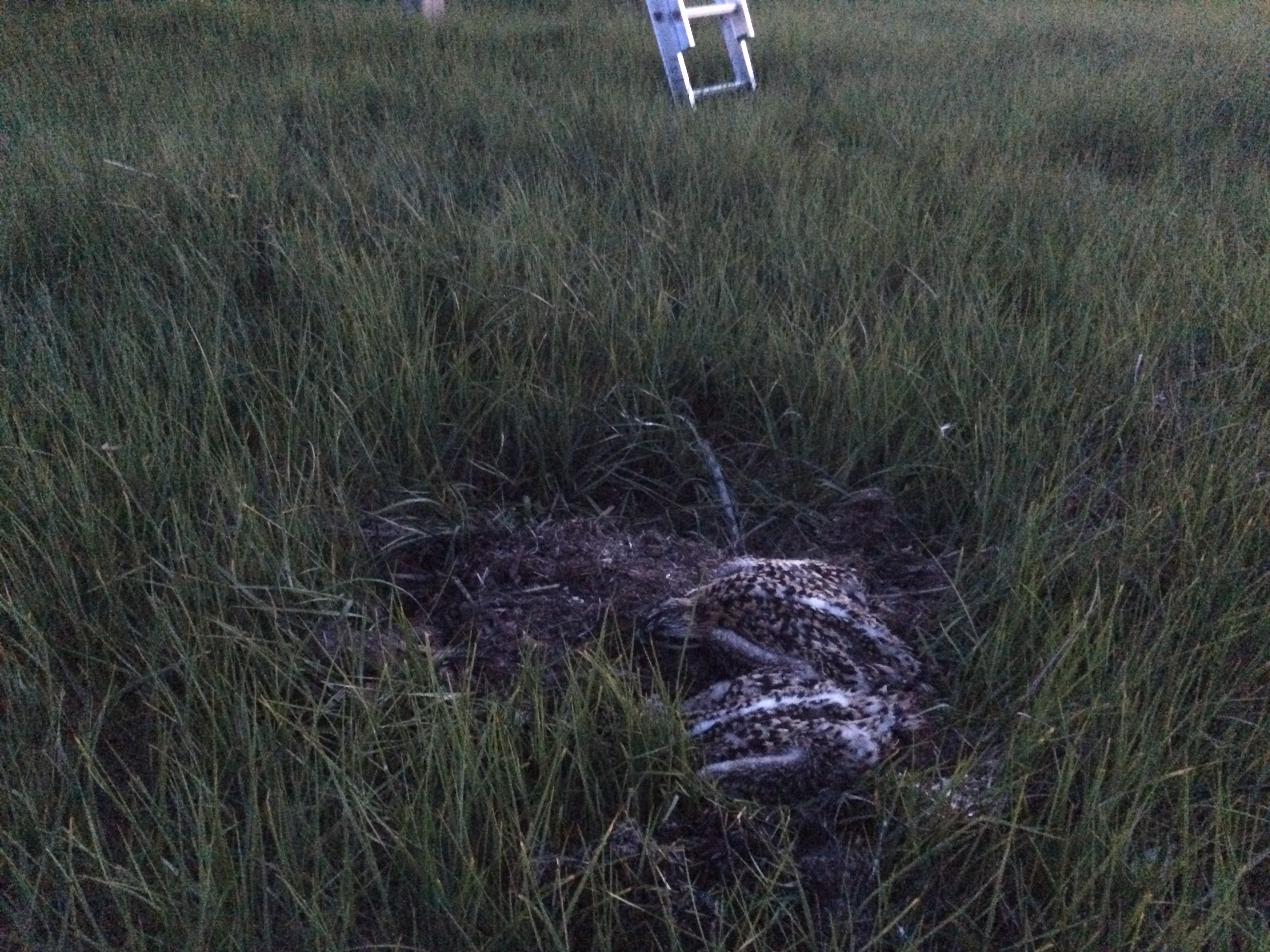
The following day we rallied to get out on our boat to conduct some more “post-storm surveys,” the first of the season. We checked nests from Bonnet Island to Loveladies and Barnegat. A total of 18 active nests were surveyed. At the first nest we checked we found four young (this nest has failed to produce young for the past two years, amazing!)!! The second had two nestlings in the nest and none were found on the ground. GREAT! But, as the clouds moved in the survey took a darker turn… The next nest we checked was empty but had the remains of a very young osprey. Then the next one had two alive in the nest and one dead on the ground (a 14 day old). The next two nests had 2 and 3 young in them and they all looked very healthy. Then at the next nest we saw the whole nest down on the marsh. When we dug through it we found the bodies of two young. They were instantly crushed under the weight of the nest. So sad. The adult female was still sitting on the nest, surely hoping they were found alive. 🙁 It is now too late to get out to other areas to rescue young. I have learned that young are NOT fed when they are grounded. So there is little chance that any young would still be alive if found on the ground. Future surveys will determine how many other areas were affected by the strong storms.
Despite the gloomy outcome, nests in this severely impacted area had overall good results. We counted a total of 27 young from 18 active nests which gives us an average productivity rate of 1.5 young (per active-known-outcome nest). This is almost twice the level needed to sustain the population. Most young were around 17 days old. Only five were banded for future tracking.
It’s too early to tell how the entire population will fare this year. It could be a down year, with reports of no large schools of menhaden that are close to shore. Menhaden (bunker) are one of the most crucial food sources for many coastal species, including osprey.
Photos from the Survey:
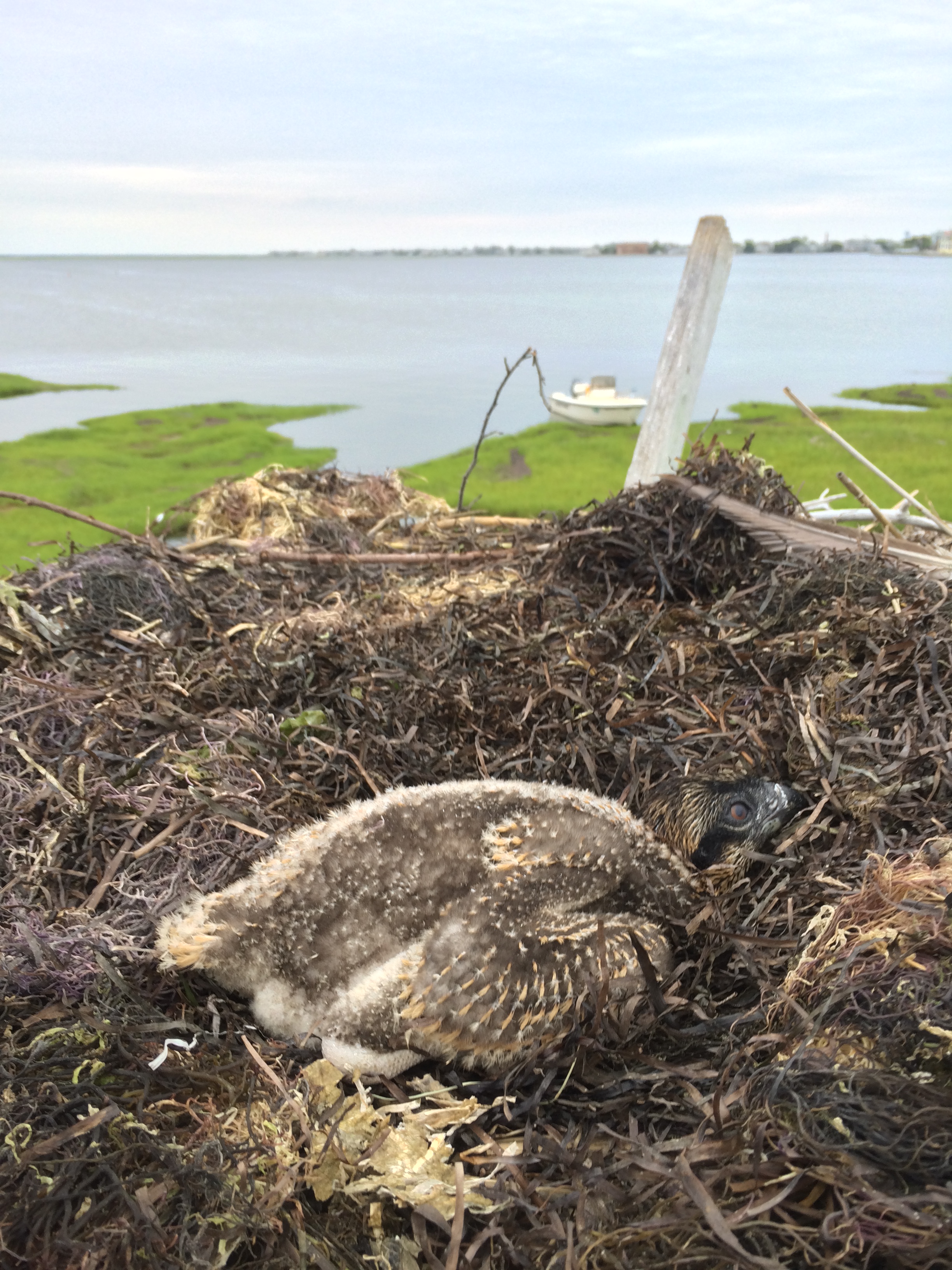
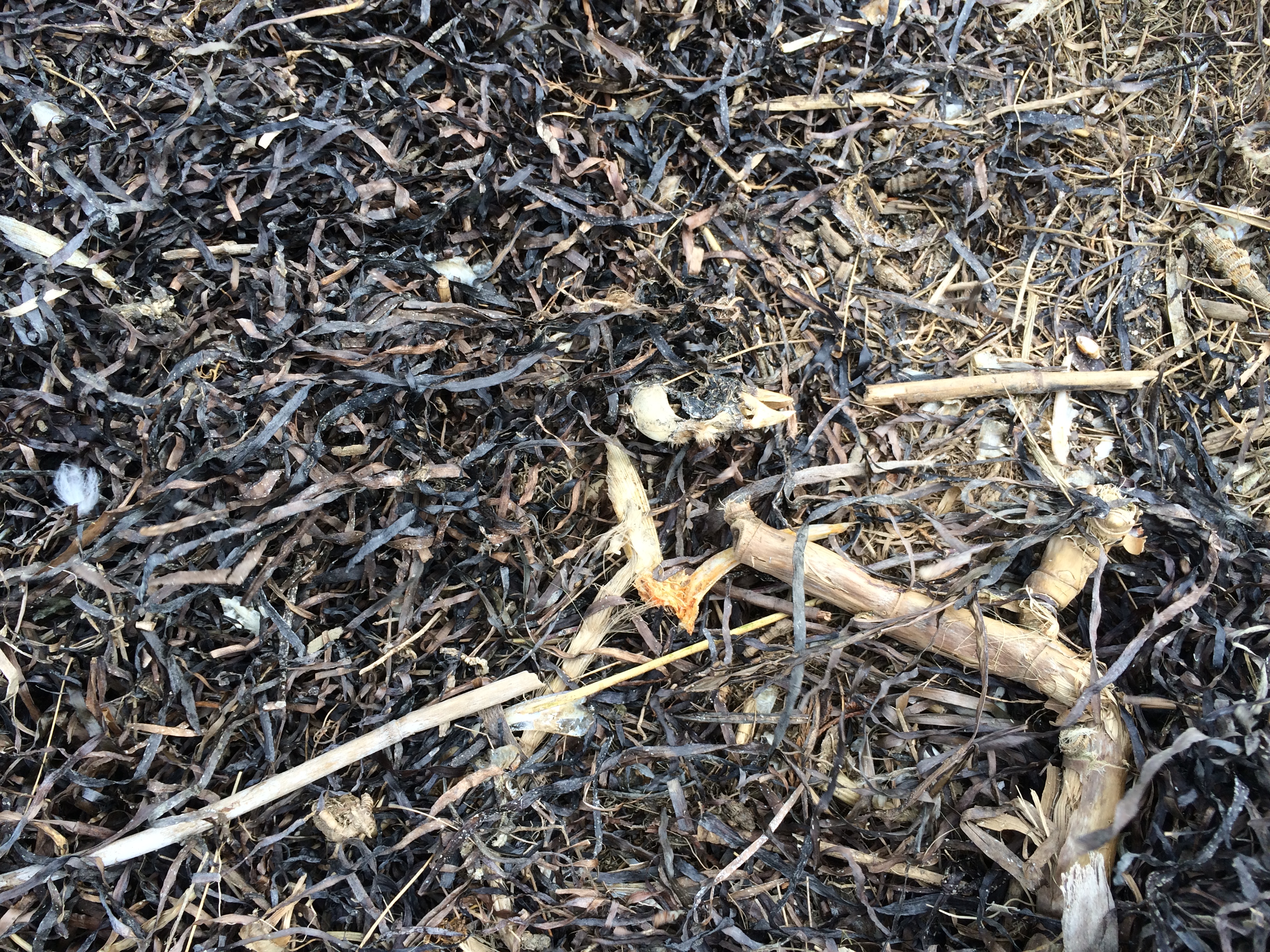
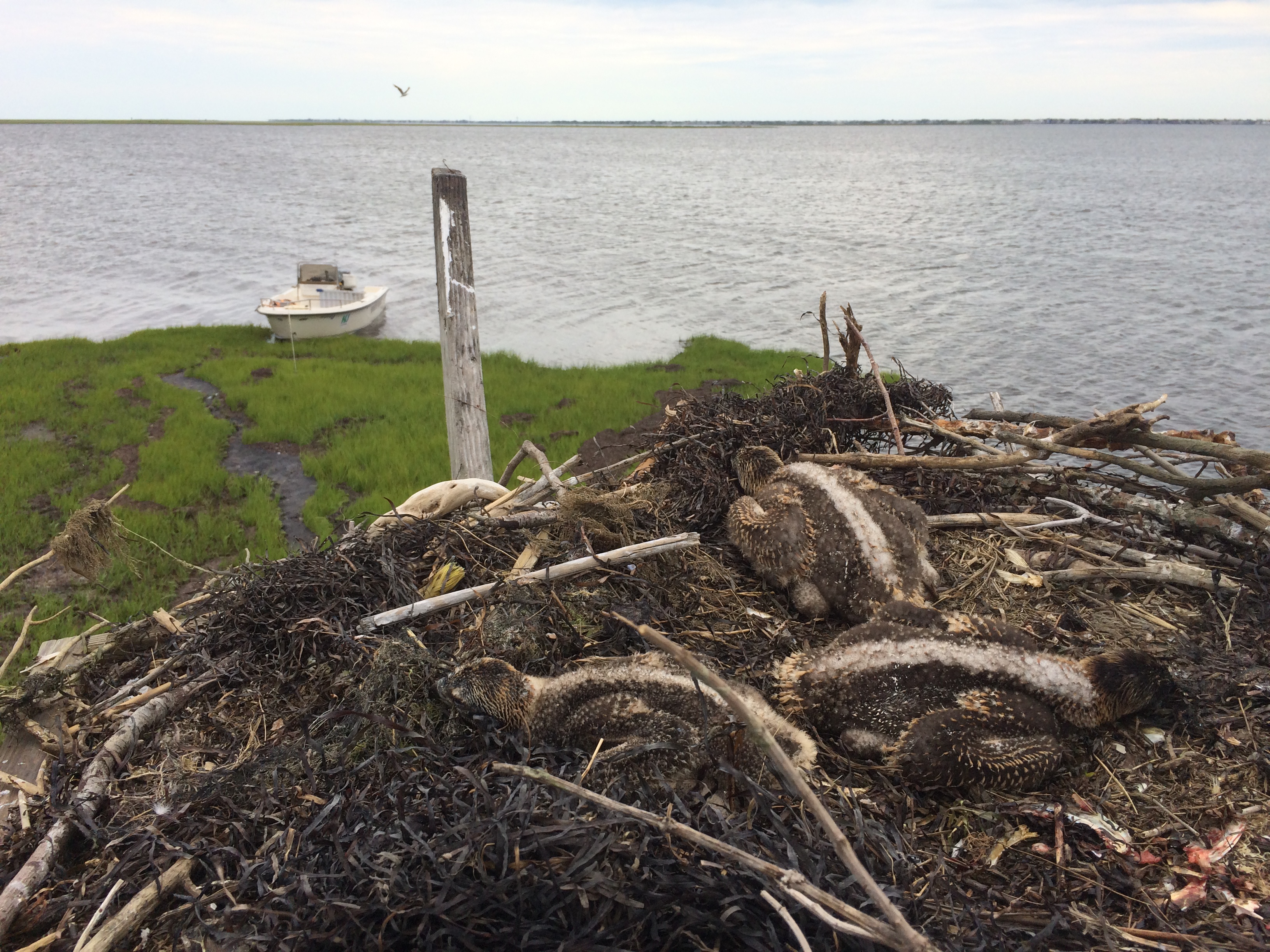
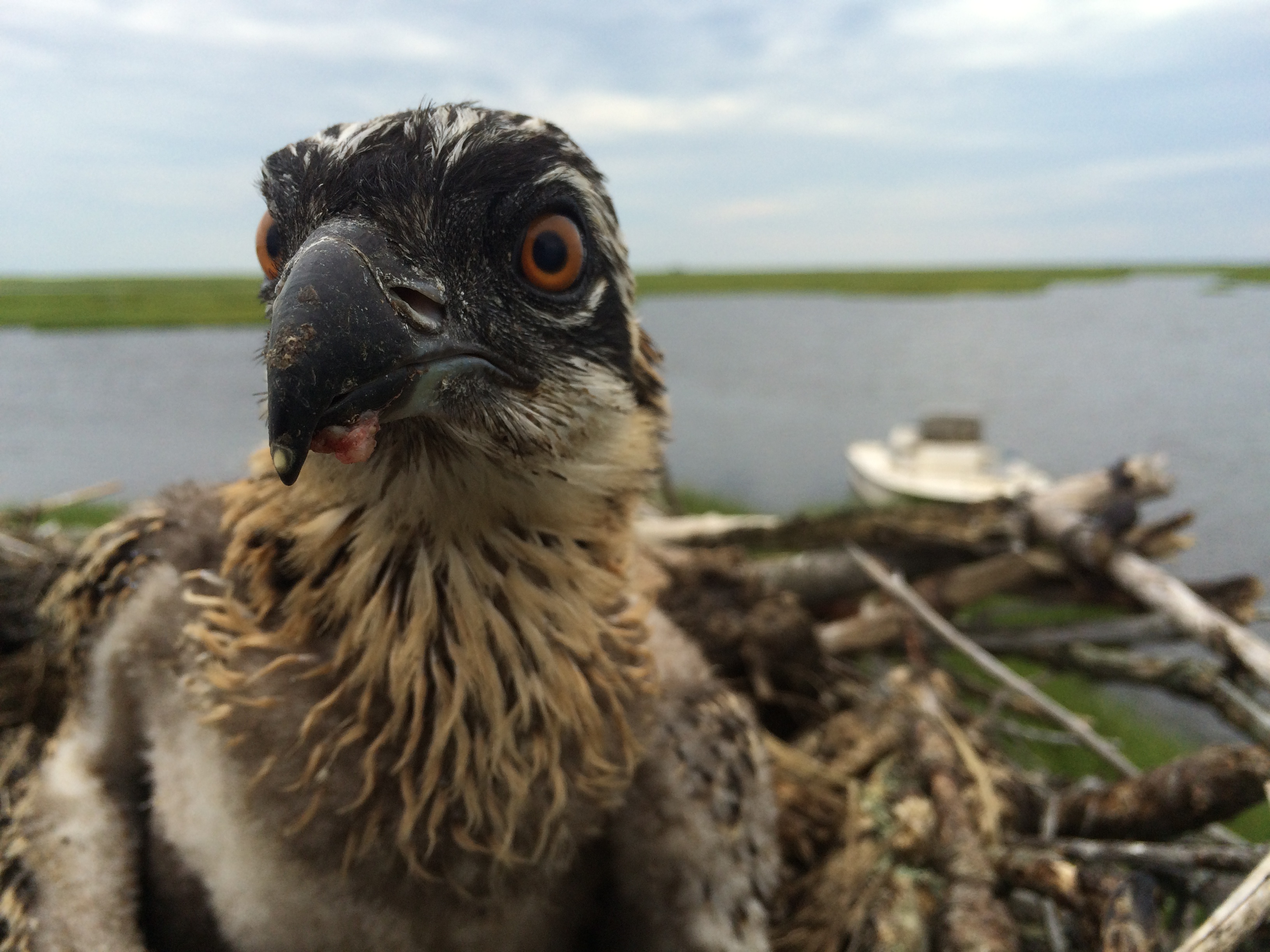
Remains of a young osprey. Photo by Ben WurstOne. Two. Three. All in the nest! Photo by Ben WurstFemale on her nest. Photo by Ben WurstThe oldest in this historic nest got a little feisty. Photo by Ben WurstFemale hovers over her nest to check on her young (3) after we surveyed her nest. This is one of the oldest nests in NJ. Photo by Ben Wurst.Young that were found on the ground were decomposing very quickly. We moved them out of sight from the adults. Photo by Ben WurstAn empty nest off Loveladies. Last year this nest was productive. Photo by Ben WurstA week old chick and an egg on a channel marker nest of LBI. Photo by Ben WurstA four week old nestling that was banded with a red auxiliary band for future tracking. Photo by Ben Wurst
2015 Species on the Edge Art & Essay Contest Winners Represented on New Story Map
By: Kathleen Wadiak, Wildlife Conservation Intern
Conserve Wildlife Foundation’s 2015 Species on the Edge Art and Essay Contest gave fifth grade students from across the state the opportunity to research an endangered species and submit a drawing and essay written from the animal’s perspective. Meant to support awareness of endangered species in students, the Species on the Edge Art & Essay Contest encourages fifth graders to think like wildlife biologists as they gather research and learn about pressing environmental issues. The results of this contest are the subject of our newest story map!
This interactive map allows the user to click on icons to see participating schools, first and second winners from each county, and honorable mention entries. Scrolling through the text on the left side changes the content of the points on the map. A click on each map point brings up more information, like the number of classes from each school that submitted an entry. While scrolling through the list of winners, users can even click on the schools’ icons to bring up the students’ names, essays, and artwork.
The format of this story map is simple and easy to use, allowing for an interesting, interactive way to display the hard work of students across New Jersey.
Women & Wildlife Awards 2015 Nominations Open Until August 10, 2015
By: Liz Silvernail, Development Director
In founding Conserve Wildlife Foundation of New Jersey, past Women & Wildlife honoree Linda Tesauro helped to ensure the protection of eagles and other rare wildlife.
For the 10th year, Conserve Wildlife Foundation of New Jersey will present Women & Wildlife Awards to special individuals for their achievements, the advances they have made for women in their professions, their efforts to increase awareness of rare species and the habitats they depend on, and their contributions to New Jersey’s wildlife.
By acknowledging these special individuals, CWF hopes to encourage more young women to strive to make a positive impact on species and habitat protection, especially through the biological sciences. Conserve Wildlife Foundation encourages you to take this opportunity to nominate a woman who has distinguished herself in the service of New Jersey’s wildlife.
The nomination period has been extended! The nomination form will now be accepted through Monday, August 10, 2015. Nominations submitted last year will automatically be reconsidered this year.
Save the Date: Tenth Annual Women & Wildlife Awards
Wednesday, October 28, 2015
Duke Farms, Hillsborough, New Jersey
Join us for this year’s very special event with keynote speaker Governor Christine Todd Whitman. We will be honoring outstanding women for their contributions to wildlife conservation at a wonderful cocktail party and silent auction on Wednesday, October 28, 2015, from 6:00 p.m. to 9:00 p.m.
Please Save the Date and join us to celebrate New Jersey’s wildlife and the women who protect our unique biodiversity.
Tickets will be on sale in August 2015. Proceeds benefit Conserve Wildlife Foundation of New Jersey’s work to protect our rare and imperiled wildlife.