Young osprey develop so fast!
by Ben Wurst, Habitat Program Manager




by Ben Wurst, Habitat Program Manager
by Ben Wurst, Habitat Program Manager

I feel lucky to have had the chance to see a snowy owl on one of New Jersey’s beaches! It was certainly a once in a lifetime experience! Snowy owls are such an intriguing species that we know so little about. Hopefully scientists will learn more about them by studying their movements during this irruption to protect critical habitat for them, like some of the beaches and other habitat types that they overwintered on here in New Jersey.
Since we all LOVE the snowy owls so much, you can now purchase your very own memento of the irruption this winter! The plush snowy owl that you see above was made right here in the US; designed by talented artists and made by hand by craftsmen and women in Upperstate New York. 20% of the sales of these plush birds goes to Conserve Wildlife Foundation of New Jersey to protect REAL birds.
More plush birds are on the way, like ospreys, piping plovers, oystercatchers, and peregrine falcons!
I for one cannot wait to get my hands on a plush osprey!! 🙂
by Ben Wurst, Habitat Program Manager
Many North American ospreys have already departed from their wintering grounds in Central America, N. South America, and the Caribbean and are on migration to their summer breeding grounds. In New Jersey, most ospreys nest along the Atlantic Coast, from Sandy Hook to Cape May and arrive in mid-late March. One nest (083-A-007) is on a decommissioned channel marker (#21) on the Navesink River, off Fair Haven. The nest was first found in 2006 and in 2013 the nesting pair successfully produced three young. Considering the current condition of the nest pole, they were really lucky to produce any young at all!
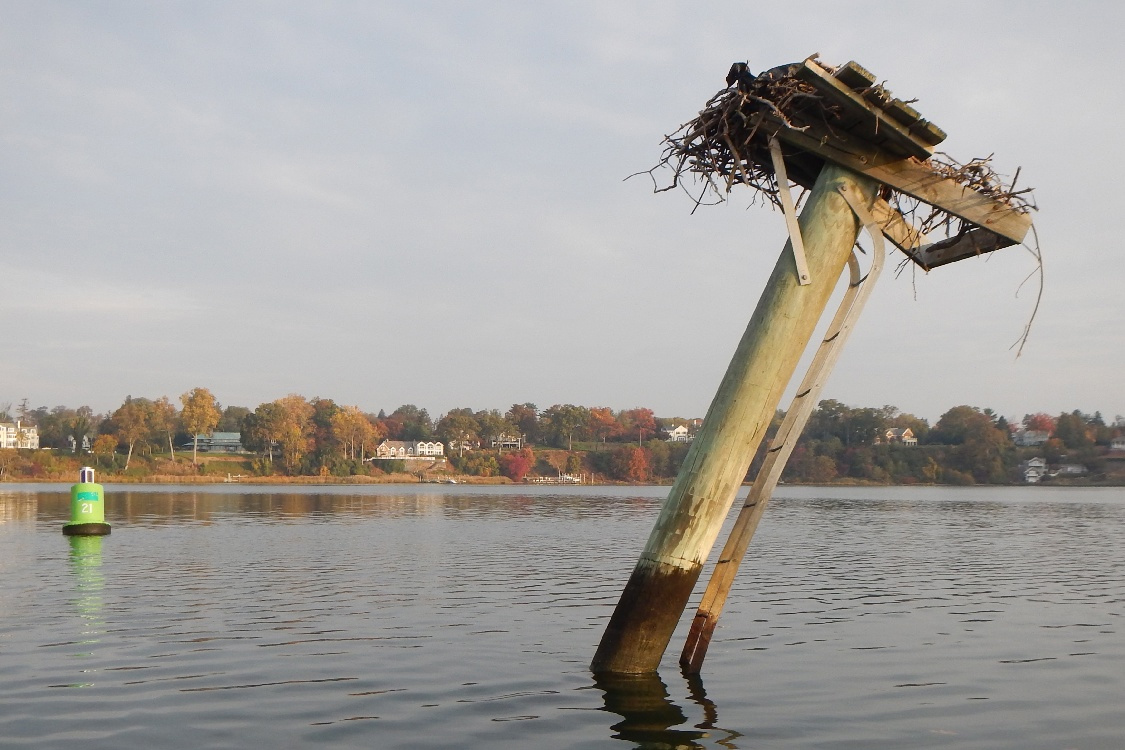
This platform was one of many that sustained damage by Superstorm Sandy. We pledged to repair any and all platforms that were reported as damaged by the Storm and did; however, we don’t have the equipment or boats to repair a leaning platform in open water, like 083-A-007. Since it was damaged we have been contacted by many concerned citizens who watch the pair that nests here. We’re sharing this story to help garner support to repair the nest pole.
Ospreys mate for life and return to the same nest site, year after year. They will build their nest at an angle to compensate for the lean, but young are still in jeopardy of falling out of it. Our goal is to get it fixed before the pole falls over. Lastly, this is an important nest site in the region. There is very little preserved open space in this region of Monmouth County and very few osprey nests.

Last year we tried reaching out to local marine construction and bulkheading companies but had no luck getting anyone to even return our calls. Then we contacted the Bureau of Coastal Engineering’s Aids to Navigation and they did not have equipment in the area to make the needed repairs last fall (we’ve since called them again to get their assistance and are waiting to hear back).
Do you know any local bulkheading or marine construction companies who work in the Fair Haven/Rumson area? If you do, please see if they can provide some assistance so this pair of ospreys have a safe place to nest!
by Ben Wurst, Habitat Program Manager

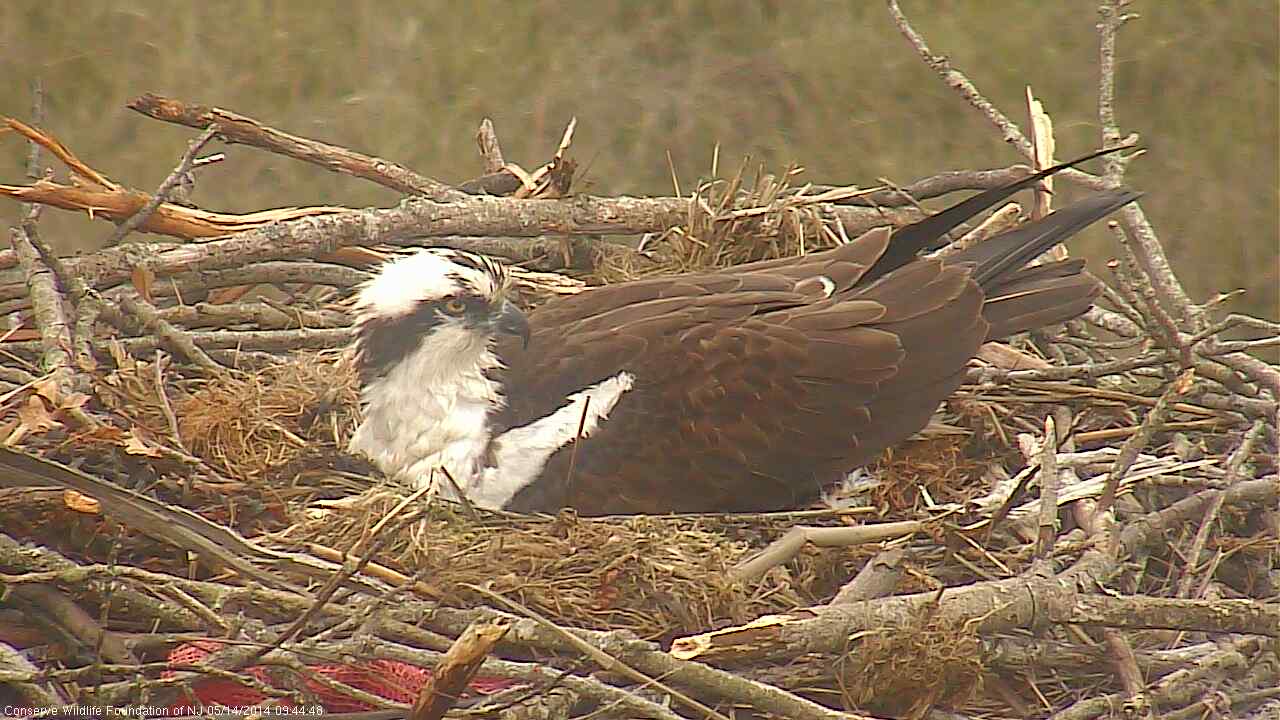
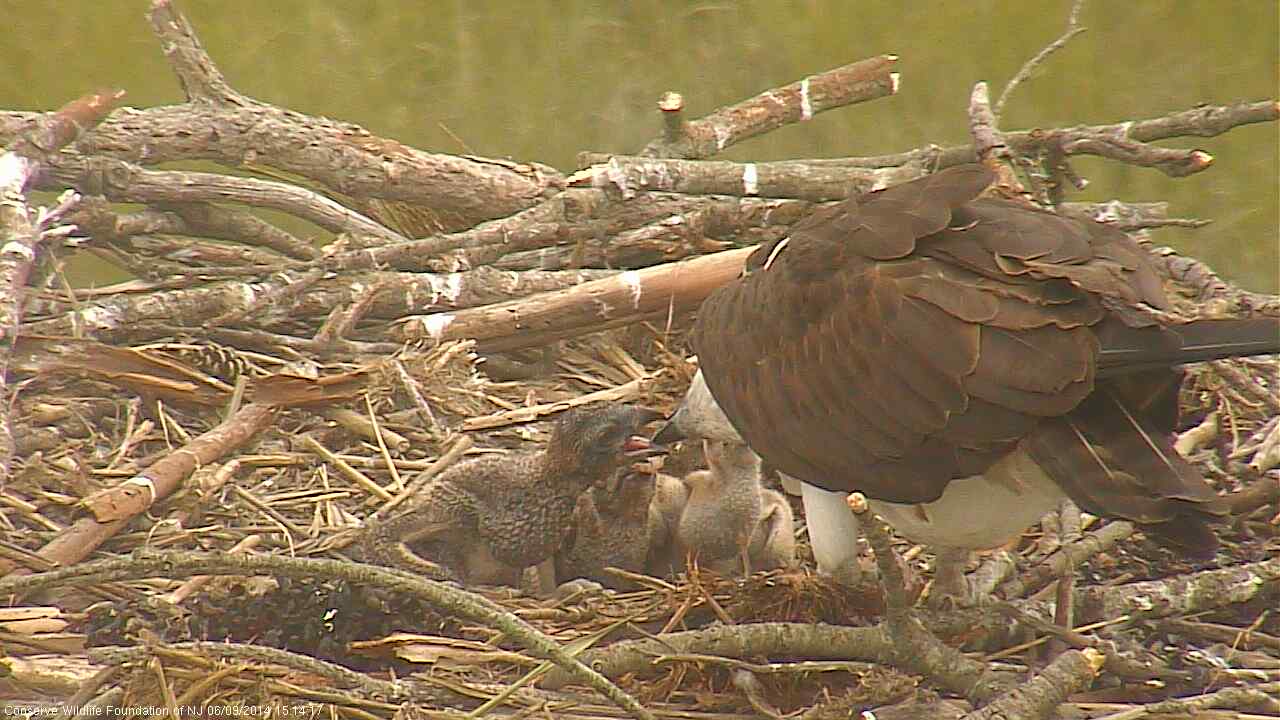
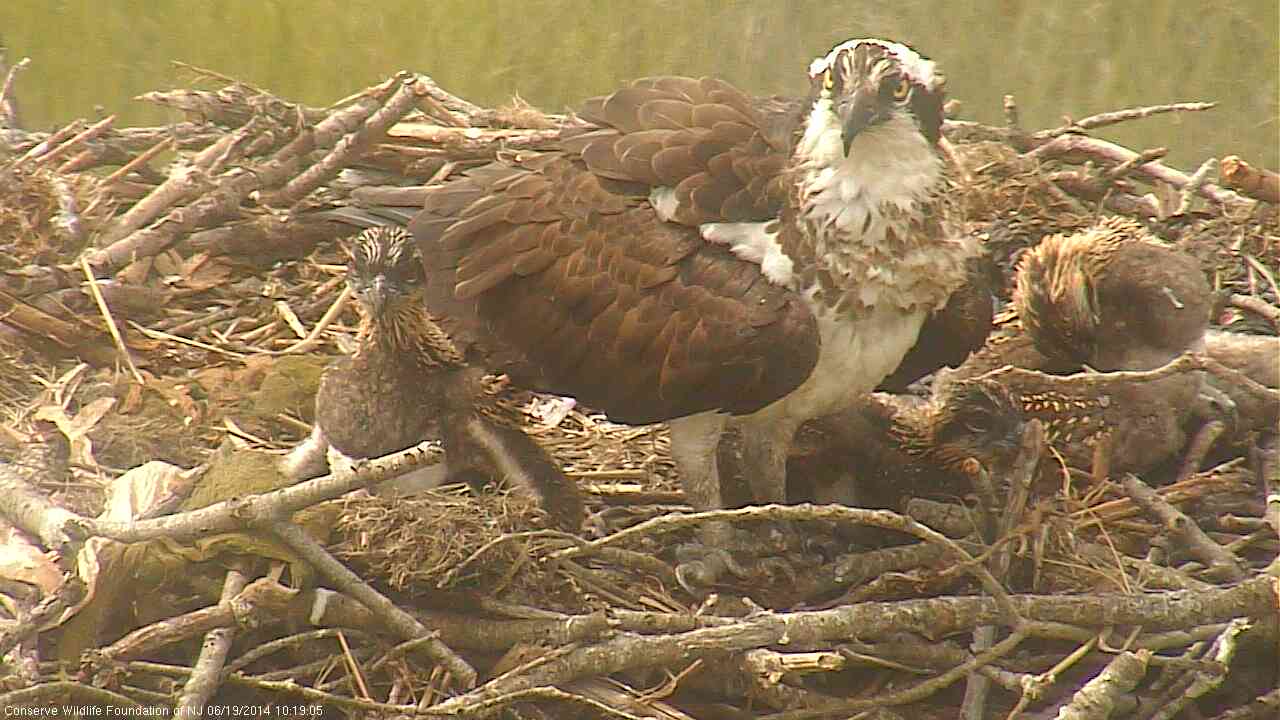
If you haven’t noticed, we now have three healthy osprey nestlings at the nest at Edwin B. Forsythe National Wildlife Refuge in Oceanville, as viewed by our Osprey Cam. The first chick hatched on May 25th, the second on the 26th, and the third on the 28th. The eggs hatched in the order they were laid, referred to as asynchronous hatching. The incubation period was ~38 days for all three eggs (average is 35-37 in NJ; 32-43 throughout their range). With the cooler temperatures the longer period is expected. Osprey young are born semi-altricial, or are downy and require close parental care to survive. The male osprey has been very busy foraging and catching more prey to feed all the hungry mouths. Have you tried to identify the prey that they’ve brought in?
by Ben Wurst, Habitat Program Manager
Last year 26 nesting pairs of peregrine falcons were monitored in New Jersey. The core of the state population nests on towers (old hacking towers) and on buildings in urban areas. Each spring we assist NJ Division of Fish & Wildlife’s Endangered and Nongame Species Program to help monitor the core of the population by performing nest checks and by installing a remote, motion-activated “spy” cam in nests to record the adults as they enter and exit nests. The footage captures the legs of peregrines. Why? Many peregrines are banded before they can fly with a federal USGS bird band and a state bi-color, alpha-numeric band. The state bi-color band can be read from the video captured by the camera. The information that these identifications provide is immensely valuable for relating peregrine origin and age to nest success, site fidelity and turnover rate in the population.
Here is a short clip from a nest site in Ocean Gate and the bird in the video was identified as a male (*8/*5, black/green) that was banded in 2005 at Sedge Island.
by Ben Wurst, Habitat Program Manager
We had quite a scare last week, on April 30th around 12:30pm, after getting a report from an observer of our Osprey Cam on our Facebook page. A single use plastic shopping bag had gotten wrapped around the neck of the incubating female. After getting the report we started to monitor the situation to see how it would unfold. The bag was loosely wrapped, so we hoped she would be able to free herself…which she did after an hour.

A lot of viewers and FB fans were asking why we weren’t going out to remove the bag from her neck. We answered each and every question to help make sure people knew that we were doing everything we could to protect her safety. First, we couldn’t just walk out to the nest (which is out in the middle of the salt marsh) without the female reacting to us and flying off the nest (with the plastic bag around her neck). Her flying off the nest with the bag around her neck would have only caused even more harm to her. She could have gotten snagged on a piece of nesting material and in the struggle could have choked to death or she could have fractured one of her eggs… Second, if she would have been tied down to the nest, then we would have enacted a plan to go out to the nest (after a certain amount of time) and released her. Our policy is that we will only intervene if it is a life or death situation. When we enter their nest sites we introduce stress to the birds which can ultimately do more harm than good. Finally, at least we have a camera to monitor the nest! Think of all the other 500+ nests in New Jersey where we only go out to monitor them once or twice during the nesting season. So much plastic winds up in osprey nests that it is a serious concern. People need to be more aware of their surroundings and do their best to make sure waste is properly disposed of.

Statistics for plastic recycling are dismal… According to the U.S. Environmental Protection Agency “In 2010, the category of plastics which includes bags, sacks, and wraps was recycled at almost 12 percent.” We’re lucky that she was able to free herself. This just proves that ospreys do not have an easy life. There are many threats to ospreys and they have very high mortality rates, which are around 80%.
On the positive side, the female and male continue to incubate three eggs at Edwin B. Forsythe NWR. We should start to watch for hatching around May 19-20th. We have been writing nest news with other life history information on a weekly basis on our Osprey Cam page.
by Ben Wurst, Habitat Program Manager
I must admit, I’ve been anxious for the return of this pair of ospreys (and all others for that matter). The return of ospreys is a sign of spring, regrowth, and of recovery (from the effects of Superstorm Sandy) as we watch them rebuild their nests as we have helped to repair and replace many of their nesting platforms throughout our coast.
Over the past 6 weeks I had the task of installing a new remote/solar powered/high definition camera system on the coastal salt marsh of New Jersey. The camera system was installed inside Edwin B. Forsythe National Wildlife Refuge in Oceanville next to an existing osprey nesting platform. The camera system streams live video 24/7 from the nest to the Visitor’s Center at Forsythe and on our website. Since the system has been installed we’ve had crows, peregrine falcons (one that was a juvenile who was ID’d by her leg band and originated in Delaware), and a great horned owl (not good since owls are predators of osprey young) perch on the platform.
The nesting pair of ospreys arrived back from their wintering grounds on Friday, March 29th. We don’t know anything about the breeding pair other than neither is banded with USGS bird bands. The female has a very heavily streaked and prominent “necklace” of brown feathers on her breast. The male is smaller and has a bright white breast. Since arrived they have already been copulating (breeding) on the nest and will continue to do so over the next few weeks until the female will lay eggs in late April. For now they will continue to spruce up their nest and the male will perform courtship displays, after a successful hunt or while carrying nesting material, near the nest to help strengthen their pair bond.
There is a microphone out at the nest and it works. Some issues have come up with pairing the sound and video feeds and we are working on getting that sound online. I will be writing a weekly “Nest Cam News” journal on the Osprey Cam page with information about osprey reproduction, life history and other cool facts about ospreys! Some other great news is that the Wildlife Drive at Forsythe NWR will be open this weekend!!


by Ben Wurst, Habitat Program Manager

Marine debris (specifically plastics) have become a serious problem in coastal areas throughout the world, especially in the Pacific Ocean where gyres create large floating “garbage patches.” I work out on the back bays and salt marshes throughout the coastal region of New Jersey as I help to monitor and manage ospreys and their nesting platforms. Every time I’m out I encounter trash. Most of it accumulates along the wrack line on the higher portions of the marsh where storm surges, high winds, and during spring tides (during full and new moon phases) push it onto the marsh. This debris then makes its way into the nests of ospreys because this is where they collect most of their nesting material.