Spotlight on Jeanne McArthur-Heuser, Women and Wildlife Legacy Award Winner

Jeanne McArthur-Heuser’s Long-lasting Beach-Nesting Bird Legacy

By: Lindsay McNamara, Communications Coordinator

2014 Women & Wildlife Legacy Award Winner Jeanne McArthur-Heuser has dedicated herself to protecting Sandy Hook’s natural resources and the species that call the area home for over 30 years.

When Jeanne began her career at Gateway National Recreation Area three decades ago, Sandy Hook was home to few pairs of breeding Piping Plovers. By 2012, there was a record high of 50 pairs, which is currently the largest population of breeding Piping Plovers in New Jersey. Jeanne’s conservation efforts on Sandy Hook have benefitted the entire ecosystem, causing increases in the populations of Osprey, American Oystercatchers, Least Terns, and Black Skimmers in the most densely populated state in the country.

Join us to honor Jeanne and the three other 2014 Women & Wildlife Award Winners on Thursday, October 23rd beginning at 6pm. Purchase events tickets and find more information.


Jeanne McArthur-Heuser
Jeanne McArthur-Heuser Legacy Award Winner

CWF asked Jeanne a few questions about what working in wildlife conservation means to her:

What motivates you to get out of bed and go to work?

“I have the best job in the world with the National Park Service. I do not consider what I do work. I have been working for the NPS for over 30 years. It never gets boring.”

What is your favorite thing about work?

“Every day is different and I love what I do. I get to mentor High School kids and share my knowledge with Student Conservation Association interns. I truly try to make a difference every day.”

What is your favorite thing to do when you are not working?

“I love going to auctions and bidding on antiques. It’s all about finding treasures and getting a good deal.”

What wildlife lives in your office?

“I have many animals that pass through my office. I have a holding cage for tagging box turtles and hognose snakes. I have transported an immature bald eagle, ospreys, great horned owls, baby raccoons, baby skunks, and baby opossums. I have not had a cat that could reproduce in 40 years but every year I find a litter of kittens. It is a running joke in the office that if I am carrying a box you should run otherwise you will become the proud owner of kitten.”

Do you have a wildlife species you like best and why?

“I have dedicated most of my career to improving the habitat and increasing the productivity of piping plovers. When I first started working at Sandy Hook, we only had 7 pair. Today my highest number of Piping Plover is 50. I hope someday they will be delisted.”

Please join us on Thursday, October 23, 2014, from 6:00 – 8:30 p.m. at the Trenton Country Club to honor the contributions that Jeanne McArthur-Heuser, Cathy Malok, Brooke Maslo, and Meghan Wren have made to wildlife in New Jersey.

We are excited to recognize the leadership and inspiration they provide for those working to protect wildlife in New Jersey. Women & Wildlife will also celebrate the timeless and inspiring journeys of wildlife migration in New Jersey and beyond.

Lindsay McNamara is the Communications Coordinator for Conserve Wildlife Foundation of New Jersey.

Help Bats Find a Good Home!

By Dan Silvernail, Eagle Scout Candidate and Conserve Wildlife Foundation Volunteer

Big brown bats in an attic space (c) Phil Wooldridge

Bats don’t get enough credit. They fly around at night devouring thousands of mosquitoes and other unwanted insects. They reduce our need to use pesticides to protect crops and trees. Their droppings, or guano, can even be used as garden fertilizer.

Aside from their nightly all-you-can-eat buffet, they don’t have the easiest life. People needlessly fear them, believing myths that they all have rabies or want to fly into your hair! Over six million bats have been wiped out by a disease called White-nose Syndrome which attacks them while they are hibernating. Their natural forest habitat is often destroyed. When they find a nice building in which to live, they often get kicked out, leaving them in need of a tight, warm place to give birth and raise their young.

That’s where we can help. We can build these flying mammals nice summer homes where they can hang out with their babies. By creating narrow spaces inside the house, painting the outside a dark color and caulking up the sides to retain the heat, and roughening up the wood to make it easier for the bats to climb in, we give something back to the bats for sparing us hundreds more mosquito bites and playing an important role in our ecosystem.

That’s why I chose to put together bat house kits for my Eagle Scout Project and why you and your family can come to this weekend’s New Jersey Wild Outdoor Expo to help build them.

Family fun at the NJ Wild Outdoor Expo
  • When: Saturday, September 13 & Sunday, September 14, Noon and 2:00 PM
  • Where: Colliers Mills Wildlife Management Area, Jackson Township, New Jersey
  • What: The workshops are free. Materials are available on a first come, first served basis.
  • Children can do a lot of the work to build the house, so families are encouraged to do the project together.

The bat houses will be donated to Conserve Wildlife Foundation of New Jersey to put up before bats are evicted from attics, eaves, and buildings, so they can easily find a new place to roost. Stop by CWF’s table in the Conservation Tent to learn more about bats and other imperiled wildlife species. You can always pick up plans to buy materials and make bat houses on your own.

Please come show New Jersey bats some appreciation!


Calling All Scouts: Earn your badges at this weekend’s WILD Outdoor Expo!

If you are looking for some great outdoors activities that can help fulfill Girl & Boy Scout Badges, join us this weekend at the New Jersey WILD Outdoor Expo! Tons of great activities will be offered, all for FREE!

Kayaking, NJ WILD Outdoor Expo

On Saturday and Sunday this weekend, September 13 & 14, the New Jersey WILD Outdoor Expo is offering unique blend of conservation information, education and hands-on opportunities to learn outdoor skills and activities. Numerous environmental and conservation exhibits, demonstrations and seminars are planned for the weekend. Visitors can learn about, and try, a wide array of activities including fishing, hiking, shooting sports, kayaking, camping skills, rock climbing, wildlife watching and much more.

Many of these free activities can be help fulfill Girl and Boy Scout badge requirements. CWF will be providing handouts of these activities at the Expo, but they are also provided here on our website. Badge counselors will not be present at the Expo.

Archery, NJ WILD Outdoor Expo

Some of the badges that can be fulfilled at the Expo include:

  • Birds badges
  • Naturalist badges
  • Photography badges
  • Camping and hiking badges
  • Forester badges
  • Outdoorsman badges
  • And many more!

For more information, or to be added to the scout mailing list, please contact Stephanie Feigin at 609-984-0621 or sfeigin@conservewildlifenj.org

Dig A Little Deeper – Go Clamming!

Part 1, Monday, was an introduction to these exciting programs. Part 2, Tuesday, highlighted the Harvest the Bay Day happening this Saturday, August 9 from 3-8pm. Part 3, Wednesday, gave the “Insider’s Look” into the amazing outdoor programs, told through the words of the experts teaching the programs at Island Beach State Park. And Part 4, Thursday, was a roundtable interview with the Island Beach State Park naturalists.

by Brooke Sambol

IMG_5721Among the many programs visitors can enjoy at Island Beach State Park, clamming is one that truly sticks out. Until I started working in the park, I had never been clamming, and now it’s one of my favorite programs to lead.

We take visitors out into Barnegat Bay, where we use clam rakes or our feet to locate and scoop up Quahog and sometimes surf clams. Due to the nature of clamming, this program attracts people of varying ages. It’s very common to have both adults and children sign up for a clamming tour. The mix of ages creates a great dynamic, where both adults and children have fun experiencing the bay from a hands-on approach.IMG_5263

A clam rake is offered for the program, but I always prefer using my feet. Digging my toes into the sand in search of clams is a grounding experience for me. Searching the bay with just my body fosters a feeling of closeness to nature; it’s here that I’m grateful that I live so close to the water. Not to mention, finding a clam after searching a while is very exciting!

All in all, clamming is one of my favorite programs at Island Beach State Park, and our visitors seem to share the sentiment.

To join a clamming program at Island Beach State Park, click here!

Brooke Sambol is a Wildlife Intern with the Conserve Wildlife Foundation of New Jersey


Round Table Interview with the Island Beach State Park Naturalists

Part 1, Monday, was an introduction to these exciting programs. Part 2, Tuesday, highlighted the Harvest the Bay Day happening this Saturday, August 9 from 3-8pm. Part 3, Wednesday, gave the “Insider’s Look” into the amazing outdoor programs, told through the words of the experts teaching the programs at Island Beach State Park. And Part 5, Friday, will feature a personal account from one of CWF’s interns who works at Island Beach State Park. 

ruddy turnstoneLearn from the Experts: A Round Table Interview with Island Beach State Park Naturalists

Q:        So many people know Island Beach as one of the most popular beaches along the New Jersey Coast. Is there to more to IBSP than just the beach and fishing?

A:        Absolutely!  The IBSP Nature Center is located approximately 7 miles from the park entrance and offers interactive, educational activities for the entire family along with pristine views of the ocean, bay and Barnegat Lighthouse.  IBSP Park educators also conduct a variety of programs including kayak tours, island history/Eco-Hikes, surfing lessons, snorkeling, fishing, clamming, moonlight hikes with a beach bonfire, and more!  Next time you visit IBSP, stop by and check it out!

-Kelly Scott, Park Naturalist

Q:        How do people register for Programs at IBSP?

A:        Participants are encouraged to register online via PayPal at: www.conservewildlifenj.org/education/programs/islandbeach or call the IBSP Nature Center at 732-793-1315

Q:        How did you become an IBSP Park Educator?

A:        I attended NJ Governor’s School for the Environment, where I was introduced to Sedge Island Natural Resource Education Center (Sedge). I volunteered at Sedge for a summer and became an intern the following year. I attended Rutgers University and received a B.S. of Environmental Policy, Institutions, and Behavior, and a minor certificate in Informal Science Education.

–Tom Seager, Park Educator

ospreyQ:        What is your favorite part of working at IBSP?

A:        I enjoy working with the different types of animals, the different programs each day, and most of all, educating the public to spread awareness and show them how much fun nature can be.

–Scott Witte, IBSP Seasonal Supervisor

Q:        Are there programs specifically designed for children?

A:       Yes!  IBSP offers the WILDCHILD programs including our most popular Surfing Safari (Ages 8-17), Nature Toddlers (Ages 3-5), and Island Explorer’s (Ages 6-12).  Visit www.conservewildlifenj.org/education/programs/islandbeach for more information.

Q:        Are there volunteer opportunities at IBSP?

A:        Yes!  Volunteers are an integral part of our program here at IBSP.  We are always looking for volunteers to help with the Nature & Interpretive Centers, daily programs, trail maintenance, tank maintenance, and more!  Stop by and fill out an application or call the Nature Center at 732-793-1315.

-Becca Hanson, IBSP Seasonal Supervisor

Q:        What options are available for school groups/class trips at IBSP?

A:        We strongly encourage school groups to visit IBSP.  This island provides a very unique experience for students to learn about coastal ecology, barrier island ecosystems, native species, local geology, and historical features of the area.  Programs can be tailored to suit any grade level and often include seining tours to find and identify species in the bay, beach walks, trail hikes and tours of our Nature/Interpretive Centers.  Any school group interested in scheduling a visit, or if you would like additional information, please contact the Nature Center at 732-793-1315.

Harvest the Bay Day!

Harvest the bay day flyerPart 1, Monday, was an introduction to these exciting programs. Part 3, Wednesday, gave the “Insider’s Look” into the amazing outdoor programs, told through the words of the experts teaching the programs at Island Beach State Park. Part 4, Thursday, was a roundtable interview with the Island Beach State Park naturalists. And Part 5, Friday, will feature a personal account from one of CWF’s interns who works at Island Beach State Park. 


The rich ecological resources of Barnegat Bay and IBSP, coupled with high numbers of visiting park patrons serves as the perfect backdrop for our Harvest the Bay Festival. IBSP, has two extensive natural areas, coupled with two large points of recreational usage and a marine conservation zone, making it an easy link to demonstrate the function of healthy coastal ecosystem, the effects of human interaction and beneficial aspects of management. Each year, the park hosts over 1 million guests that that engage in boating, clamming, fishing, swimming, and hiking along the 10 miles of shoreline.
Barnegat Bay acts as an early life history nursery for many species of fish/invertebrates that are both recreationally and commercially significant in terms of harvest. The bay supports healthy aquatic flora including submerged aquatic vegetation and phytoplanktonic growth. Subsequently, early life history stages of coastal bivalves, crustaceans and forage fish occur along the bay because of high levels of primary productivity. However, some fisheries resources in Barnegat Bay have experienced a decline in recent years. Despite healthy levels of biological productivity in Barnegat Bay, anthropogenic effects do require monitoring and education to better promote coastal stewardship including coastal development along the watershed, increased nutrient loading, decreases in dissolved oxygen/pH, habitat loss, and the effects of over-harvesting marine resources.IMG_0321

The Harvest the Bay Festival was designed to promote the value of shellfish and finfish as food resources in Barnegat Bay by highlighting their ecological, economic and social importance. Vendors from governmental, non-profit and private organizations will be present to discuss with the public, the importance of Barnegat Bay to their mission. Also, local restaurant vendors will be present to display locally caught food selections of Barnegat Bay and the adjacent coastal ocean. Ultimately, the goal of the Harvest the Bay Day is to celebrate the importance of Barnegat Bay and educate the public about its significance, while promoting the following Harvest the Bay educational programs:

Harvest the Bay Clamming

Harvest the Bay-Clamming is one of the best ways to experience Barnegat Bay. Join park educators and learn about the anatomy of Quahog clams, their ecological importance in the bay, harvesting restrictions, and more.  The program provides clam rakes or you can use your feet!  Learn the skills and “clam-dance” of the baymen that still live in the area. While clamming, you are also likely to encounter some of the birds of Island Beach State Park such as the Osprey and Oyster Catcher.

Harvest the Bay CrabbingSurf Fishing 4

Discover the fascinating life cycle of the Blue Claw Crab, its niche in the ecosystem, when and how to harvest them, and what you can do to assure their populations remain at a healthy level.

Harvest the Bay Fishing

Bluefish, Fluke, Black Drum – the bay is host to a variety of local fish. Explore the role of finfish in the bay’s ecosystem and discover techniques for successful fishing. Cast a line into the bay and reel in your catch of the day!


Highlighting the Island Beach State Park Programs!


The Jersey Shore has changed immeasurably over the past century. But one place gives you the chance to recapture the beauty and wild feeling that once encompassed the entire coast – Island Beach State Park.

At Island Beach State Park, you can still find hands-on adventures along the Atlantic Coast and the Barnegat Bay. You can still be immersed in the nature of coastal beach dunes, maritime forest, and vast saltmarsh. You can still find wildlife like osprey, red fox, diamondback terrapins, piping plover, sea turtles, and an incredible array of fish and shellfish.

This week CWF is highlighting the hands-on interactive learning programs offered at Island Beach State Park. This marks the first of five blog stories that will spotlight these programs.


Part 1, Today, will be an introduction to these exciting programs. Part 2, Tuesday, will highlight the Harvest the Bay Day happening this Saturday, August 9 from 3-8pm. Part 3, Wednesday, will give the “Insider’s Look” into the amazing outdoor programs, told through the words of the experts teaching the programs at Island Beach State Park. Part 4, Thursday, will be a roundtable interview with the Island Beach State Park naturalists. And Part 5, Friday, will feature a personal account from one of CWF’s interns who works at Island Beach State Park. 

CWF is excited to partner with New Jersey State Parks and offer incredible programs about New Jersey’s natural world at Island Beach State Park.

Become a WILDCHILD, take a sunset kayak tour, try your hand at surf-fishing, go bird watching, or enjoy a movie night at the park! Whatever you decide, you will be guided by professional educators and naturalists who have plenty of natural and wildlife stories to share with you.

At nearly 10 miles long, Island Beach is New Jersey’s most expansive stretch of undeveloped barrier island.  Our programs help you to connect with the beauty of this ecosystem and its ample natural resources.  Have your kids participate in a WILDCHILD program including surfing, surf-fishing, and island exploration. Try and catch the big one during a surf-fishing class or discover the beauty of Barnegat Bay through kayaking.

CWF Selected for Rain Barrel Auction Through EarthShare NJ

rainbarrelphoto4


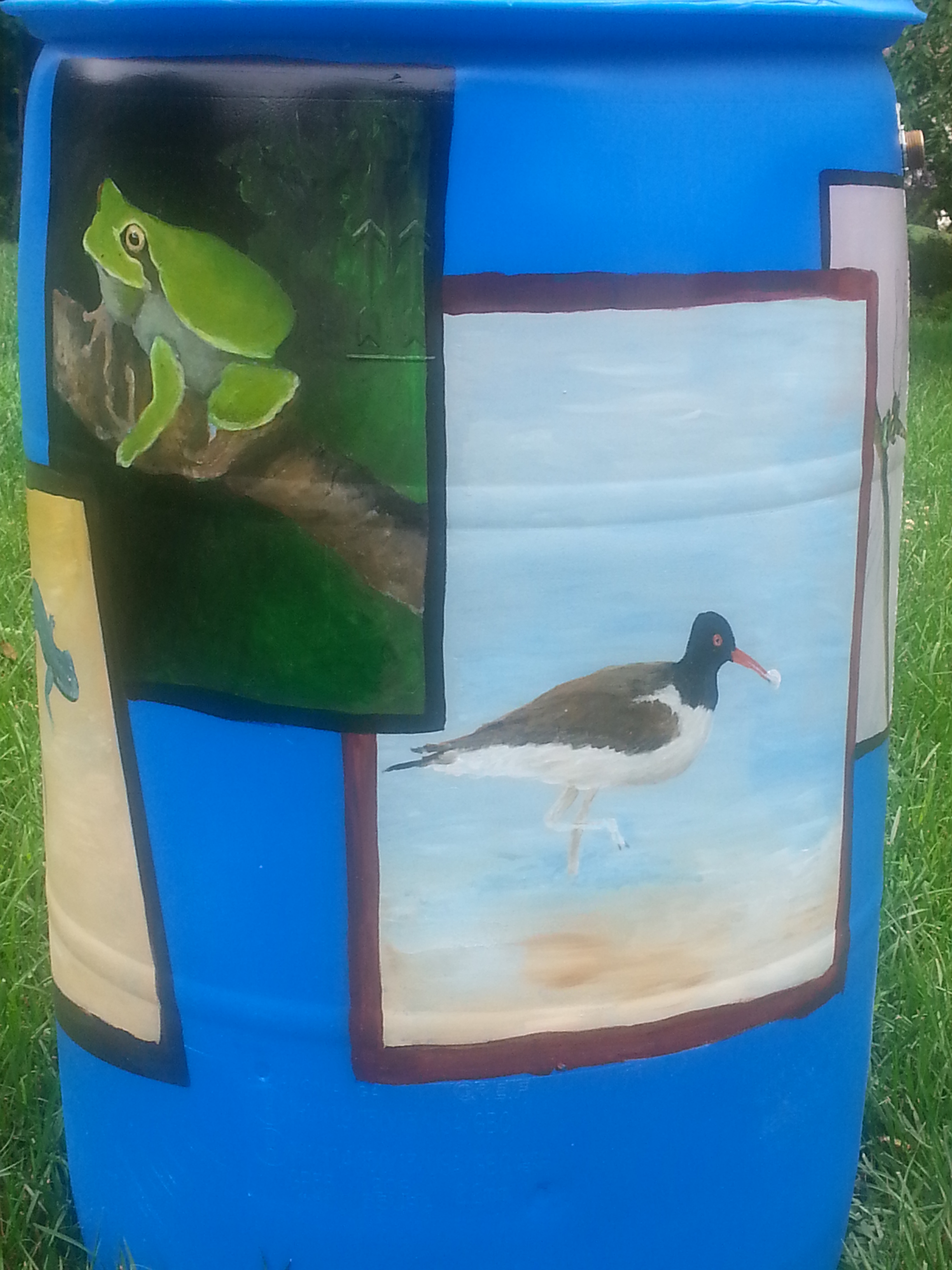
On May 30, 2014 EarthShare New Jersey launched the exciting new Rain Barrel Auctions program.  Thanks to a donation of barrels from Ocean Spray Cranberries, Inc. in Bordentown, N.J., each of the 24 members of EarthShare New Jersey will have one designed which captures the important work each of these charities do for our environment.  The auctions are designed to raise awareness and funds for the local members of EarthShare New Jersey. 

Rain Barrels offer a long-term, sustainable way to collect and store the rain water that drains from our roofs and gutters. The water can then be used around the home, in the garden, or even for hydration as long as it is adequately filtered and cleaned.  Each of the rain barrels being auctioned off are not only functional, but exquisite one of a kind works of art designed by artists from across the state. The program will run until the end of 2014.

The rain barrel designed for CWF was recently posted on eBay. CWF is very excited to have been selected for this effort, and we hope this rain barrel raises awareness and the sale is a success! The proceeds for this rain barrel will be split with CWF and EarthShare.

EarthShare is a national non-profit federation with 25 years of experience in connecting people and workplaces with effective ways to support critical environmental causes. Together we’ve raised more than $300 million for programs that care for our air, land, water, wildlife and public health — in your community, across the U.S. and around the world. EarthShare develops and manages employee engagement and giving campaigns to increase support for its member organizations and help our workplace partners achieve their philanthropic and CSR goals.

Conserve Wildlife Foundation is a non-profit and an EarthShare local member organization. Together CWF and EarthShare work to create a sustainable environment through education, conservation, preservation and community awareness. Through ongoing statewide and community activities we address so many important issues.


Check out our rain barrel, with beautiful artwork by Diane Novobilsky, here

rainbarrelphoto3 rainbarrelphoto2 rainbarrelphoto1

Delaware Bay’s Stranded Horseshoe Crabs Saved by Volunteer Effort

by Stephanie Feigin, CWF Program Coordinator

This marks the third story in Shorebird Week! Our first blog post, on Tuesday, introduced the film “A Race Against Time” and directed you to a free viewing of the film on our website. Our second blog post, highlighted an incredible news story about a resighting of the iconic Red knot B95 on the Delaware Bay! And today’s blog post, will highlight volunteers incredible effort to save stranded horseshoe crabs!

Volunteer Don Senior extracts an impinged horseshoe crab from the rubble on the south end of Fortescue beach along the Delaware Bay on Saturday  (c) Phillip Tomlinson South Jersey Times
Volunteer Don Senior extracts an impinged horseshoe crab from the rubble on the south end of Fortescue beach along the Delaware Bay on Saturday (c) Phillip Tomlinson South Jersey Times

This story illustrates the incredible efforts of volunteers for Conserve Wildlife Foundation and other conservation groups to save the stranded horseshoe crabs on Delaware Bay beaches. Horseshoe crabs can easily be flipped onto their backs by incoming tides, and they are not able to right themselves on their own. They also get trapped easily by tides and man-made obstacles, such as debris, which leaves them unable to return to the water leaving them to eventually die.


Return the Favor, a multi-group effort, has committed to rescuing as many horseshoe crabs as possible from South Jersey’s Delaware Bay beaches by regularly combing designated stretches of beach and helping to flip the crabs back on their bellies and redirect them back to the water. If possible these volunteers go out daily and rescue all of the flipped or impinged crabs. These efforts have been very successful so far, and they hope to continue these efforts and engage more about who want to volunteer.

  • To read this full news article click here
  • More information on how you can become a volunteer can be found on their website at www.ReturnTheFavorNJ.org.

And make sure to check out the film “A Race Against Time” which highlights CWF’s efforts to restore the Delaware Bay Shore beaches as well!

Terrapin Week: Developing a Northeast Regional Conservation Strategy for Terrapins

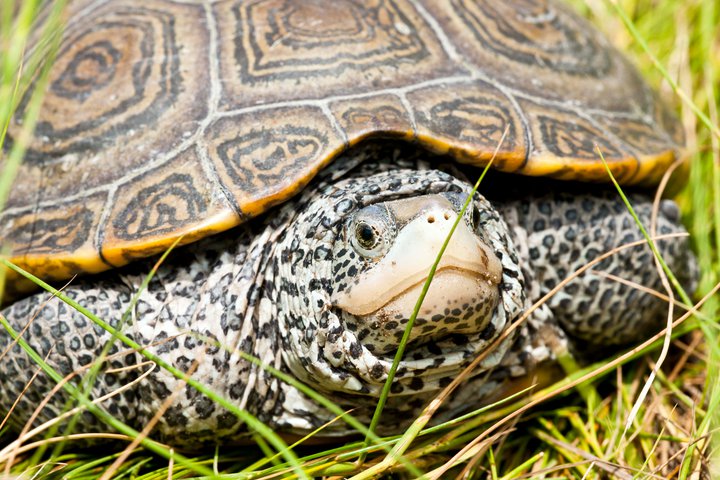
This story marks the second of five blog stories spotlighting New Jersey’s Diamondback Terrapin – and educating people on the research and efforts being done to protect these fascinating reptiles!

Part 1, Monday, was an introduction into the world of the Diamondback Terrapin. Part 2, today’s blog post, will feature CWF’s research efforts to protect the terrapins. Part 3, on Wednesday, will look at great places to view these beautiful turtles . Part 4, Thursday, will highlight some important ways you can help protect the Diamondback Terrapins. Part 5, Friday, will showcase some other important regional research being done by our partners.

by Stephanie Egger, CWF Wildlife Biologist

I am pleased to announce CWF was awarded a grant from the Regional Conservation Needs Program* for the development of a conservation strategy (strategy) that focuses on the conservation, management, and protection of terrapins from Massachusetts to Virginia.

Stephanie Egger, CWF wildlife biologist

For the next two years, we will be working with over 30 partners, many of whom are part of the Mid-Atlantic and Northeast regions of the Diamondback Terrapin Working Group (DTWG), assembling data and developing a strategy with the help of their years of expertise working with terrapins.

The overarching goal of the strategy is to help achieve long-term sustainability of terrapins by identifying the species current and historical populations and its habitat (known and unknown occupancy); characterizing and ranking threats; prioritizing focal areas for regional and individual state management; identifying data gaps; and reviewing the regulatory status in each state. The strategy will describe a strategic initiative for implementation of conservation actions across eight states and identify focal areas for conservation. The results of the strategy could be used to solicit additional funding for implementation for more regionally significant areas for terrapins in the future.

(c) Eric Sambol
(c) Eric Sambol

We’ve hit the ground running for this project and will convene the partners in meetings later this year at the College of William & Mary in Virginia and Cape Cod, Massachusetts as well as visit states for more local terrapin meetings.

More information on this project can be found on the Northeast Regional Conservation Needs (RCN) Grant Program site.

*The Northern Diamondback Terrapin (Malaclemys terrapin terrapin) in the Northeastern United States:  A Regional Conservation Strategy” is supported by State Wildlife Grant funding awarded through the RCN Program.  The RCN Program joins thirteen northeast states, the District of Columbia, and the U.S. Fish and Wildlife Service in a partnership to address landscape-scale, regional wildlife conservation issues.  Progress on these regional issues is achieved through combining resources, leveraging funds, and prioritizing conservation actions identified in the State Wildlife Action Plans.  See RCNGrants.org for more information.


Stephanie Egger is a Wildlife Biologist for Conserve Wildlife Foundation of NJ and Co-Chair of the Mid-Atlantic region of the Diamondback Terrapin Working Group