Conserve Wildlife Foundation’s New Shorebird Site

Find beautiful photographs like this one of a red knot preening on our new shorebird page. © Jan van de Kam
Find beautiful photos like this one of a red knot preening on our new shorebird page. © Jan van de Kam


Wondering how you can learn more about shorebirds? Look no further.


Despite its part in one of the world’s most incredible migrations, the annual arrival of tens of thousands of shorebirds in Delaware Bay remains relatively unknown to many New Jersey residents. Only recently have shorebirds received some news coverage, but it’s not good news – their numbers are declining rapidly. Scientists have begun to fear that without concerted conservation efforts, species like the red knot may soon go extinct.


Check out the vibrant new migration map on CWF's new shorebird page! © NJDFW
Check out the vibrant new migration map on CWF’s new shorebird page. © NJDFW

The Delaware Bay Shorebird Project, a study led by the New Jersey Division of Fish & Wildlife’s Endangered and Nongame Species Program, has documented shorebird activity in Delaware Bay for nearly thirty years. The result has been an extensive knowledge base that documents every aspect of shorebird life – from measuring food availability and weight gains to tracking migration routes and breeding success – in New Jersey and beyond. Now, as a longtime partner on this project, the Conserve Wildlife Foundation of New Jersey is proud to introduce a new way to learn about these wonderful birds and the work underway to save them: a brand new shorebird site!


CWF's Larry Niles holds a red knot with a geolocator. Read about this research and more on our new shorebird page. © Jan van de Kam
CWF’s Larry Niles holds a red knot with a geolocator. Read about this research and more on our new shorebird page. © Jan van de Kam

These new additions are loaded with content to bring you up to date on all the latest developments in the protection of shorebirds. Learn about these special birds on the Key Species page, and find detailed descriptions about their appearance, life cycle, and where to see them on their own pages in our online Field Guide. Check out the Media page for videos, photos, news articles, scientific publications, and more. Take an in-depth look at all the different areas of shorebird study currently underway on the Research page, and click on the Conservation page to discover how these birds are being protected. Finally, visit our Get Involved page to learn how you can become part of the efforts to help save these remarkable species from extinction.


Be sure to check out all the new additions at:  http://www.conservewildlifenj.org/protecting/projects/shorebird/


Hatching!!

Three healthy hatchlings at Forsythe NWR!

by Ben Wurst, Habitat Program Manager

Chicks!

If you haven’t noticed, we now have three healthy osprey nestlings at the nest at Edwin B. Forsythe National Wildlife Refuge in Oceanville, as viewed by our Osprey Cam. The first chick hatched on May 25th, the second on the 26th, and the third on the 28th. The eggs hatched in the order they were laid, referred to as asynchronous hatching. The incubation period was ~38 days for all three eggs (average is 35-37 in NJ; 32-43 throughout their range). With the cooler temperatures the longer period is expected. Osprey young are born semi-altricial, or are downy and require close parental care to survive. The male osprey has been very busy foraging and catching more prey to feed all the hungry mouths. Have you tried to identify the prey that they’ve brought in?

Shorebirds, Horseshoe Crabs and Stewards…

together on the Delaware Bay

by Larissa Smith, Wildlife Biologist/Volunteer Coordinator

Shorebird Steward Liz Hermosa shows beach visitors a clump of horseshoe crab eggs on Cook's beach.
Shorebird Steward Liz Hermoso shows beach visitors a clump of horseshoe crab eggs on Cook’s beach.

Once again migratory shorebirds, including the NJ endangered red knot, have returned to the Delaware Bay to feed on horseshoe crab eggs.  This annual phenomenon brings people from around the world to the Delaware Bay beaches.

Beaches are closed during the migration from May 7th through June 7th to protect the shorebirds from disturbance when feeding.  Just as the birds return each year so do volunteer Shorebird Stewards who educate the public about the beach closures , shorebirds and horseshoe crabs on nine beaches in Cape May and Cumberland County.  Now is a great to come out to the beaches to view shorebirds and crabs and say “hi” to the stewards.

This year the hot spots for shorebirds  in Cape May County  are Reed’s , Cook’s  and Kimble’s Beaches and  Fortescue in Cumberland County.


Reduce, Reuse, Recycle!!

Single use plastic bag wrapped around ospreys neck…

by Ben Wurst, Habitat Program Manager

We had quite a scare last week, on April 30th around 12:30pm, after getting a report from an observer of our Osprey Cam on our Facebook page. A single use plastic shopping bag had gotten wrapped around the neck of the incubating female. After getting the report we started to monitor the situation to see how it would unfold. The bag was loosely wrapped, so we hoped she would be able to free herself…which she did after an hour.

Here you can see the single use plastic bag around her neck.

A lot of viewers and FB fans were asking why we weren’t going out to remove the bag from her neck. We answered each and every question to help make sure people knew that we were doing everything we could to protect her safety. First, we couldn’t just walk out to the nest (which is out in the middle of the salt marsh) without the female reacting to us and flying off the nest (with the plastic bag around her neck). Her flying off the nest with the bag around her neck would have only caused even more harm to her. She could have gotten snagged on a piece of nesting material and in the struggle could have choked to death or she could have fractured one of her eggs… Second, if she would have been tied down to the nest, then we would have enacted a plan to go out to the nest (after a certain amount of time) and released her. Our policy is that we will only intervene if it is a life or death situation. When we enter their nest sites we introduce stress to the birds which can ultimately do more harm than good. Finally, at least we have a camera to monitor the nest! Think of all the other 500+ nests in New Jersey where we only go out to monitor them once or twice during the nesting season. So much plastic winds up in osprey nests that it is a serious concern. People need to be more aware of their surroundings and do their best to make sure waste is properly disposed of.

There are ways you can help make a difference:

  1. Reduce the amount of stuff you buy and the amount of trash you produce
  2. Reuse what you can, recycle what you can’t
  3. Pick up litter when you see it. There is a great movement in Australia called “Take 3” and their message is simple: “Take three pieces of rubbish with you when you leave the beach, waterway or… anywhere and you have made a difference.”  
  4. Stop or reduce your dependence on single use plastics
  5. Use reusable shopping bags
  6. Don’t release balloons!
The female struggles to get free of the bag.

Statistics for plastic recycling are dismal… According to the U.S. Environmental Protection Agency “In 2010, the category of plastics which includes bags, sacks, and wraps was recycled at almost 12 percent.” We’re lucky that she was able to free herself. This just proves that ospreys do not have an easy life. There are many threats to ospreys and they have very high mortality rates, which are around 80%.

On the positive side, the female and male continue to incubate three eggs at Edwin B. Forsythe NWR. We should start to watch for hatching around May 19-20th. We have been writing nest news with other life history information on a weekly basis on our Osprey Cam page.


Attend the NJ Wildlife & Conservation Conference on April 26th

Public invited to hear expert panels on invasive species, wildlife disease, and other threats facing sportsmen and wildlife conservationists

NJWCC logoHunters and birdwatchers alike will come together for the first annual New Jersey Wildlife and Conservation Conference on April 26, 2013 in Eatontown, New Jersey. Conserve Wildlife Foundation of NJ (CWF) is partnering with the New Jersey State Federation of Sportsmen’s Clubs and the New Jersey Division of Fish & Wildlife to host these expert panels at the Sheraton Eatontown Hotel at 6 Industrial Way East in Eatontown, N.J.

“Working together for wildlife was the catalyst that blurred the lines between the Federation camouflage and Conserve Wildlife green, enabling us to partner together and tackle the complex fish and wildlife issues facing New Jersey today,” said Frank Virgilio, President of the New Jersey State Federation of Sportsmen’s Clubs.

The inaugural conference will feature panels of wildlife experts from New Jersey Audubon, the New Jersey Outdoor Alliance, and many other organizations, exploring timely and controversial issues ranging from invasive species and wildlife disease to our declining forest health and conservation advocacy.

“The many conservation enthusiasts in New Jersey owe a great deal to sportsmen, who practiced wildlife conservation long before it entered national consciousness,” said CWF Executive Director David Wheeler. “Today our shared interests have led to countless success stories, protecting New Jersey’s valuable habitat and wildlife species during a time when we face more challenges than ever. This conference will tackle those issues with the most timely and meaningful information available.”

Individuals or companies seeking to register should visit www.ConserveWildlifeNJ.org.  Discounted rates for attending are as low as $20 for the all-day panels.

Ospreys are back!!

Meet the osprey pair at Nest #2835

by Ben Wurst, Habitat Program Manager

I must admit, I’ve been anxious for the return of this pair of ospreys (and all others for that matter). The return of ospreys is a sign of spring, regrowth, and of recovery (from the effects of Superstorm Sandy) as we watch them rebuild their nests as we have helped to repair and replace many of their nesting platforms throughout our coast.

Over the past 6 weeks I had the task of installing a new remote/solar powered/high definition camera system on the coastal salt marsh of New Jersey. The camera system was installed inside Edwin B. Forsythe National Wildlife Refuge in Oceanville next to an existing osprey nesting platform. The camera system streams live video 24/7 from the nest to the Visitor’s Center at Forsythe and on our website. Since the system has been installed we’ve had crows, peregrine falcons (one that was a juvenile who was ID’d by her leg band and originated in Delaware), and a great horned owl (not good since owls are predators of osprey young) perch on the platform.

The nesting pair of ospreys arrived back from their wintering grounds on Friday, March 29th. We don’t know anything about the breeding pair other than neither is banded with USGS bird bands. The female has a very heavily streaked and prominent “necklace” of brown feathers on her breast. The male is  smaller and has a bright white breast. Since arrived they have already been copulating (breeding) on the nest and will continue to do so over the next few weeks until the female will lay eggs in late April. For now they will continue to spruce up their nest and the male will perform courtship displays, after a successful hunt or while carrying nesting material, near the nest to help strengthen their pair bond.

There is a microphone out at the nest and it works. Some issues have come up with pairing the sound and video feeds and we are working on getting that sound online. I will be writing a weekly “Nest Cam News” journal on the Osprey Cam page with information about osprey reproduction, life history and other cool facts about ospreys! Some other great news is that the Wildlife Drive at Forsythe NWR will be open this weekend!!

Female osprey at nest #2835
Male osprey at nest #2835

Volunteers Survey New Jersey’s Eagle Population…

…during the 2013 Midwinter Bald Eagle Survey

By Larissa Smith, Biologist/Volunteer Manager

Shark River © Dennis Ruffe

Every January NJ participates in the National Midwinter Eagle Count.   Volunteers surveyed for eagles statewide during the weekend of January 12th & 13th.    Due to dense fog the visibility was poor in many of the survey areas but despite this the total count was  297 bald eagles.  This is 38 less than 2012’s high count of 335 bald eagles.  Four golden eagles were also counted during the survey.

2013 Midwinter Eagle Survey Results

  • Southern NJ: 264 bald eagles
  • Northern NJ: 33 bald eagles
  • Total bald eagles: 297

Thank you to all volunteers who participated!

February is a great time to get out and view eagles in New Jersey.  So far twenty-one pairs of eagles are incubating (on eggs) while others pairs are busy getting ready for the season.  Not only can you spot resident birds this time of year but wintering eagles as well.  The Cumberland County Winter Eagle Festival takes place this Saturday the 9th. This is a good opportunity to see eagles and other raptors and learn more about them.  I’ll be there at the CWF table so stop by and say “Hi”.

For more information on the festival: http://www.conservewildlifenj.org/events/v/011/2/2013/09/


Night Hikes This Weekend at Island Beach and Allaire

Join us for a Night Hike this Saturday!

Celebrate the coming of the full moon!

Join CWF for an evening night hike at either Allaire State Park or Island Beach State Park. 

At Allaire, we will go for a short hike alongside the canal exploring the senses and how they adapt to the night.  Program begins at 6pm at the Nature Center.  To register for the night hike at Allaire, please call Charlene at 732-567-3675.  Cost is $5/person.

At Island Beach, bundle up and join us for a hike to the beach. Roast marshmallows over a campfire and listen to ghost stories of the Atlantic!  Program begins at 6pm the Nature Center.  To register for the night hike at Island Beach, visit here. Cost is $5/person.


We’ve Been Wiki’d!

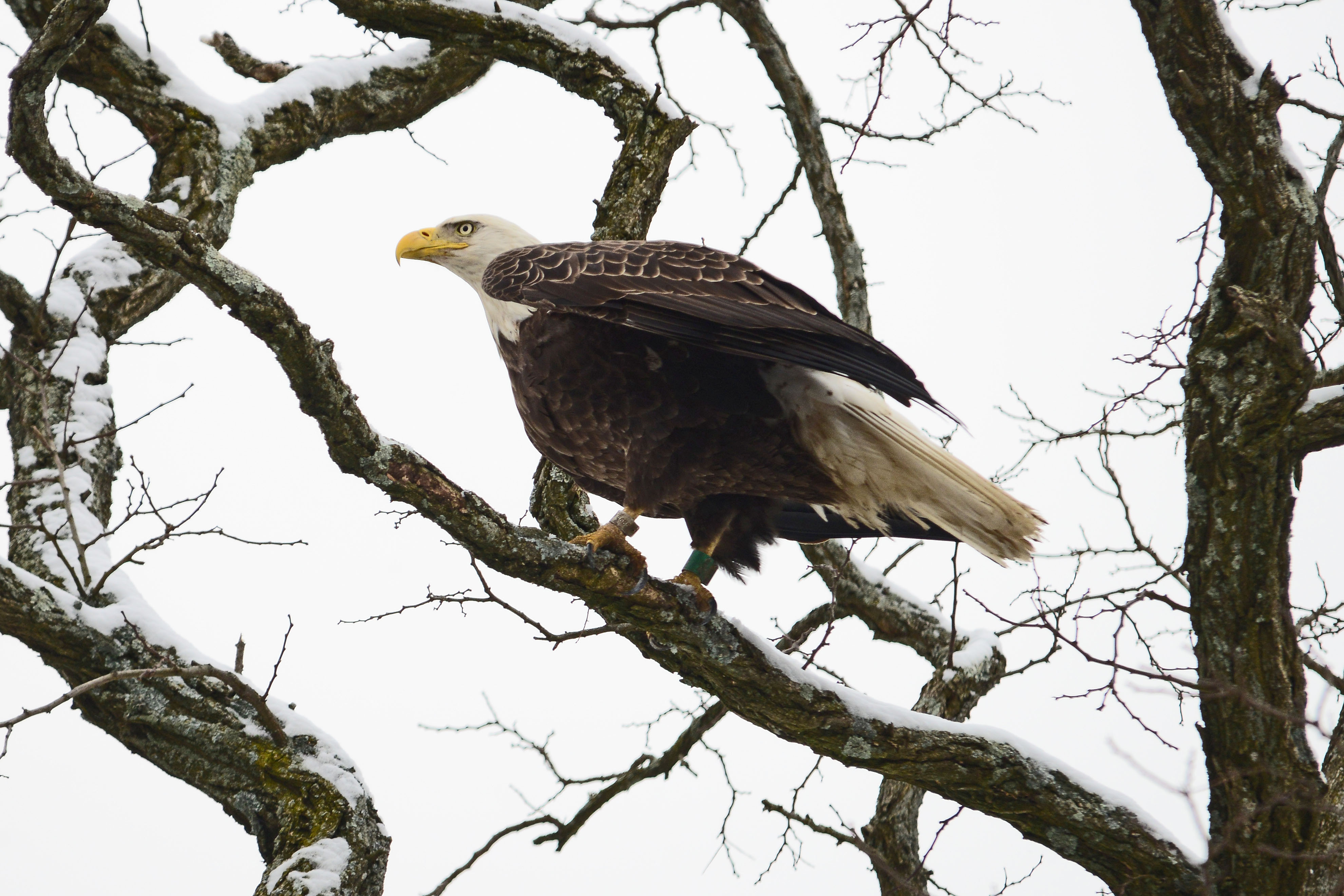
Bald Eagle pair © George Cevera

There is a new informational resource for Conserve Wildlife Foundation of NJ.  A Wikipedia page!  The page is a good educational source for the public who may not know much about NJ rare wildlife or conservation work in NJ.   The endangered species that are mentioned on the Wikipedia page have links to the Wikipedia pages about them.

The page has an overview of the foundation’s conservation projects and it also covers the foundation’s habitat protection projects and educational programs. 

Check it out! and do a search for Conserve Wildlife Foundation of NJ.


Allaire Nature Center: We are open for business!

by Charlene Smith, Allaire Nature Center Manager

Hi! My name is Charlene Smith and I am the manager at Allaire Nature Center. I am a recent graduate of Rutgers University where I majored in Ecology & Natural Resource Management. I have spent half my life in Montreal, Quebec, Canada and the other half in New Jersey and have been pleasantly surprised at the history, beauty, and diversity of this state. I have a passion for the outdoors and love discovering all the wildlife and various landscapes that New Jersey has to offer.

I am excited to kick off a new season of adventuring into the wilds of Allaire State Park.  Tucked away in the woods at the edge of a pond, I have always considered Allaire Nature Centerto be a hidden gem that only a few people have had the chance to experience.  

CWF is offering many nature based programs that help to get people out in the field and experience wildlife hands-on.  This weekend, come and explore the pond and stream or take a quiet bird walk.  Check out our programs page.

Many people come to Allaire and can’t believe what a beautiful park it is and that it took them so long to come visit. They always vow that they will return again soon and spread the word to friends and family.

So, what are you waiting for? Come spend the whole day at Allaire! Make sure you bring your walking shoes and curiousity – and stop by the nature center and say Hi!