Project RedBand is a go!

Time to get outside and watch some ospreys!

by Ben Wurst, Habitat Program Manager

A pair of ospreys produced at a nest on Barnegat Bay were banded with a red auxiliary band. © Northside Jim

A lot has changed throughout the 40 project history of the New Jersey Osprey Project. From a low of only 53 osprey pairs (statewide) in 1973, today there are more than 540 pairs that return here each year to feed, nest, and raise young. In the beginning work to re-establish their population was a trementous undertaking. Ospreys, a  were loaded with environmental contaminents (DDT, which caused the thinning of egg shells), their habitat was bulldozed, and early on birds were shot for their feathers and eggs. Once the Endangered Species Conservation Act of 1973 ospreys were afforded protection they deserved, and work by biologists like Pete McLain were underway to restore the population in New Jersey.  Continue reading “Project RedBand is a go!”
Osprey Chick Banding – An Unforgettable Experience

by Brooke Sambol

Photography by Eric Sambol

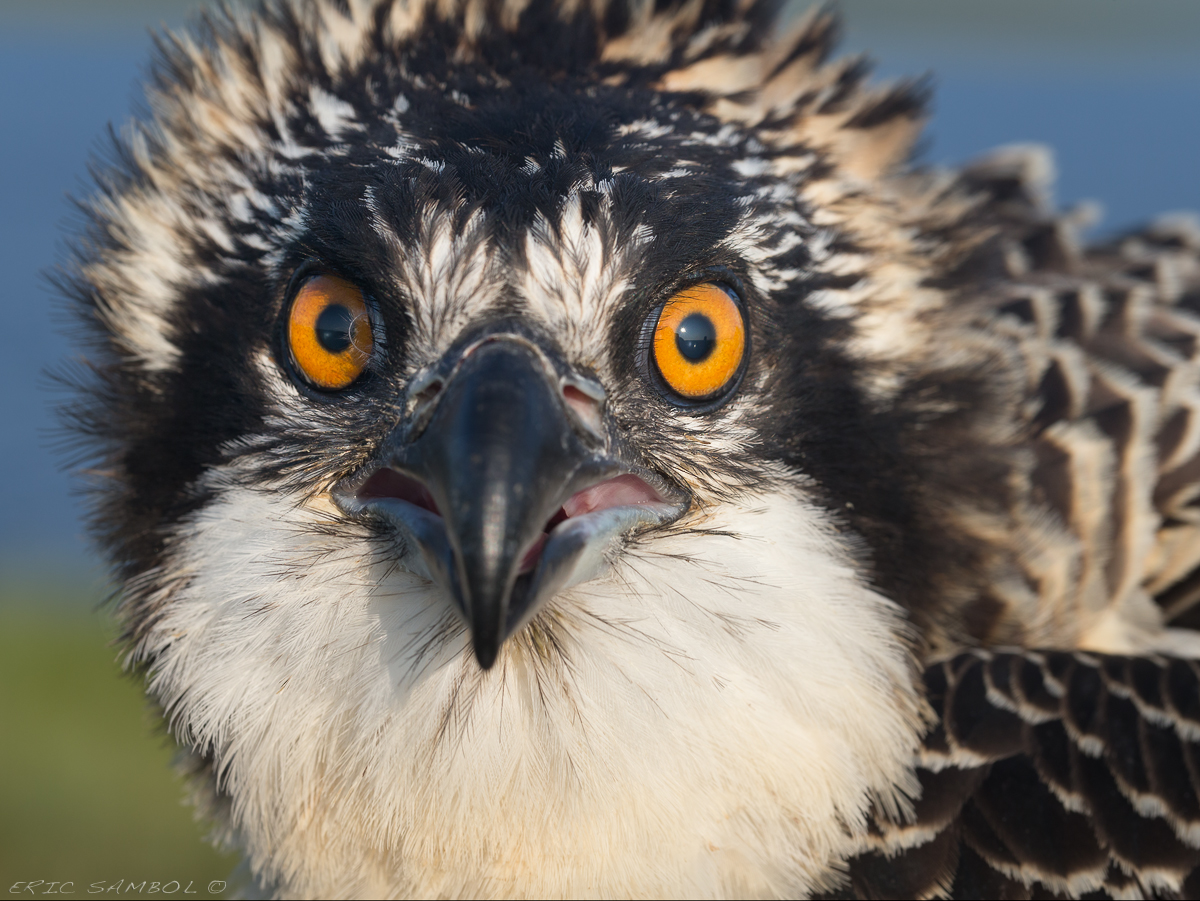
Osprey close up (c) Eric Sambol

The other day, my dad and I got the chance to accompany CWF biologist, Ben Wurst, on an osprey-banding excursion – him for photography, and me for the experience.

At 6 am, we set out on a small boat in Tuckerton, New Jersey. Through the salt marshes, we visited each nest for Ben to take notes on the ospreys occupying them. When the conditions were right , he could also band the chicks.

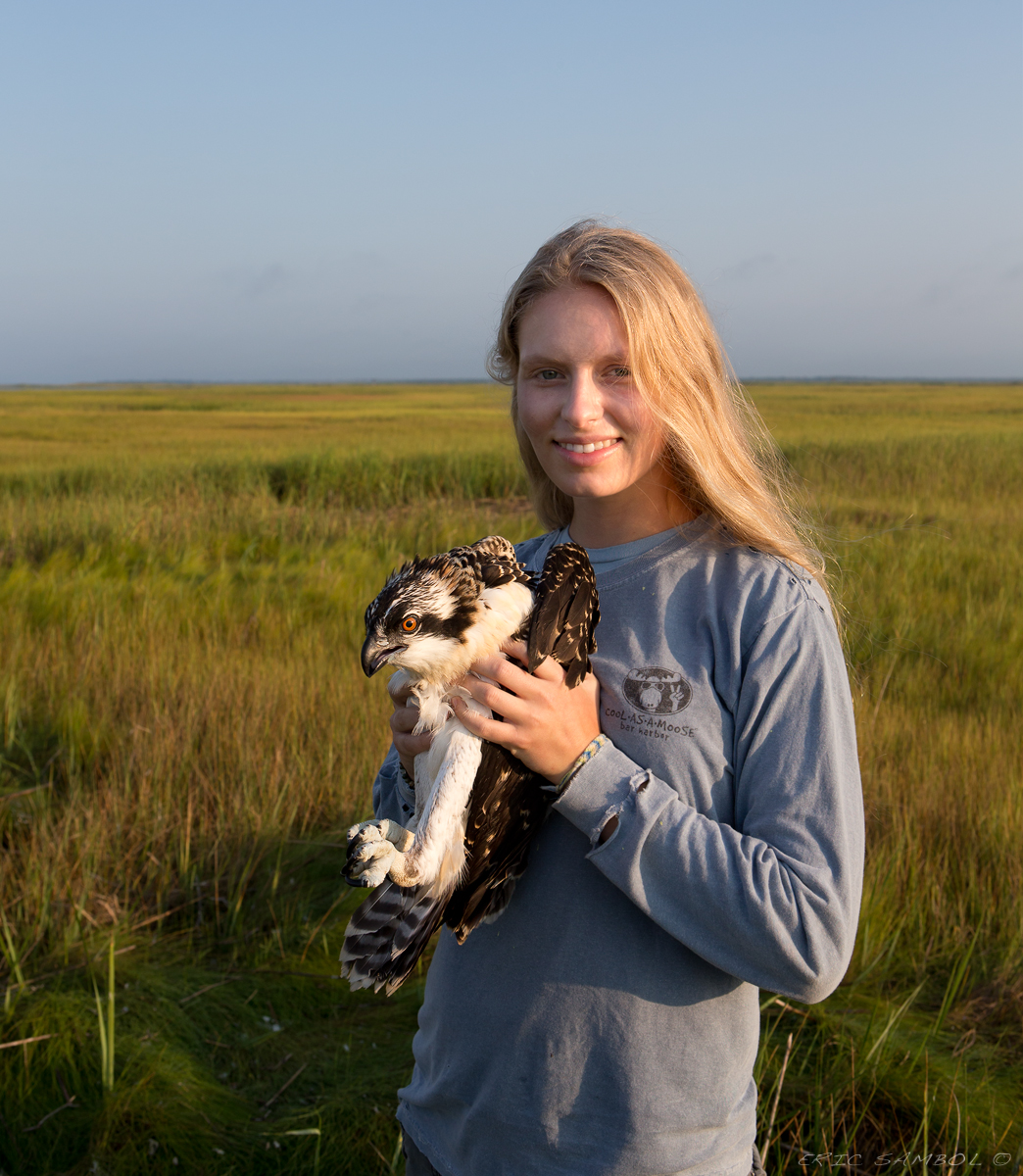
Ospreys are truly beautiful birds, magnificent to behold, and even more so up close. I was fortunate enough to hold one chick while Ben attached a band around its ankle.

Brooke Sambol holding an Osprey (c) Eric Sambol

Over the years, CWF has played a major role in osprey monitoring and species rehabilitation. The work they’ve done has really paid off. Due to the widespread use of the pesticide DDT during the 1970’s, osprey populations in New Jersey plummeted from over 500 nests to just 50 nests. Since then, biologists, including those from CWF have implemented an intensive osprey rehabilitation project.

This included the replacing of healthy osprey eggs from Maryland into DDT-weakened New Jersey nests, the building of hundreds of osprey nest boxes along the coast, and diligent monitoring.

In 2013, biologists counted 405 nesting osprey pairs. The success is monumental, and a testament to the change that can occur through science and dedication.

Brook Sambol is a Coastal Wildlife Intern with Conserve Wildlife Foundation of New Jersey

Photo from the Field

Running the numbers

by Ben Wurst, Habitat Program Manager

Ben Wurst prepares to band two osprey nestlings for future tracking. Photo courtesy Eric Sambol

By now many young ospreys have taken to the wing. While they still rely on their nests to perch at night and their parents for food, these juveniles take to the skies to learn the skills needed to survive to adulthood. Our nesting surveys have been completed, birds banded, and our sunburn and green bites are healing! Over the next week I will start to enter and summarize data that I’ve collected and data from our volunteer “banders” who help cover the most densely populated colonies. From my surveys, which range from Mantoloking to Atlantic City, I’d say that productivity is down in some areas and up in others, as compared to last year. But, ospreys still had a decent year. I would NOT call it a BAD year!

By far my own survey effort was not as great as last year, when we conducted a census of all nesting ospreys in NJ, by publishing our nest locations on our partners website, called Osprey Watch. This year I battled broken boats, a severe cold (still didn’t slow me down), harsh south winds, and thunderstorms to get to as many nests as I could, especially on Barnegat Bay. Why Barnegat Bay? We all have heard that Barnegat Bay is dying. Overloaded with excess nutrients from stormwater runoff, which is killing off the eelgrass beds that provide shelter for many juvenile fish, aka future osprey prey. This project will help us learn about osprey foraging habitat on N. Barnegat Bay. Are more birds foraging in the ocean in those areas, as opposed to birds that nest closer to LBI and LEHT? Hopefully our ospreys will help shed some light on the health of the bay. Lastly, the project would not be possible without the generous support of Northside Jim, chief blogger/extraordinary photographer at “Readings from the Northside” and his many followers. With their support we were able to purchase (100) and deploy (60) a red auxiliary band on young birds. These bands are engraved with an alpha-numeric code which will make identifying birds much easier than only the aluminum USGS band. In the coming weeks Jim will be giving us some assistance with setting up a nice little website where people can learn all about the bands, the birds, and most importantly: report re-sightings of these awesome new bands!

Edwin B. Forsythe NWR Osprey Banding

Three nestlings produced at the Osprey Cam nest are banded for future tracking!

by Ben Wurst, Habitat Program Manager

In the late afternoon of June 24, 2014, I kicked off the 2014 Osprey Nesting Surveys by banding the three nestings at the Osprey Cam nest. I was joined by Ann Marie Mason Morrison, with Friends of Forsythe NWR, our founding partner with the Osprey Cam, and two U.S. Fish and Wildlife Service interns, Jessie and Kirsten who helped bring out all the equipment needed to the nest (two 20′ ladders).

This is one of the most difficult nests to reach in all of New Jersey! It either takes a boat (at high tide) or two 20′ ladders (at low tide) to cross a 15′ wide ditch on the coastal salt marsh. Anyone who has crossed the ditch can attest to how difficult it is. Now you can watch and see what when into banding these three nestlings. A portion of the video was cut when I was attempting to repair the sound at the camera equipment box. At the same time the nest was cleaned of harmful plastic debris that the birds used as nesting material. A total of 3 balloons and a plastic bag were removed from the nest. The three young were banded with USGS bird bands (1088-04358,59 & 60) for future tracking. Check out a photo that I got of “the runt.” Enjoy!

Osprey Cam update: First egg to 21 days old

Young osprey develop so fast!

by Ben Wurst, Habitat Program Manager

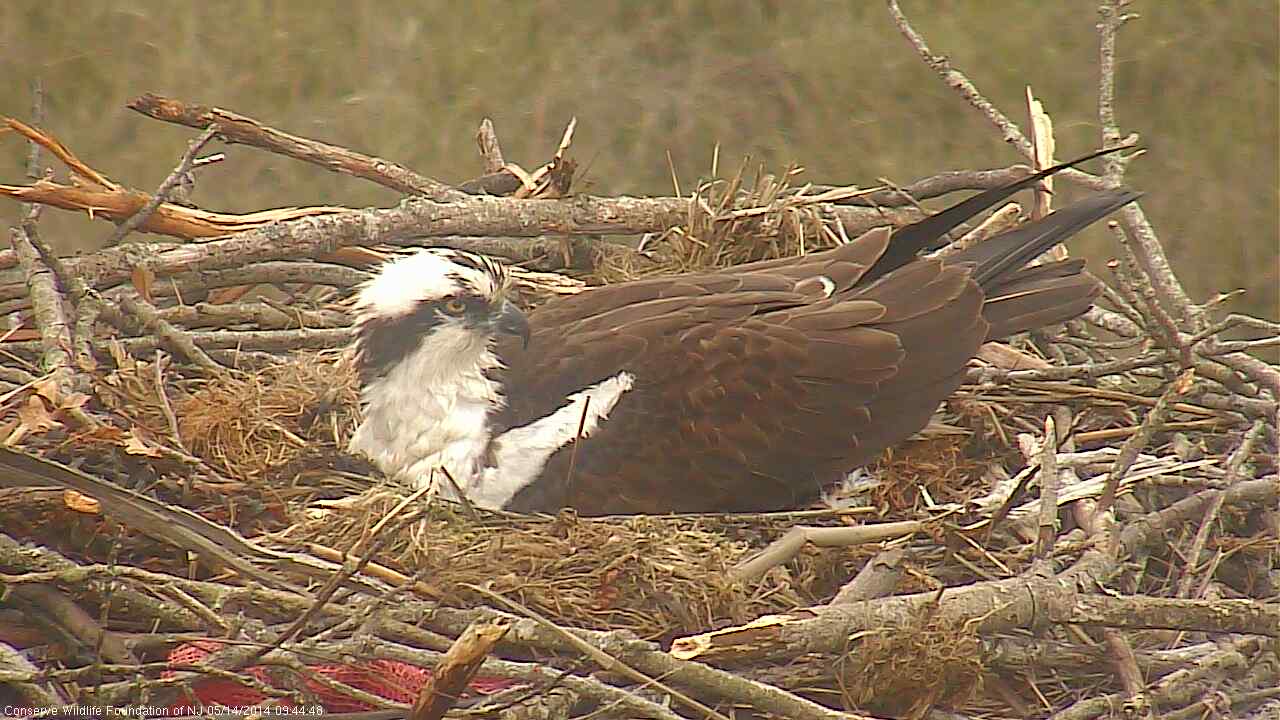
First egg was laid on April 19.
They were incubated for 38 days, which is slightly more than the average of 35 days in NJ.
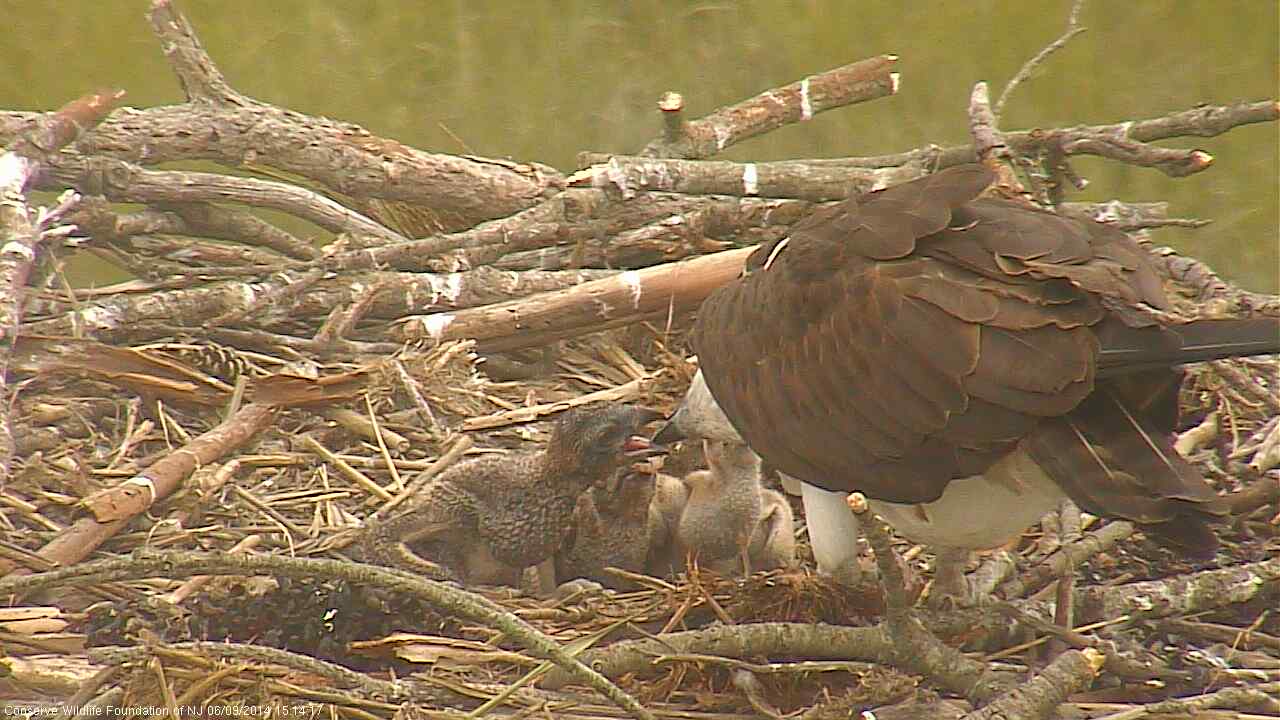
The first two eggs hatched on May 29th, and the third on June 1.
5-7 days old.
5-7 days old. Sleepy…
Feeding time is non-stop with ospreys!
Two weeks old.
Downy and body feathers start to emerge at 14 days old.
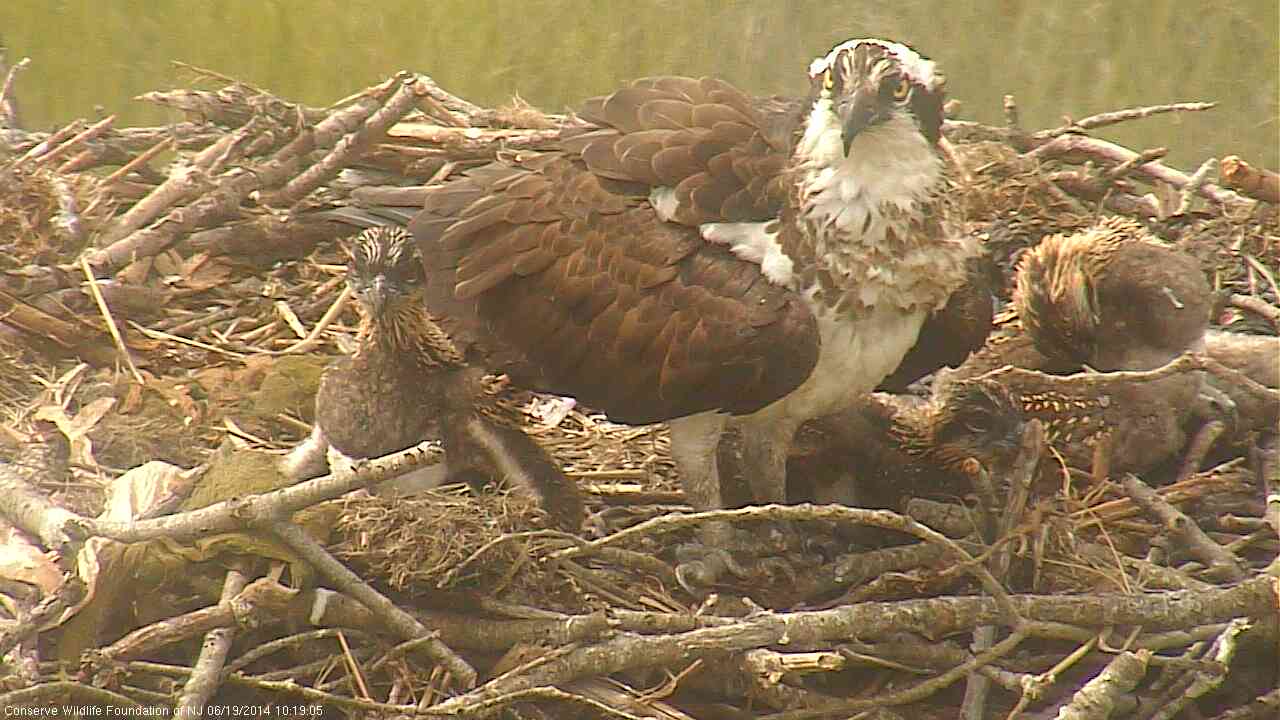
Today marks 21 days old (for the oldest two young). They're now very active in the nest and like to check out all the cool nesting material mom & dad used in the nest.
Today marks 21 days old (for the oldest two young). They’re now very active in the nest and like to check out all the cool nesting material mom & dad used in the nest.

Three little hatchlings!

Eggs hatch at Osprey Cam nest in Oceanville

by Ben Wurst, Habitat Program Manager

Three eggs have hatched at the Osprey Cam nest at Forsythe NWR in Oceanville.

It’s been a hectic spring (to say the least). I’ve been swamped with field work since early April. Time has been flying by!!

The osprey pair nesting at the nest with our Osprey Cam on it has successfully hatched three young. The eggs hatched at ~37 days and in the order they were laid. Ospreys exhibit asyncronous hatching, which helps make sure that only the strongest young survive to fledge. In years with a good supply of fish then all young will survive. When there is harsh weather or a lack of prey (fish) then the oldest and strongest will survive, this is often called natural selection. The last two catches, from the male, have been very large white perch. There has been so much food that the young all get their fill. Sometimes the runt won’t get fed right away, but if he peeps a lot and begs for food, then he will get his share too.

Regarding the trash in the nest:

We are watching the plastic in the nest and will take action if necessary to remove it. Our policy is only to act when a bird is in a life threatening situation. Us entering a nest creates disturbance which might cause even more harm (more so when a bird is potentially entangled). Extreme care (and patience) must be taken in these types of situations. Trust us. We’d LOVE to not see the trash in the nest, BUT this is a teachable moment for all who are watching the Osprey Cam. Please share our post on social media and encourage your friends to pick up the next piece of litter they see or to not release balloons! If we all act, then we can all make a difference!


Battle of the Bags!!

by Ben Wurst, Habitat Program Manager

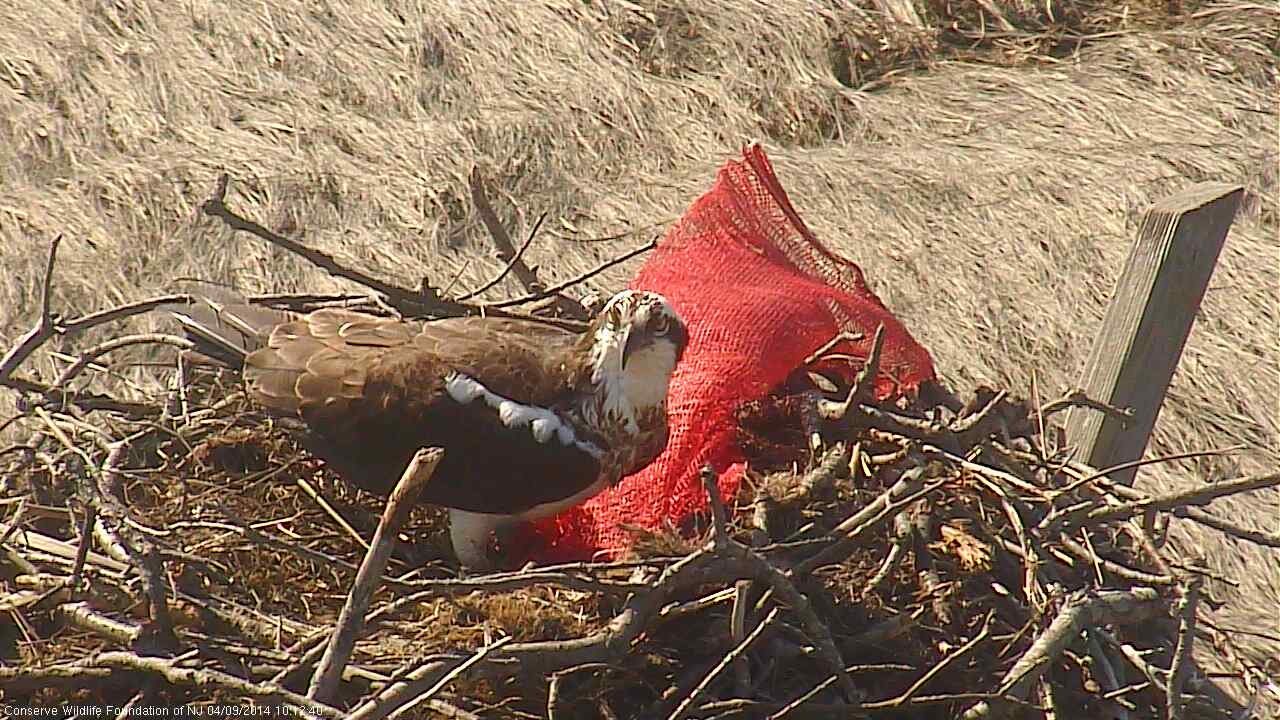
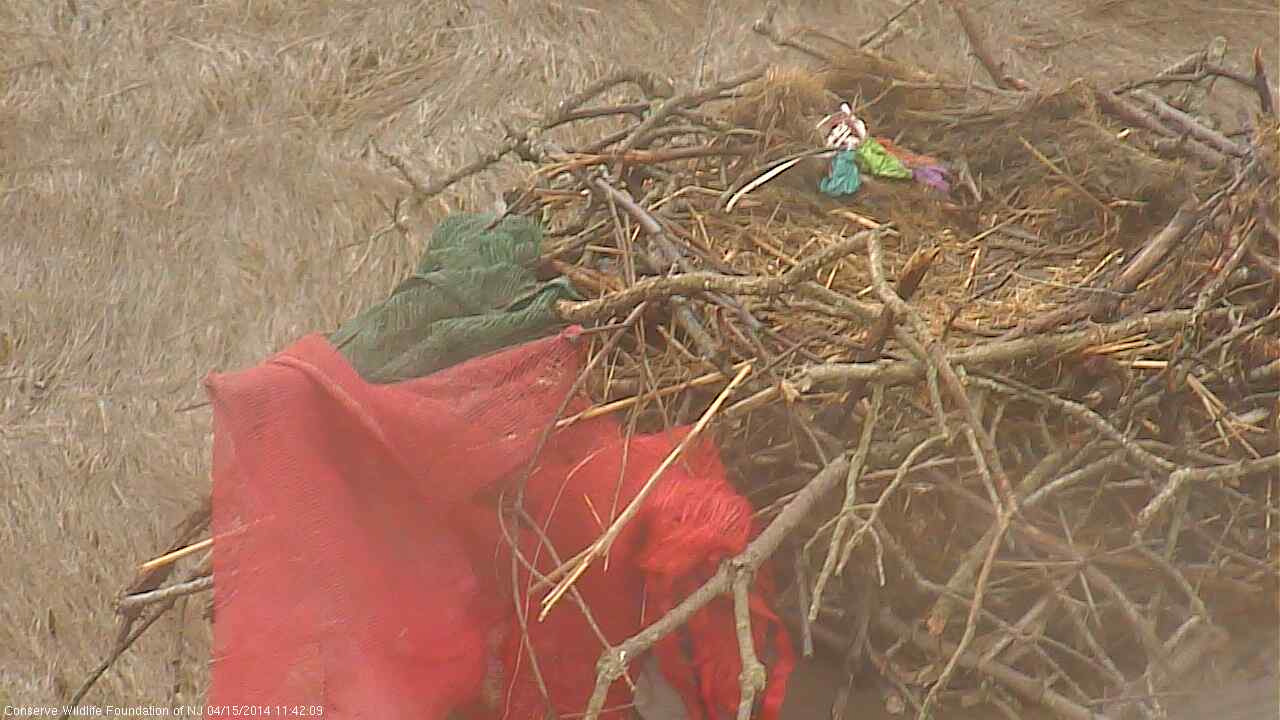
The osprey pair at our Osprey Cam nest has been “decorating” their nest with plastic marine debris. They’re turning out to be hoarders of plastic mesh bags. So far they’ve collected three to use as nesting material. How will this play out? We can’t say for sure but are closely monitoring with the Osprey Cam.

Plastic mesh clam bag in the nest.
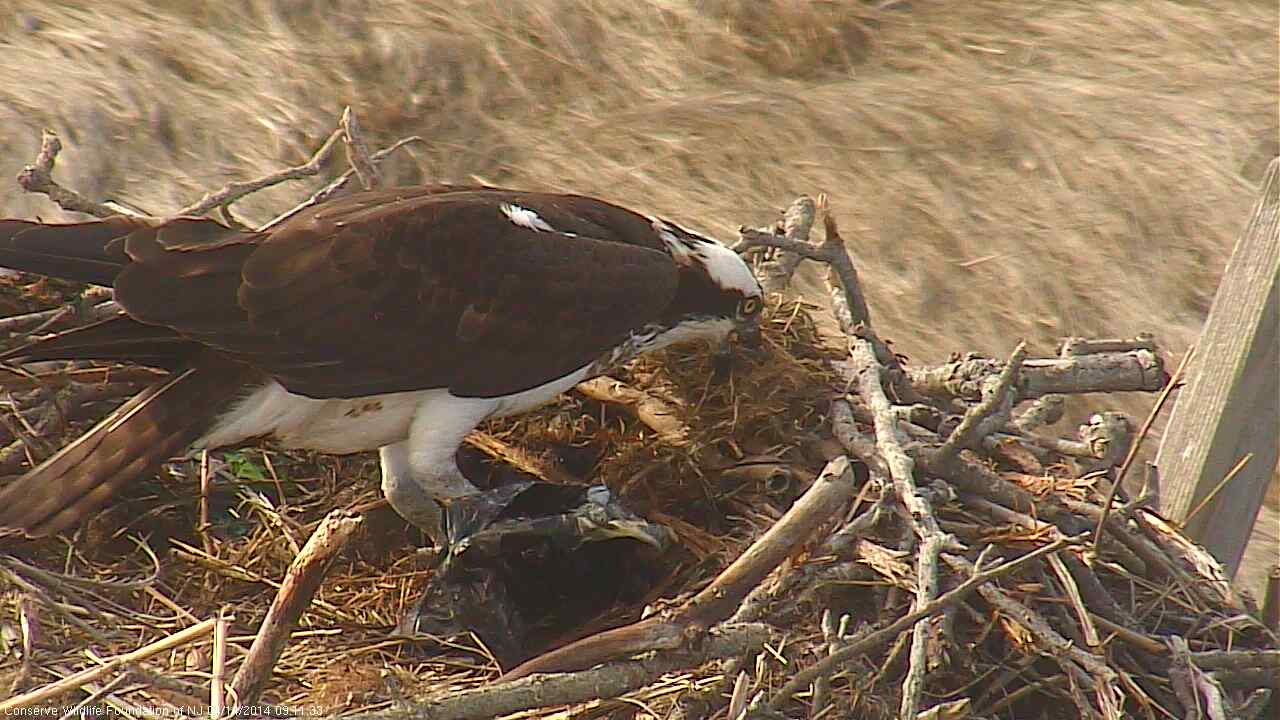
The ospreys returned and so did the marine debris.
Yay! Some natural nesting material!!
Too many plastic mesh bags!!
They're slowly migrating out of the nest...
They’re slowly migrating out of the nest…

Plush birds help real birds in New Jersey!

Ever see an adorable bird in the wild and wanted to take it home with you?

by Ben Wurst, Habitat Program Manager

A Stuffed Owl hunts a desolate beach.
Well now you can!

I feel lucky to have had the chance to see a snowy owl on one of New Jersey’s beaches! It was certainly a once in a lifetime experience! Snowy owls are such an intriguing species that we know so little about. Hopefully scientists will learn more about them by studying their movements during this irruption to protect critical habitat for them, like some of the beaches and other habitat types that they overwintered on here in New Jersey.

Since we all LOVE the snowy owls so much, you can now purchase your very own memento of the irruption this winter! The plush snowy owl that you see above was made right here in the US; designed by talented artists and made by hand by craftsmen and women in Upperstate New York. 20% of the sales of these plush birds goes to Conserve Wildlife Foundation of New Jersey to protect REAL birds.

More plush birds are on the way, like ospreys, piping plovers, oystercatchers, and peregrine falcons!

I for one cannot wait to get my hands on a plush osprey!! 🙂

Osprey nest needs urgent repairs

A productive nest on the Navesink River needs a helping hand!

by Ben Wurst, Habitat Program Manager

UPDATE: We have learned that the pole has been straightened!! Thank you all for the support!!!

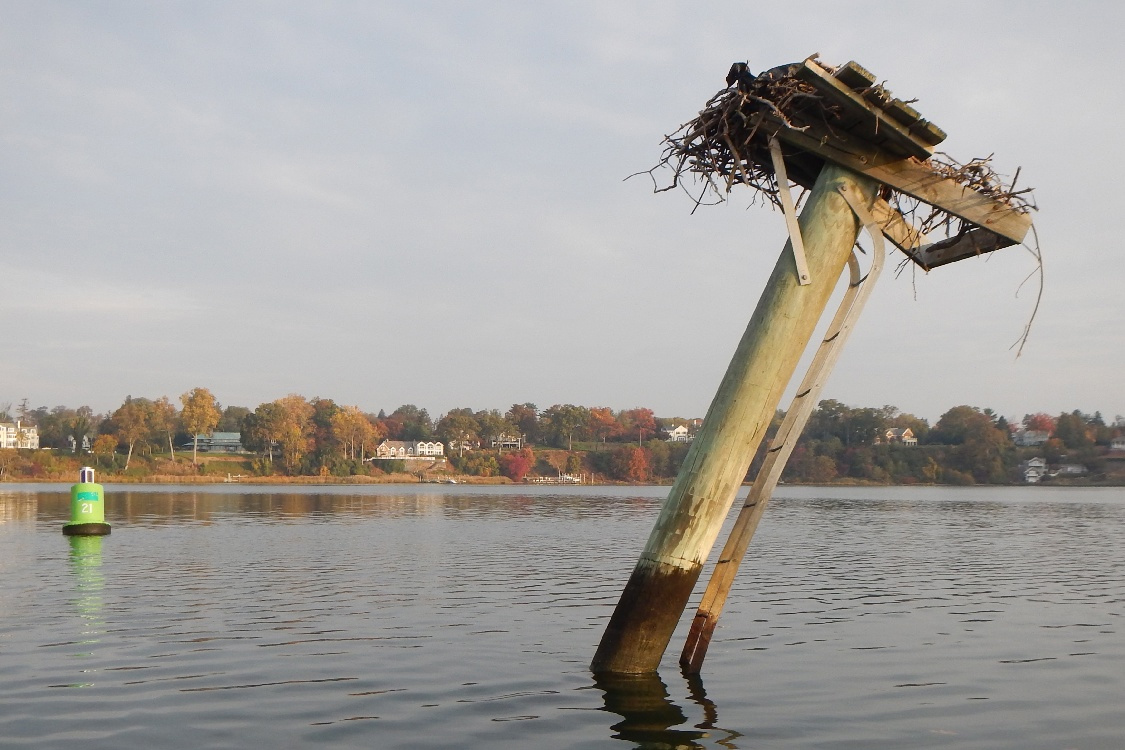
Many North American ospreys have already departed from their wintering grounds in Central America, N. South America, and the Caribbean and are on migration to their summer breeding grounds. In New Jersey, most ospreys nest along the Atlantic Coast, from Sandy Hook to Cape May and arrive in mid-late March. One nest (083-A-007) is on a decommissioned channel marker (#21) on the Navesink River, off Fair Haven. The nest was first found in 2006 and in 2013 the nesting pair successfully produced three young. Considering the current condition of the nest pole, they were really lucky to produce any young at all!

083-A-007 on the Navesink needs some TLC!

This platform was one of many that sustained damage by Superstorm Sandy. We pledged to repair any and all platforms that were reported as damaged by the Storm and did; however, we don’t have the equipment or boats to repair a leaning platform in open water, like 083-A-007. Since it was damaged we have been contacted by many concerned citizens who watch the pair that nests here. We’re sharing this story to help garner support to repair the nest pole.

Ospreys mate for life and return to the same nest site, year after year.  They will build their nest at an angle to compensate for the lean, but young are still in jeopardy of falling out of it. Our goal is to get it fixed before the pole falls over. Lastly, this is an important nest site in the region. There is very little preserved open space in this region of Monmouth County and very few osprey nests.

We need your help!

Ospreys return to their nesting grounds in mid-late March in New Jersey. © Howie Williams

Last year we tried reaching out to local marine construction and bulkheading companies but had no luck getting anyone to even return our calls. Then we contacted the Bureau of Coastal Engineering’s Aids to Navigation and they did not have equipment in the area to make the needed repairs last fall (we’ve since called them again to get their assistance and are waiting to hear back).

Do you know any local bulkheading or marine construction companies who work in the Fair Haven/Rumson area? If you do, please see if they can provide some assistance so this pair of ospreys have a safe place to nest!

Contact us if you know anyone who can help:

A break in the weather

Great Bay Blvd. Osprey Platform Install

by Ben Wurst, Habitat Program Manager

We took advantage of the break in cold/wet weather along the southeast coast of New Jersey and installed a new nesting platform for ospreys this week. The new platform was installed for a pair that previously nested on sensitive equipment used by the Rutgers University Marine Field Station on Great Bay Blvd. in Little Egg Harbor. The equipment was located on a short cluster of pilings near the boardwalk to the Station. It failed to produce young in 2013. More than likely it was predated by raccoon, the main ground predator of osprey young.

A large number of volunteers showed up to help out. The actual install was quite easy considering it could be accessed by the land via Great Bay Blvd. The platform was placed along a tidal creek so that biologists can easily access the nest for future surveys. Rutgers staff will install deterrents on the old nest so birds can’t nest there when they return in late March. You can see the location of the nest on Osprey Watch or drive out on GBB to see it in person.

Thank you to all the volunteers who came out to help!