SNOWstorm at Island Beach State Park

Snowy Owls in Seaside Park, New Jersey

By: Guest Blogger Eric Chandler, Wildlife & Nature Photographer

16457352488_13dd57d925_o

Why do snowy owls from the Arctic migrate to New Jersey? I was determined to photograph these beautiful creatures, as well as research why snowy owls return to Island Beach State Park (IBSP) every year.


The migratory snowy owl population has been spotted all along the coast of New Jersey. Popular hangouts include Sandy Hook, Island Beach State Park, Long Beach Island and even further south as all the Atlantic City. Snowy owls have also been spotted as south as North Carolina.


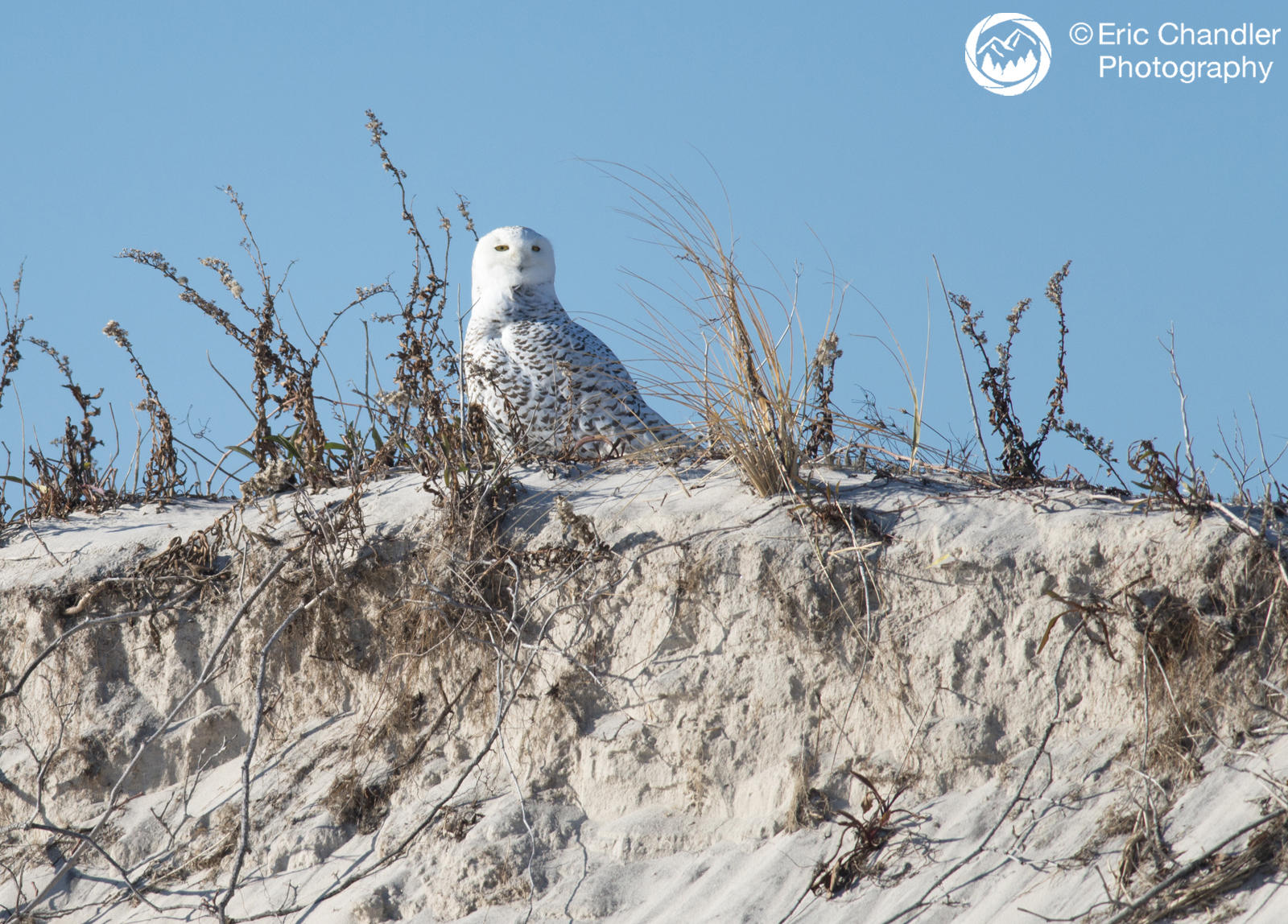
Unlike other raptors, snowy owls spend the majority of their time sitting, as they hunt for prey from the ground. Their unique ability to rotate their head up to 270 degrees allows them to sit in one spot and scan large land areas for prey. The sand dunes at Island Beach State Park provide owls with an opportunity to scan for prey from a seated position, while elevated. Extreme winds are also present on ISBP; the offshore and onshore winds produce some pretty wicked combinations, which give snowy owls that at home feel.


The only real threat to snowy owls at IBSP is human disturbance. Like all raptors, it is illegal to hunt or trap snowy owls. Even though they aren’t hunted with rifles, they are hunted by photographers, who may step on dunes. I can’t express how many times I’ve watched snowy owls take off due to people getting too close. I’m thankful that they still return instead of finding a new migration home. Occasionally, helicopters fly overhead and the owls just watch them in confusion.
16458749439_88cf955d1d_o

Don’t be fooled by the size of snowy owls; these birds have wingspans up to five feet and reach up to two feet tall. With such great size, snowy owls are able to hunt ducks, geese, and even large waterfowl if need be. Small rodents such as lemmings and hares are their favorite, they consume over 1,600 lemmings a year! IBSP features a wide variety of prey on their local menu such as squirrels, mice and small birds. Unfortunately, in the three seasons I’ve spent studying and photographing snowy owls, I have yet to witness a snowy owl eat. Snowy owls are diurnal, which means they are active during both the day and night. It never clicked in my head, but if you think about it, during many months in the arctic there are 24 hours of sunlight, which explains why they are diurnal. During migrations, they mostly hunt late in the day.


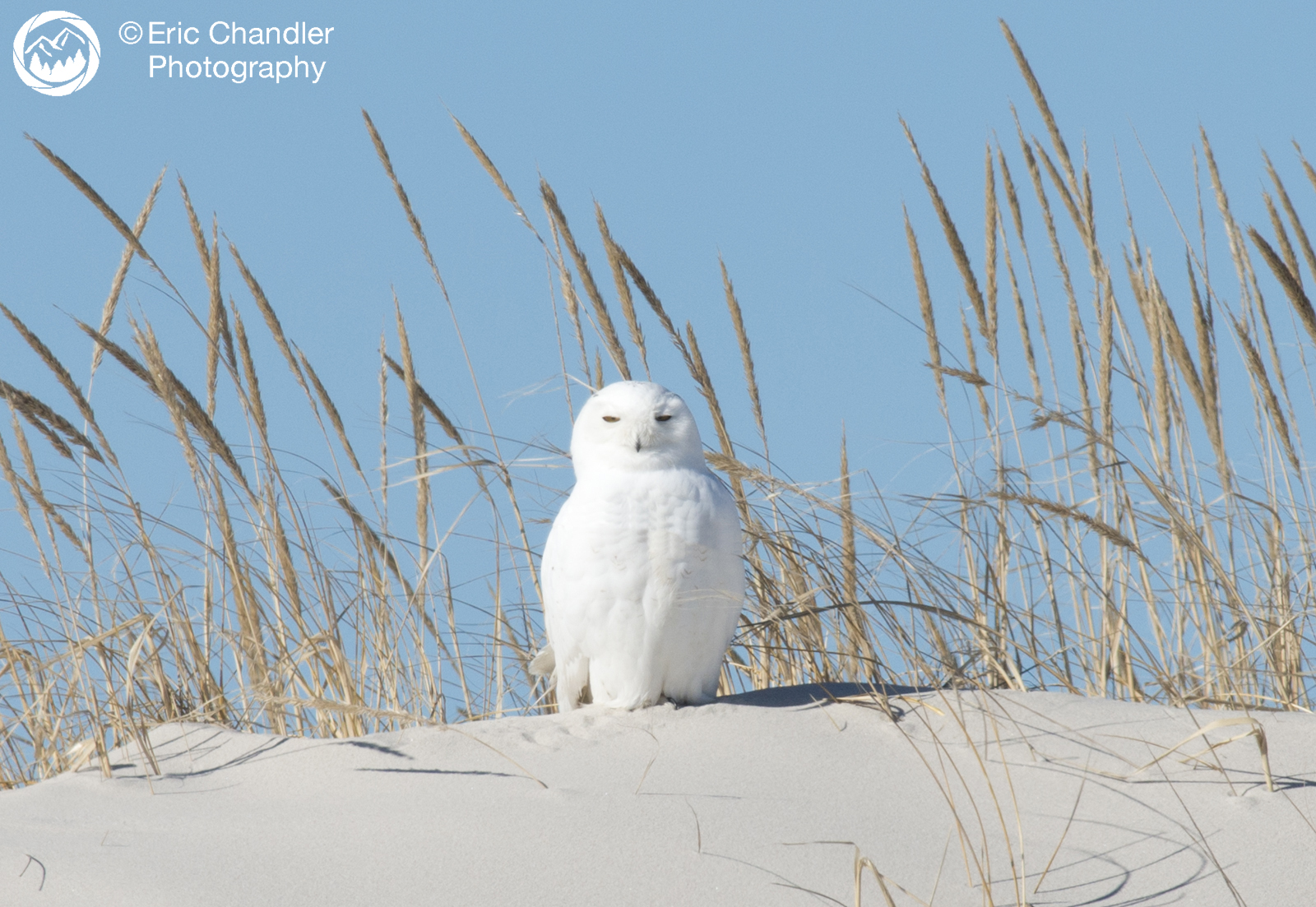
Over the past three seasons of photographing the female snowy owl, I never spotted a male, until this year! To my knowledge, this is the first year the male has been spotted at IBSP. The female is very beautiful, with dark markings throughout her pure white feathers, and bright, cat-like yellow eyes. I could photograph her for days. As I was packing up after photographing the female one afternoon, I saw a massive heard of photographers with their bazooka lenses. They must have spotted something pretty important, so I had to see. Could there be two female snowy owls? Once I arrived, I could not believe my eyes, a pure white snowy owl. Now, I love using the term majestic when it comes to wildlife, it’s a very powerful adjective. This male snowy owl surpasses that adjective for sure. It’s so hard to put into words how beautiful this creature is when seeing it right before your eyes, in order to appreciate its beauty. From his ability to spin his head up to 270 degrees, to seeing him squint his yellow eyes at you. His beauty almost demands to have his photograph taken. The stunning glow of the solid white plumage reflecting off the sunlight was a sight to see. I believe he enjoyed the paparazzi coverage; he wasn’t disturbed at all and sat with us for hours. For weeks after that day, every photographer that I bumped into and had not seen him since.


On an early Sunday morning, after shooting the female owl for three-four hours with about twenty photographers, I decided to venture a little bit and search for the male. If you’re not familiar with Island Beach State Park, it is a narrow, 10-mile barrier island with only one road. It’s very easy to get in the car and drive from parking lot to parking lot, but your chances of missing the wildlife are extremely high (many people also acquire a driving on the beach permit.) For me, I love being out in sub 20 degree temperatures, admiring the peaceful empty beach and watching groups of ocean birds play tag with each other. After four miles of walking, hoping to spot the male owl, all of a sudden this huge white bird starts flying towards me. He literally landed on top of a dune right in front of me! I spent the remainder of my day with him and captured some the best photographs of my career.
16022625514_7377959710_o

Underneath multiple layers with the cold wind blowing in my face on a gorgeous beach without a cloud in the sky, the sun to my back, a prime photography setting, and not a person within miles of my view, this was my sanctuary. If you want to capture the award winning photograph, you must learn patience and be respectful of the wildlife. Don’t chase after wildlife, they will come to you when the time is right. If you didn’t get your opportunity today, you will in the future.


So, now we know why this pair of snowy owls enjoys migrating to Island Beach State Park each year. They have plenty of mammals and birds to prey upon, elevated sand dunes to hunt from with almost no threat from larger predators. A few years ago, there was a eruption of snowy owls that traveled the coastline. Researches said this rare abundance of snowy owls usually occurs every 30-40 years! This was due to a large population of lemmings in the Arctic, prior to migration seasons. I find it very interesting that in Paleolithic caves in France, drawings of snowy owls were created over 40,000 years ago. That makes them the one of the oldest recognizable bird species show in in pre-historical art in the world.


From drawings in a cave, to photographs that I capture, it’s pretty awesome to share the appreciation of snowy owls from thousands of years ago. They are beautiful creatures and I look forward to their return each winter. Snowy owls migrate back to their homes in the tundra in late March, early April. With only a few months left, get out there and search for snowy owls at your local beach, but please be sure to respect the wildlife, and stay off the dunes!


Eric Chandler is a Wildlife & Nature Photographer based in New Jersey.

Eric reports that roughly three-four weeks ago the pair of Snowy Owls mentioned in this post left Island Beach State Park. Recent reports of large amounts of snowy owls in Northern New York have led Eric to believe that the owls are heading back home!


Battling bald eagles land in tree

Locals residents and wildlife enthusiasts partner to save lone survivor!

by Ben Wurst, Habitat Program Manager

A lesson I’ve learned in my short career working with endangered wildlife in New Jersey is that you always need to be prepared for the unexpected. You never know what tomorrow brings.

There is never too much gear you can have at your disposal. Luckily, for the surviving bald eagle that was rescued, local residents made it possible. Continue reading “Battling bald eagles land in tree”

Photos from the Field: Peregrine Falcon Nestbox Installation in Trenton

Meeting our goals…we can only hope!

by Ben Wurst, Habitat Program Manager

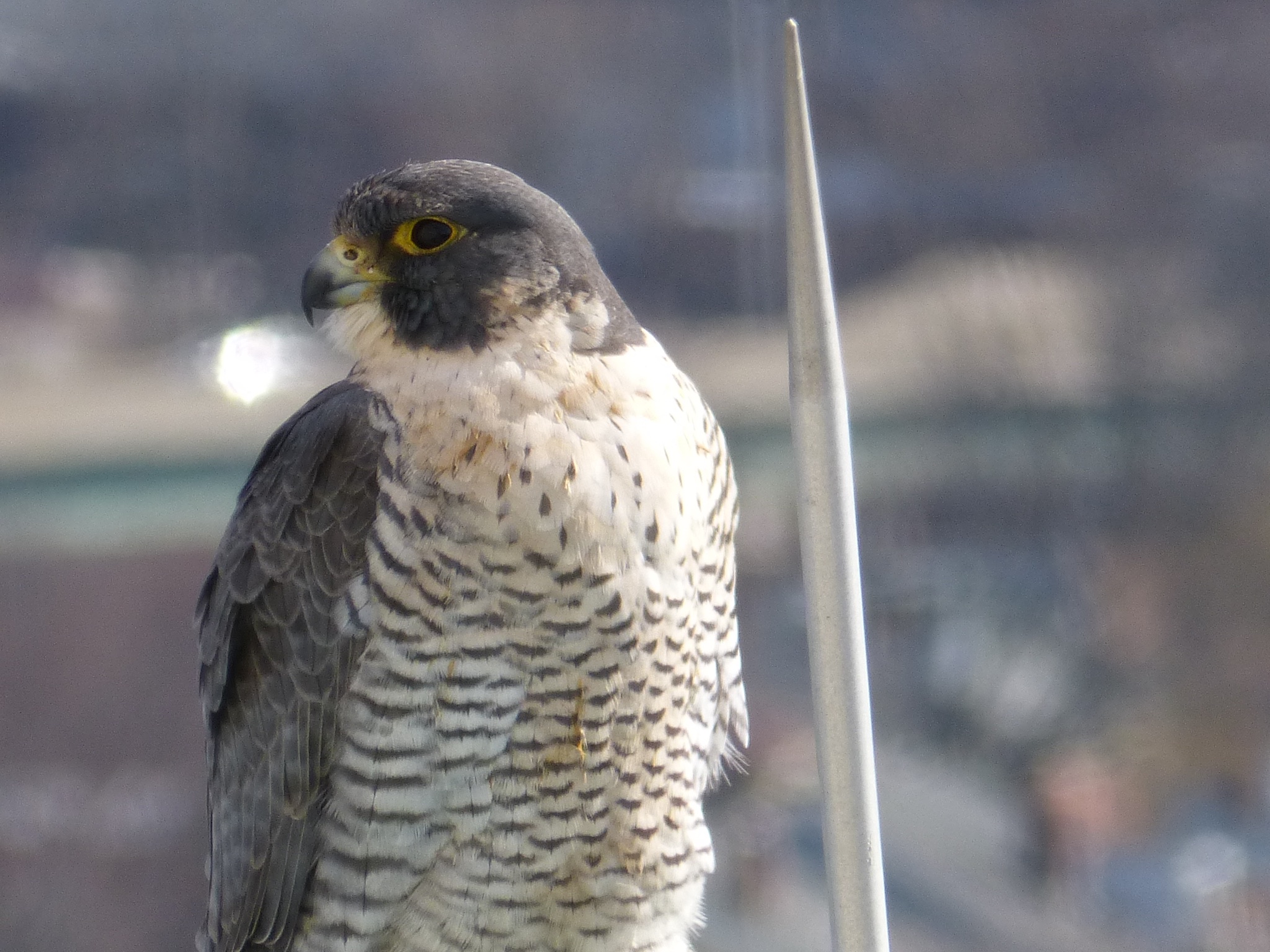
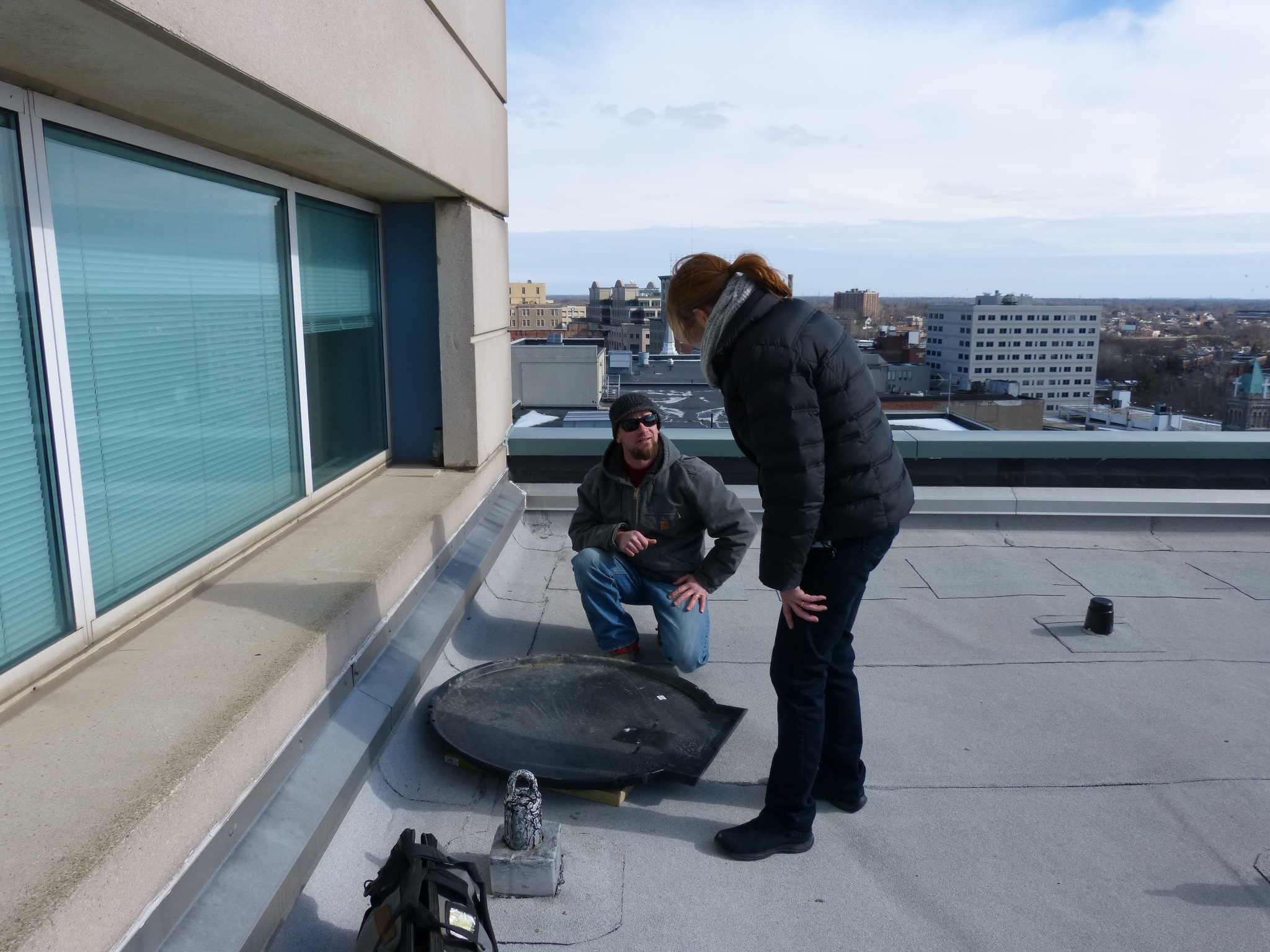
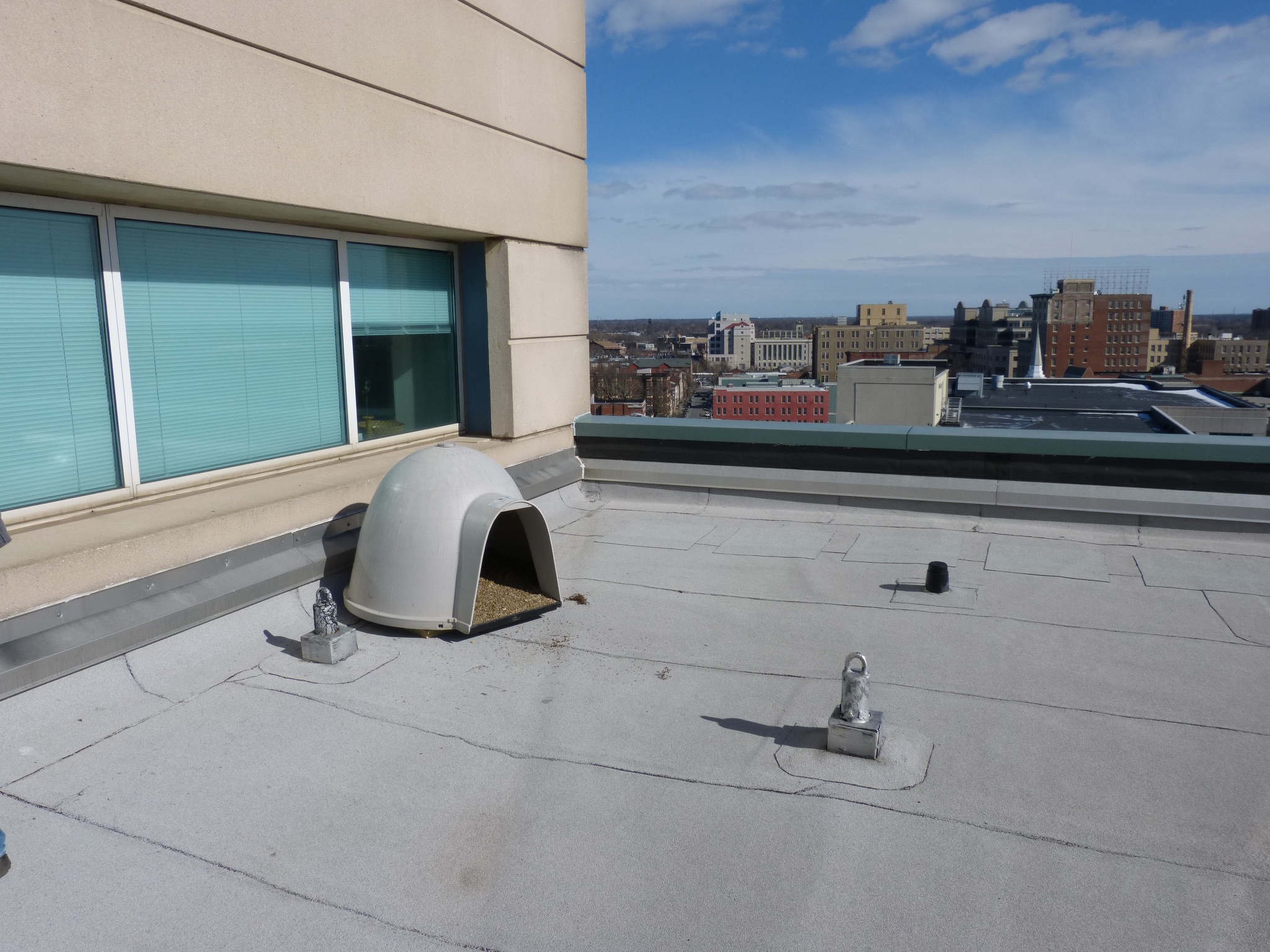
In 1993-94 six young peregrine falcons were released at 20 West State Street (Mary G. Roebling Building) in Trenton to help bolster the population of urban nesting falcons in the area. Currently the closest nest is 20 miles away at the Tacony-Palmyra Bridge (where they also have a camera at the nest). Twenty years later and we may finally get some nesting falcons in Trenton! It all started when Jean Bickal, a worker in the building, noticed a falcon that often perched on the building ledges. From there Kathy Clark, a Zoologist with New Jersey Division of Fish & Wildlife made a site visit and took measurements to see if we could fit a nestbox (dog igloo) out a window on the 10th floor, which also had a roof on it. It appeared one would fit so we setup a date to install the new nestbox.


Cities and urban areas actually provide suitable habitat for falcons. Urban areas usually have lots of ledges under bridges or on buildings for them to nest, and abundant prey, in the form of pigeons and other songbirds. In New Jersey we have three other pairs that nest on buildings in Jersey City, Elizabeth, and Atlantic City, plus pairs that nest on the Tacony-Palmyra, Walt Whitman, Betsy Ross, and Burlington-Bristol Bridges.


On February 5th we helped install a new nestbox on top of a roof at 20 W. State St. We’re hoping that the falcon seen that day will find a mate and use the nestbox to raise young. Fingers crossed that we get some good news soon!


Learn more:

First, we had to fit this "Dog Igloo" out the window. © Jean Bickal
After getting all our gear up to the 10th floor, we first had to fit this “Dog Igloo” out the window…  © Jean Bickal
When we got here a female peregrine falcon was perched on the ledge of the 10th floor roof! © Jean Bickal
We spotted this beautiful young female peregrine falcon on the ledge! © Jean Bickal
 © Jean Bickal
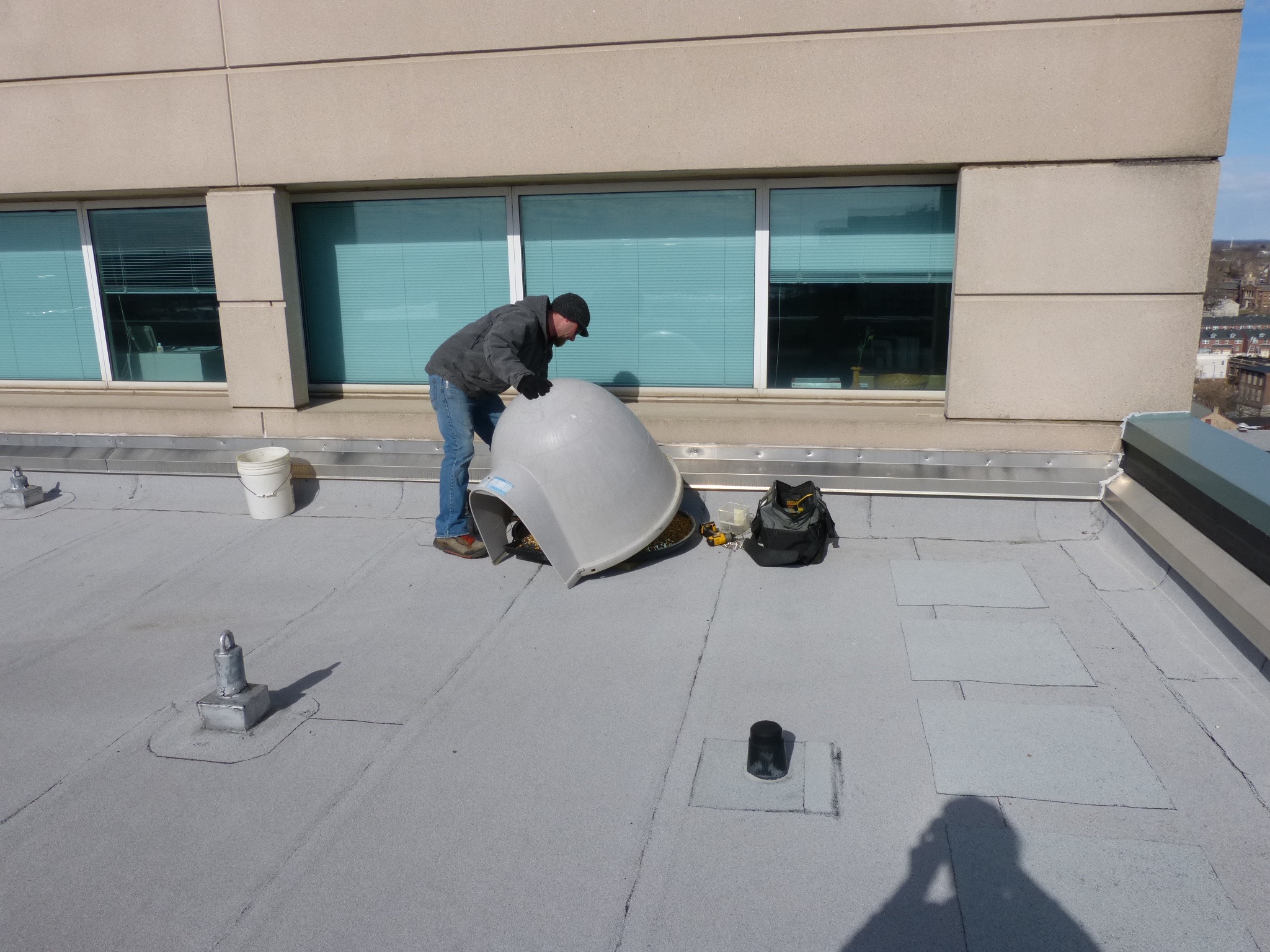
After fitting the nestbox through the window we carried it over to where it would be installed, all as the falcon watched us! © Jean Bickal
Kathy Clark, ENSP Zoologist determines the best location for the nestbox while the adult female peregrine falcon watches us.  © Jean Bickal
Kathy Clark, ENSP Zoologist determines the best location for the nestbox. We moved slowly to not spook the falcon. © Jean Bickal
What a beauty! © Jean Bickal
Ben and Kathy discuss mounting and placement options. © Jean Bickal
Ben attaches the base of the igloo to some wood to weigh it down. © Jean Bickal
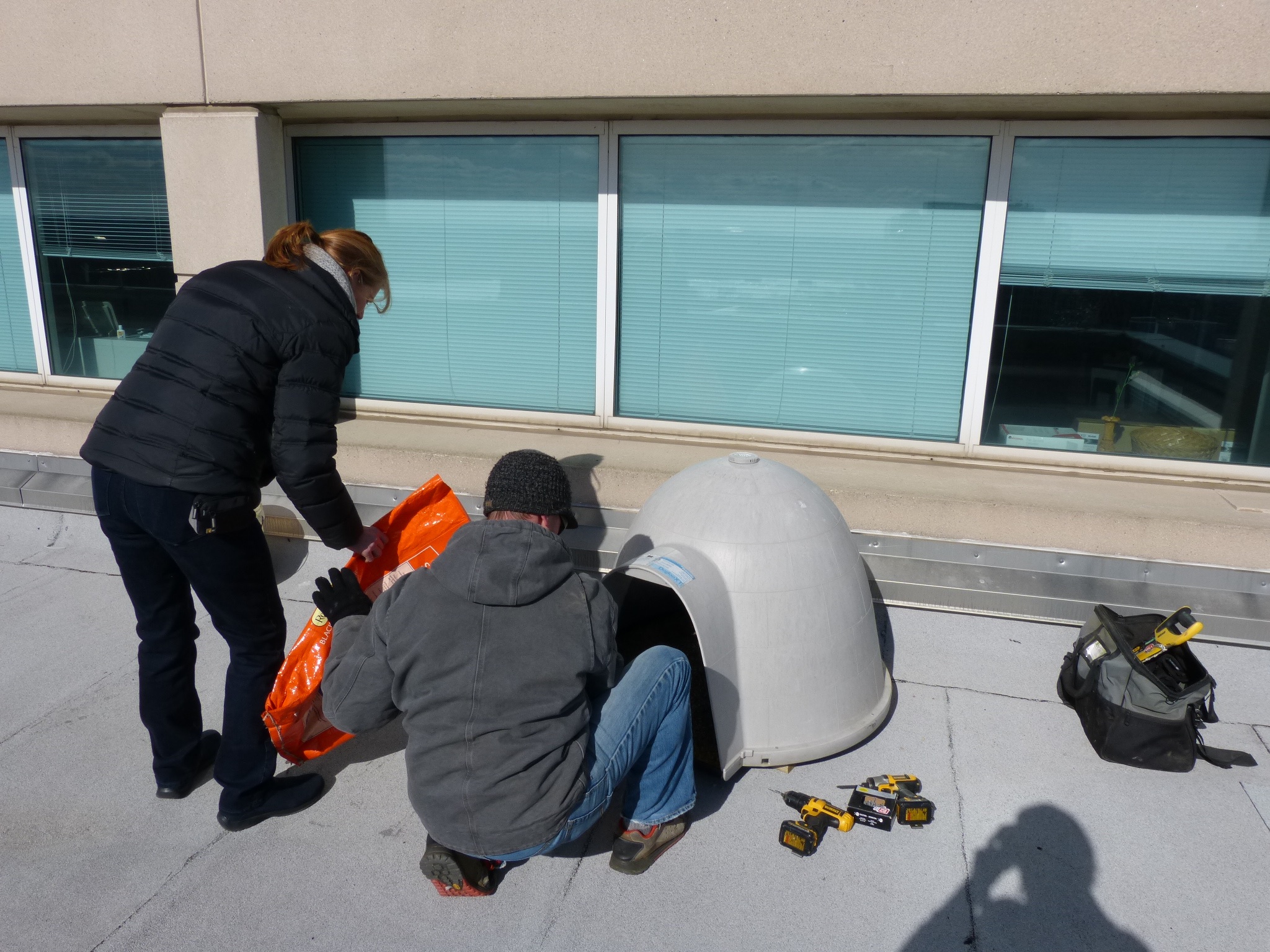
Then gravel is added.  © Jean Bickal
Then gravel is added. © Jean Bickal
The top is installed and Ben mounts it to the base. © Jean Bickal
Can never have too much gravel! © Jean Bickal
While installing the box she perched on a nearby roof top. © Jean Bickal
The finished product! © Jean Bickal

Ben Wurst is the Habitat Program Manager for Conserve Wildlife Foundation of New Jersey.

Explore New Jersey’s Wetlands!

By: Kelly Triece, Wildlife Biologist

Photo Credit: Brian Zarate, NJ Division of Fish and Wildlife

Wetlands are important because they are part of New Jersey’s water resources and are vital to the health of our waterways. Although historically underappreciated, wetlands provide many environmental benefits such as filtering pollutants, storing floodwaters and serving as carbon sinks. New Jersey is comprised of a multitude of wetland types, including freshwater swamps, bogs, fens as well as estuarine and tidal marshes.

 
Many threatened and endangered species in New Jersey depend directly on wetlands, including the small and elusive bog turtle (Glyptemys muhlenbergii)! Bog turtles spend their entire lives in mossy bogs, wet meadows or stream fed seeps. They fed mostly on invertebrates, seeds, berries and carrion. Bog turtles are important members of their ecosystem because they help recycle nutrients, keep insect populations in check, and serve as indicators of wetland function and water quality. This tiny turtle and other wetland species are often victims of habitat loss and fragmentation, so protection of our precious wetlands is important to the long term vitality of many wildlife populations!

 
Millions of citizens enjoy their local wetlands every year through recreational uses provided by photography, hiking, fishing, canoeing and more! Did you know New Jersey is home to over 900,000 acres of wetlands? Get out and explore today!


Learn more:


Kelly Triece is a Wildlife Biologist for Conserve Wildlife Foundation of New Jersey.


Restoring Critical Wildlife Habitat in Delaware Bay

By: Lindsay McNamara, Communications Coordinator

Photo by Jan Van der Kam

Did you know?

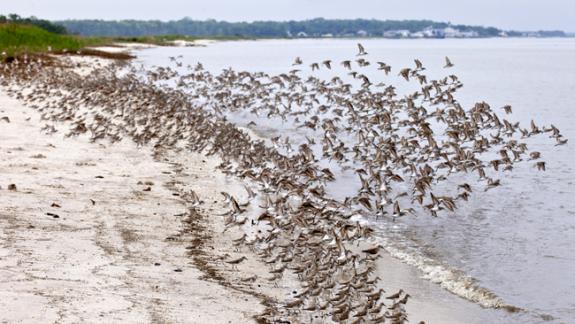
Each spring New Jersey hosts the largest concentration of shorebirds in North America! From about the first week in May to the second week in June, the biggest gathering of horseshoe crabs in the world comes to Delaware Bay to spawn.


At the same time, hundreds of thousands of shorebirds arrive on the Bayshore to refuel on horseshoe crab eggs at a critical stopover during their migration. Delaware Bay is an extremely important area for a number of at-risk wildlife, including Red Knots and Horseshoe Crabs.


American Littoral Society and Conserve Wildlife Foundation are restoring this significant habitat in the aftermath of Hurricane Sandy. Learn more about our restoration work on our newly created project website: www.RestoreNJBayshore.org.


Learn more:

Lindsay McNamara is the Communications Coordinator for Conserve Wildlife Foundation of New Jersey.

Protecting Eastern Tiger Salamanders in New Jersey


By: Lindsay McNamara, Communications CoordinatorETS close_up_12.2014

Conserve Wildlife Foundation proudly partners with Atlantic City Electric to help protect New Jersey’s rarest amphibian, the Eastern Tiger Salamander. The survival of Eastern Tiger Salamanders is threatened by sea level rise, over-development of critical habitat and climate change.


We are working together to build a vernal pool along a portion of Atlantic City Electric’s transmission right-of-way in Cape May County. Vernal pools hold water in the winter and spring, but dry out during the summer months. Since fish cannot live in vernal pools, salamander eggs are not in danger of being eaten. We are hopeful that these ideal breeding conditions will aid Eastern Tiger Salamander recovery over time.


Last Friday, Conserve Wildlife Foundation biologists and other state biologists took Eastern Tiger Salamander egg masses from a productive pool and placed them into the new vernal pools.

CM_KD_release_1
Christine Melillo, Pepco Holdings and NJDEP Division of Land Use Regulation biologist Karena Dileo moving salamander egg masses.


Learn more:

Lindsay McNamara is the Communications Coordinator for Conserve Wildlife Foundation of New Jersey.


Green Bands: Telling the Story of New Jersey Eagles

January 2015 is the Month of the Eagle! CWF is kicking off the new year by celebrating all things eagle. Follow us on social media and be sure to check your email (sign up for our list) for weekly stories on these amazing raptors from our own eagle biologist Larissa Smith. Larissa, a wildlife biologist who has been working for Conserve Wildlife Foundation since 2000, coordinates the New Jersey Bald Eagle Monitoring Project.

By: Larissa Smith, Wildlife Biologist and Volunteer Manager


During the Month of the Eagle, we have discussed at length the use of telemetry to see the daily movements of eagles in the state. Another method that biologists use to obtain information on New Jersey eagles is from Re-Sighting New Jersey Eagles. Biologists look for the bands on the re-sighted eagles to find out the age of the bird and the nest that it came from.


In June 2014, we learned about a banded New Jersey Eagle Nesting in PA. Unfortunately, the pair lost its chicks during a wind storm last April. I recently contacted Linda Oughton, the nest observer, and she reports that the pair has been busy bringing sticks to the nest in preparation for the upcoming nesting season. We wish “Jersey Girl” and her mate a successful year!


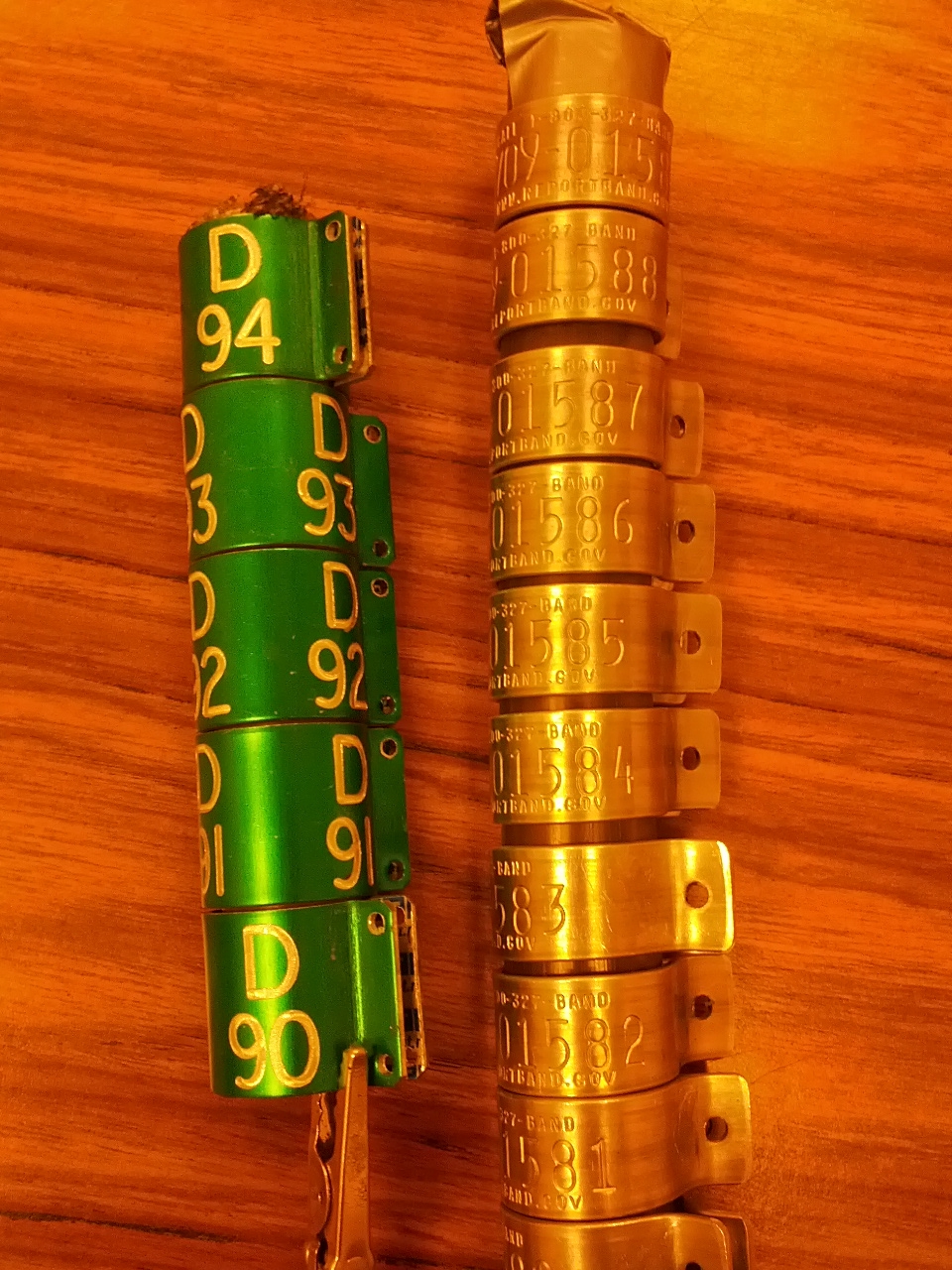
NJ  eagle bands (green) and federal eagle bands (silver)
NJ eagle bands (green) and federal eagle bands (silver)

Biologists also obtain information about New Jersey eagles from bands when eagles are recovered injured or dead. This isn’t as “feel good” as the re-sighting of a living, healthy bird, but the band still contains valuable information about the eagle’s age and the nest from which it originated.


If you find a bird with a New Jersey band, please report it to the National Bird Banding Lab.


The Banding Lab notifies New Jersey biologists when a band has been reported. The majority of recovered New Jersey birds are found in our state, but Jersey banded eagles have also been recovered in Delaware, Maryland, New York, Pennsylvania and Maine.  Each band that is found tells a story about the eagles life.


  • On April, 26, 2013, a female eagle was found dead at the Aberdeen Proving Ground in Maryland. She was banded with a red band which revealed that she was one of the eagles from the Dividing Creek Hack site* in 1988, making her 25 years old when she died. The nest observer at the Aberdeen believes that this was the female she observed nesting at Aberdeen for 20 years. At the time of the eagle’s death, there were three chicks in the nest and the male was able to successfully raise them by himself. She is the oldest New Jersey banded eagle that has been recovered.
  • In the fall of 2013, the remains of an eagle with a red band were found in the Nantuxent Wildlife Management Area. The bird was 24 years old. The eagle had been brought along with another eaglet from Canada after their nest was lost. They were placed in the Tuckahoe Hack site* and fledged in 1989.

    *The New Jersey eagle hacking project was started in 1983 as a part of the eagle restoration efforts.  Young eagles approximately six weeks of age were brought from Canada where the eagle population was stable. Hacking towers were built at two sites, Dividing Creek, Cumberland County and Tuckahoe, Cape May County. The chicks were placed in the towers and provided food until the time of fledging. The idea was that the birds, when mature, would return to their place of fledging to nest. These hacked eagles were banded with a red band. Sixty young birds were fledged from these hacking towers over an eight year period contributing to the increase in the New Jersey eagle population.

  •  A thirteen year old eagle was recovered in November of 2011 in Delaware, the cause of death was determined to be lead poisoning. The bird had been banded on May 14, 1999 in Cumberland County. What makes this eagle so special is that in 2003 the same bird was found in Cape May County with a leg hold trap attached to its foot. The foot was amputated and the bird was released. It is amazing to know that this eagle survived for eight years with just one foot!
  • The Duke Farms Eagle Cam is has gained a large online following, so it was sad news when one of the juveniles from the 2014 nest was found dead in Maine this past August.  From talking with the finders of the bird we were able to piece together the story of D-98.

These are just a few examples of the recoveries of dead eagles, but there are also many injured eagles that are cared for by dedicated wildlife rehabilitators and released back into the wild.

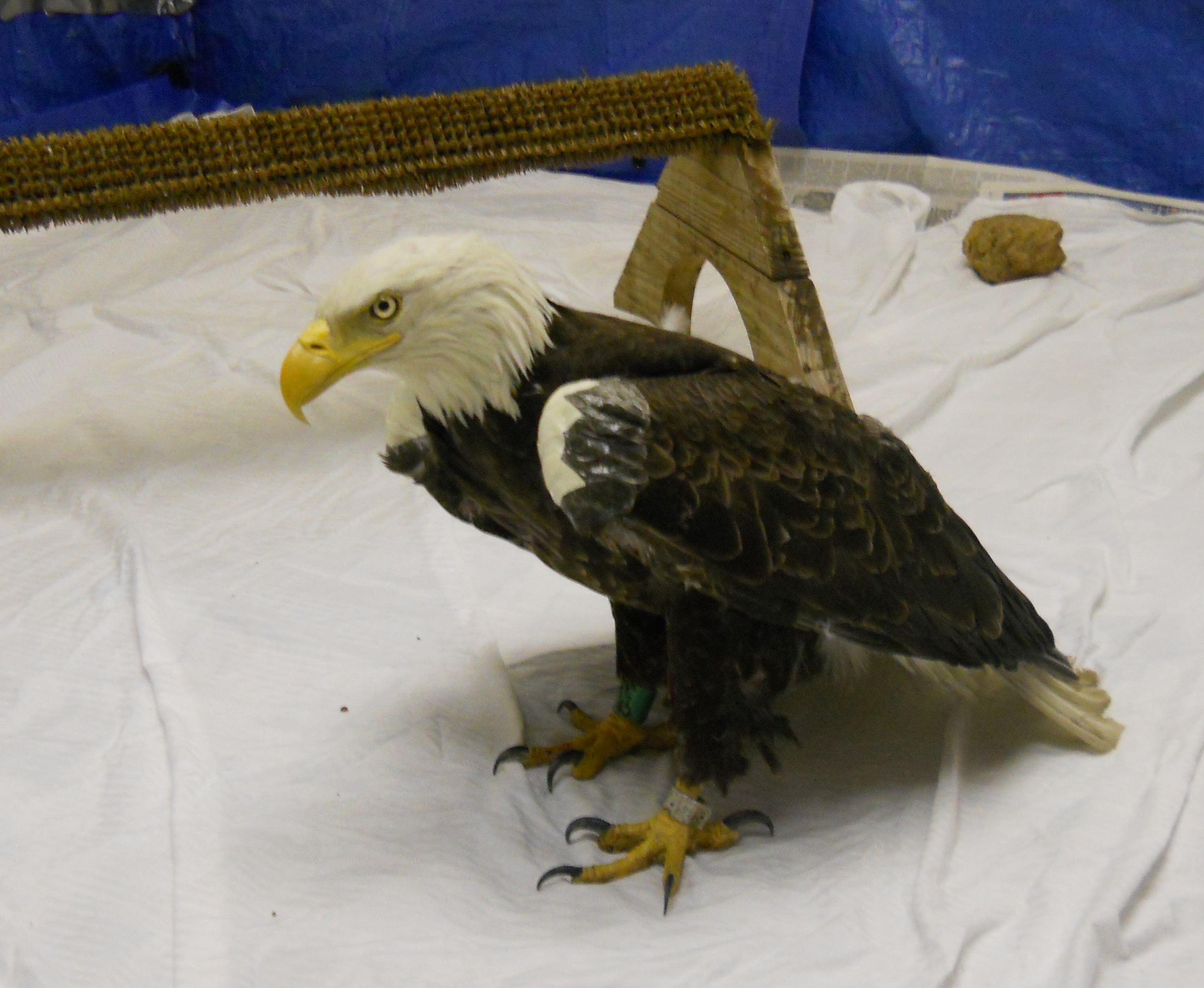
C/45 in recovery at Tri-State Bird Rescue and Research, DE

A New Jersey banded eagle was rescued from the Chesapeake Bay by a fisherman from Cecil County, Maryland on March 17th, 2013. The male had been banded at the Union Lake nest, Cumberland County on May 15, 2007 making him six years old.


The eagle was taken to Tri-State Bird Rescue and Research in Delaware where he recovered from his injuries, believe to be from a territorial dispute with another eagle, and was released on May 6, 2013.


All eagle recoveries are listed in each years annual eagle report.


Learn more:


Fight for the Flight: Monarch Butterfly Status Under Review

By: Julianne Maksym, Intern 

[youtube=https://www.youtube.com/watch?v=uxIf3YleztI]
A monarch butterfly emerges from a chrysalis in the wild. (Courtesy: US Fish & Wildlife Service)

As the summer leaves turn brown and children head back to school, flutters of black and orange wings flitter through the skies over the beaches in Cape May. As part of its yearly migration from Canada to Mexico, the monarch butterfly passes through New Jersey in search of a warmer climate for the blistery cold winter months. Multiple generations make the trek, leaving in the fall and returning in late spring.


During the summer months, the monarch can be found throughout the United States where milkweed, the species’ host plant, is plentiful. Milkweed provides nutrients to hungry caterpillars as well as space for mature females to lay their eggs. Although an adult monarch may lay up to 500 eggs in its lifetime, it has now been discovered fewer and fewer butterflies make the migration each year.


Losses of habitat and milkweed plants, the insect’s sole food source, are having tremendously devastating effects. According to a petition from butterfly advocates, the North American population has declined by more than 90 percent based on comparisons of the most recent population size estimates to the 20-year average. Numbers of monarch butterflies east of the Rockies dropped to the lowest record ever, signifying a decline of more than 90% since 1995. Monarch numbers west of the Rockies showed a similar decline of more than 50% since 1997. These figures suggest a significant predicament as the North American population represents the vast majority of all monarchs in the world. Without it, the entire species is vulnerable to extinction.


On December 29th, 2014, the U.S. Fish and Wildlife Service announced it would be conducting a status review of the monarch butterfly under the Endangered Species Act (ESA). The Service has reason to believe a listing may be necessary due to considerable evidence from a petition submitted by the Center for Biological Diversity, the Center for Food Safety, the Xerces Society for Invertebrate Conservation and Dr. Lincoln Brower. The petition stated that habitat destruction and loss of milkweed due to pesticide use are two of the most contributing factors to the declining monarch population. Other factors include disease and predation, overutilization for commercial purposes, and lack of existing conservation procedures.


To begin the status review, the Service is requesting scientific and commercial data and other information through a 60-day public information period. The Service is specifically seeking information regarding the following:

  • Subspecies’ biology, range and population trends, habitat requirements, genetics and taxonomy
  • Historical and current range, including distribution patterns
  • Historical and current population levels and current and projected trends;
  • Life history or behavior of the monarch butterfly that has not yet been documented
  • Thermo-tolerance range and microclimate requirements of the monarch butterfly
  • Past and ongoing conservation measures for the subspecies, its habitat or both
  • Factors that are the basis for making a listing determination under section 4(a) of the ESA


Starting on December 31, information can be submitted via www.regulations.gov by entering docket number FWS-R3-ES-2014-0056 in the search box and clicking on “Comment Now!” The information collection period will be open until March 2, 2015.


Until a decision has been made, take a moment to appreciate the beauty that is the monarch butterfly. Consider planting a few milkweed plants in your garden or speaking out against the overuse of pesticides. As much as the monarch butterfly’s migration is a group effort, the conservation of these beautiful creatures is even more so.


Julianne Maksym is a graduate wildlife intern for Conserve Wildlife Foundation of New Jersey.

PIPING PLOVER RESEARCHERS – THE NEXT GENERATION

CWFNJ AND MONMOUTH UNIVERSITY PARTNER IN THE BAHAMAS

By Todd Pover, Beach Nesting Bird Project Manager and Stephanie Egger, Wildlife Biologist

Monmouth University student digging the sediment cores on tidal flat in the Bahamas.
Monmouth University student using a pvc push core to collect sediments on a tidal flat in The Bahamas.

We totally shifted gears for the second half of our week here on Eleuthera, The Bahamas. Piping Plover surveys took a back seat as we focused on working with 20 students from Monmouth University (MU), who were taking part of in a two-week Tropical Island Ecology course during their winter break.

We settled into the Cape Eleuthera Institute, who hosted the students at their world class facilities for an intense (but fun) regimen of hands-on science research, typically marine based, but a Piping Plover unit was added for the MU students. It was particularly exciting to work with the MU students here in the Bahamas because back in New Jersey we have partnered with MU for over ten years on a beach nesting bird internship program during the summer months.

First up was an evening primer for the students on Piping Plovers, including a brief summary of our efforts in NJ on the breeding grounds and recent work by CWFNJ and others on the wintering grounds in the Bahamas. The next morning we were up early to kick off our trial research project; benthic macro-invertebrate sampling at Piping Plover wintering sites in the Bahamas to try to develop an inventory of their potential prey items, and eventually determine what constitutes a highly suitable foraging site. This was spurred, in part, by field observations of tidal flats that appear to be highly suitable, but have no piping plovers present, whereas similar adjacent flats are covered with shorebirds. Perhaps not all flats are created equal and prey availability is the key.

Students collecting and processing the sediment samples as part of research to assess foraging quality.
Students collecting and processing the sediment samples as part of the research to assess foraging quality.

For our field work with the students we chose two sites in Eleuthera where Piping Plovers have been observed; Savannah Sound, a classic low-tide flat in a sheltered area, and Winding Bay, an oceanfront, high-energy beach. The students extracted core sediment samples (20 cm deep) at each site along prescribed transects (10 samples per transect) for two consecutive days. Then it was back to the lab to sift the sand, sort the samples, and identify any invertebrates found. As part of the analysis, the students compared the species abundance and diversity between the two different sites, as well as between different transects within a site.

The results are yet to come and this was just a preliminary test of the methods and logistics involved. We were learning along with the students and while we were happy with the overall outcome, many questions were raised that will have to be addressed if we decide to develop a larger more robust study moving forward. In the meantime, the students got to learn a bit about Piping Plovers in the context of a research project, and inaugurate what we hope is another long-term partnership in the Bahamas.

Back in the lab to identify benthic macro-invertebrates from a Piping Plover foraging site in The Bahamas.

A special thanks to the staff at Cape Eleuthera Institute for their hospitality and for letting us be part of their innovative learning experience. Thanks to John Tiedemann and Pedram Daneshgar at Monmouth University for setting the wheels in motion and now helping us implement this partnership. And finally,  “shout-out” to Taylor Rodenberg for stepping up to assist us with the field work – Taylor was one of our MU interns in New Jersey last summer and happened to be one of the students visiting the Bahamas this winter, so she is part of a small group of lucky people to see (and work with) Piping Plovers on both their breeding and wintering grounds!

Soaring High: A Month Long Celebration of the Eagle’s All-American Comeback

Happy New Year from Conserve Wildlife Foundation of New Jersey! January 2015 is the Month of the Eagle! CWF is kicking off the new year by celebrating all things eagle. Follow us on social media and be sure to check your email (sign up for our list) for weekly stories on these amazing raptors from our own eagle biologist Larissa Smith. Larissa, a wildlife biologist who has been working for Conserve Wildlife Foundation since 2000, coordinates the New Jersey Bald Eagle Monitoring Project. This month, she will involve 80 volunteers in the monitoring of 175 territorial eagle pairs in New Jersey!

By: Larissa Smith, Wildlife Biologist and Volunteer Manager

Shark River eagle pair preparing nest @ Tom McKelvey


Why is January the Month of the Eagle? Besides the fact that eagles are an awesome way to start out the new year, now is the best time of year to see eagles in New Jersey, and it’s the month when New Jersey bald eagles start laying their eggs.


The New Jersey bald eagle population is increasing every year. 2014 was a record setting nesting season with 156 eagle nests being monitored! One hundred forty-six of these were active (with eggs) and ten were territorial or housekeeping pairs. In 2014, New Jersey nesting eagles broke the 200 mark and produced 201 young! The 2014 NJ Bald Eagle Project Report has more details on the 2014 nesting season.


During the months of January and February, not only are New Jersey’s nesting eagles around but wintering eagles are also in the area. Eagle pairs are busy preparing their nests for the 2015 nesting season. The majority of eagles begin incubation in February, but a handful do start in January. Last year, the first New Jersey pair began incubating on January 12th.  In January and February, birds from more northern states come down to New Jersey where the winters are milder. The Delaware Bay and River are rarely frozen solid, allowing birds to continue finding food during the winter months.


The two counties in New Jersey with the largest number of eagle nests are Cumberland and Salem, so these are good areas to spot wintering eagles. Mannington Meadows in Salem County is a hot spot for eagle viewing, Forsythe National Wildlife Refuge in Atlantic County and the Delaware Water Gap in northern New Jersey. This time of year you could spot an eagle in any county in New Jersey!

3rd year eagle @ Kristen Nicholas.  Immature eagles plumage is variable before reaching adult hood
3rd year eagle @ Kristen Nicholas. Immature eagles plumage is variable before reaching adult hood


Don’t forget when eagle watching, eagles don’t have a full white head and white tail until around five years of age when they are mature. In their first four years, they can be a bit trickier to spot since their feather coloration is varied at different age stages. Please remember to respect the eagles when viewing them. Eagles are very sensitive to human disturbance during the nesting season, keep your distance from eagle nests and perched eagles. For more information on being a good eagle watcher see our brochure “Bald Eagles Nesting in New Jersey.”


Duke Farm eagle pair work on their nest December 30, 2014

Even if you’re not able to get out to see an eagle, you can watch them from the comfort of your home. Conserve Wildlife Foundation partners with Duke Farms to broadcast a live Eagle Cam.  This gives everyone the opportunity to see a pair of New Jersey eagles raise their young and learn about eagle behavior. There is also an interactive page where Eagle Cam viewers can post comments, observations and ask questions.


As you can see, January is a busy month for New Jersey eagles!  We’ll keep you updated as the month progresses and detail some of our current projects such as using telemetry to track eagles. Stay tuned for more Month of the Eagle posts!