Visit the Delaware Bay Beaches!

Get out and don’t miss this amazing phenomenon!

By Larissa Smith, Assistant Biologist

A red knot feeds on horsehsoe crabs on a Delaware Bay beach. © Bill Dalton

The Delaware Bay beaches are a busy place right now and not with sunbathers and beach goers, but with horseshoe crabs and birds!  The horseshoe crabs are coming up onto the beaches to spawn and the shorebirds are arriving to feed on their eggs. It’s a great time to take a trip to the beaches to watch all the activity. The Delaware Bay is the Western Hemisphere’s second-largest spring concentration of shorebirds. The shorebirds arriving on the beaches include red knots, sanderlings, ruddy trunstones and semipalmated sandpipers.  People come from all over the world to view this natural phenomenon taking place right here in NJ.

Beach access is restricted on critical beaches from May 8th through June 4th to allow the shorebirds to feed undisturbed.  But there are still plenty of viewing areas.   In Cape May County Reed’s Beach has a viewing platform that has a great view down the entire beach.  Cook’s, Kimbells, Norburys and the Villas beaches all provide areas for viewing the shorebirds.  In Cumberland County, Fortescue is another wonderful viewing spot.  Please use the designated viewing areas and bring binoculars or a telescope so you can get a good look at the birds.
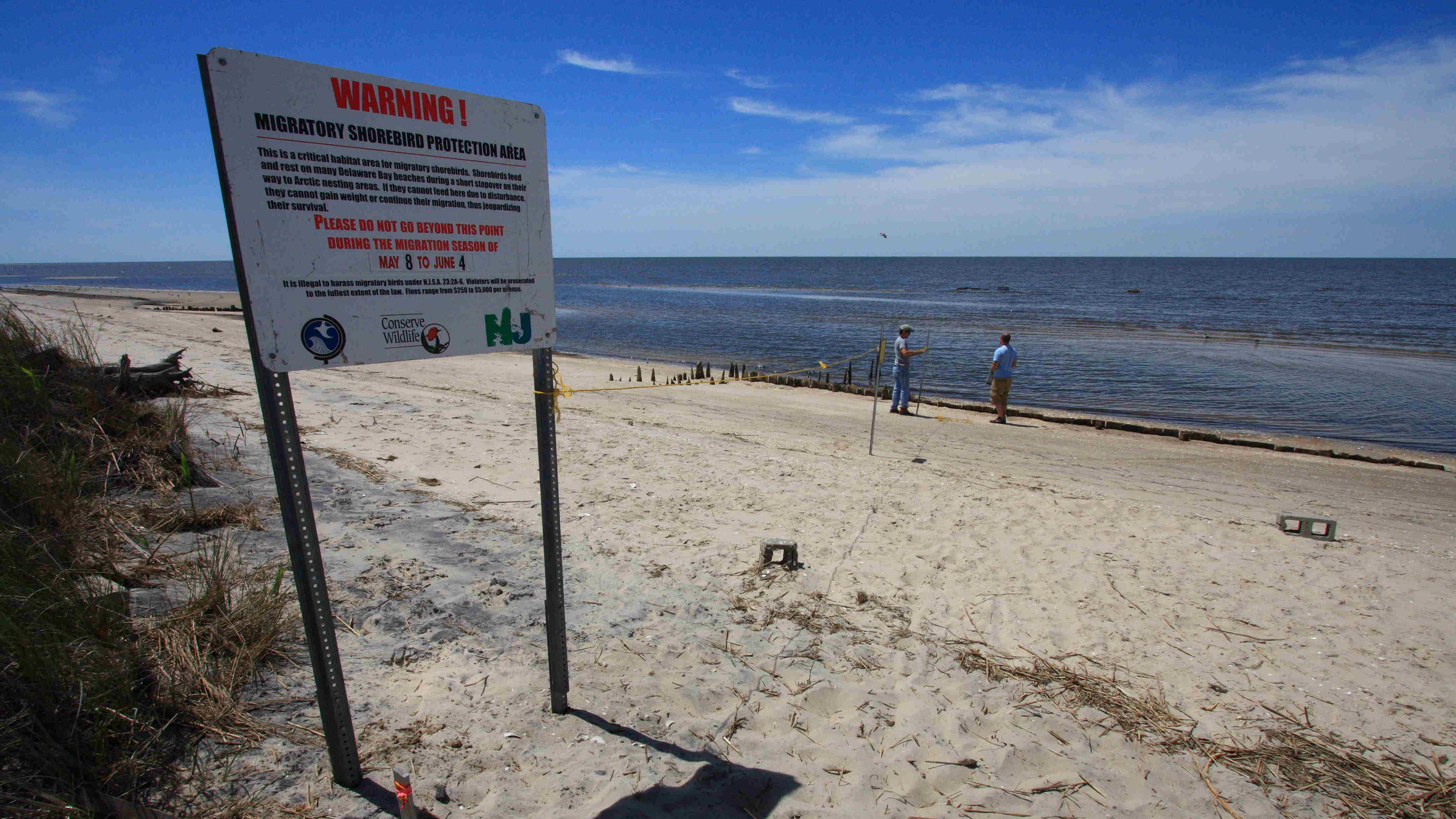
A sign informs the public about the closure of beaches to protect migratory shorebirds. © Ben Wurst

While you are out visiting the beaches you might run into one of CWF’s shorebird stewards.  These dedicated volunteers are located at the closed beaches educating the public about the shorebirds.  CWF had a new brochure printed this year, Spotting Shorebirds, Along the Delaware Bay, be sure to ask the steward for a copy of this so you can practice your shorebird ID.  The stewards can also let you know on which beaches shorebirds have recently been spotted.

It really is worth the trip to see this spring migration, you won’t be disappointed. To find out the best beaches to view migratory shorebirds, check out our exclusive Wildlife Viewing Map.

Stewards Needed for the Shorebird Project

By Larissa Smith, CWF Assistant Biologist

If you enjoy spending time on the beach, bird watching, and interacting with people while helping to make a difference, then the shorebird steward project might be the right volunteer opportunity for you! The Delaware Bay in the spring time is a great place to be!

In 2003, New Jersey began restricting beach access on critical shorebird feeding beaches. With fewer horseshoe crab eggs available it is more important than ever to protect shorebirds as they search for food on Delaware Bay beaches. Shorebirds are very

sensitive to disturbance. If birds are disturbed while they are resting on the beach or feeding, they may not build-up the necessary fat reserves to make it to their Arctic breeding grounds.

Photo of shore birds along Delaware Bay beach.
Shorebirds at Fortescue Beach on the Delaware Bay, Cumberland County. (Monica Pepe)

The shorebird steward project was put in place to have a presence at these closed beaches during the three-week closure period in May through early June. In 2009 thirty-three stewards patrolled nine beaches along the Delaware Bay in Cape May and Cumberland Counties. Their main goal was to ensure that resting and foraging shorebirds were not disturbed. As beach goers are encountered, stewards engage them in conversation, and distribute brochures and other educational materials. Stewards direct people to designated viewing areas. People visiting the Delaware Bay leave with a better understanding of biodiversity, species interaction, and an understanding of what they can do to help.

In 2010, stewards will be needed the following dates: May 8th, 9th & May 15th through 31st.

Interested applicants must be available to work at least two full days, 7-8 hours a day. A shorebird steward training will be held on May 1st.

If you are interested in learning more about the program please contact Larissa Smith at (609) 628-0402 or Email.