Eagle Battles In New Jersey

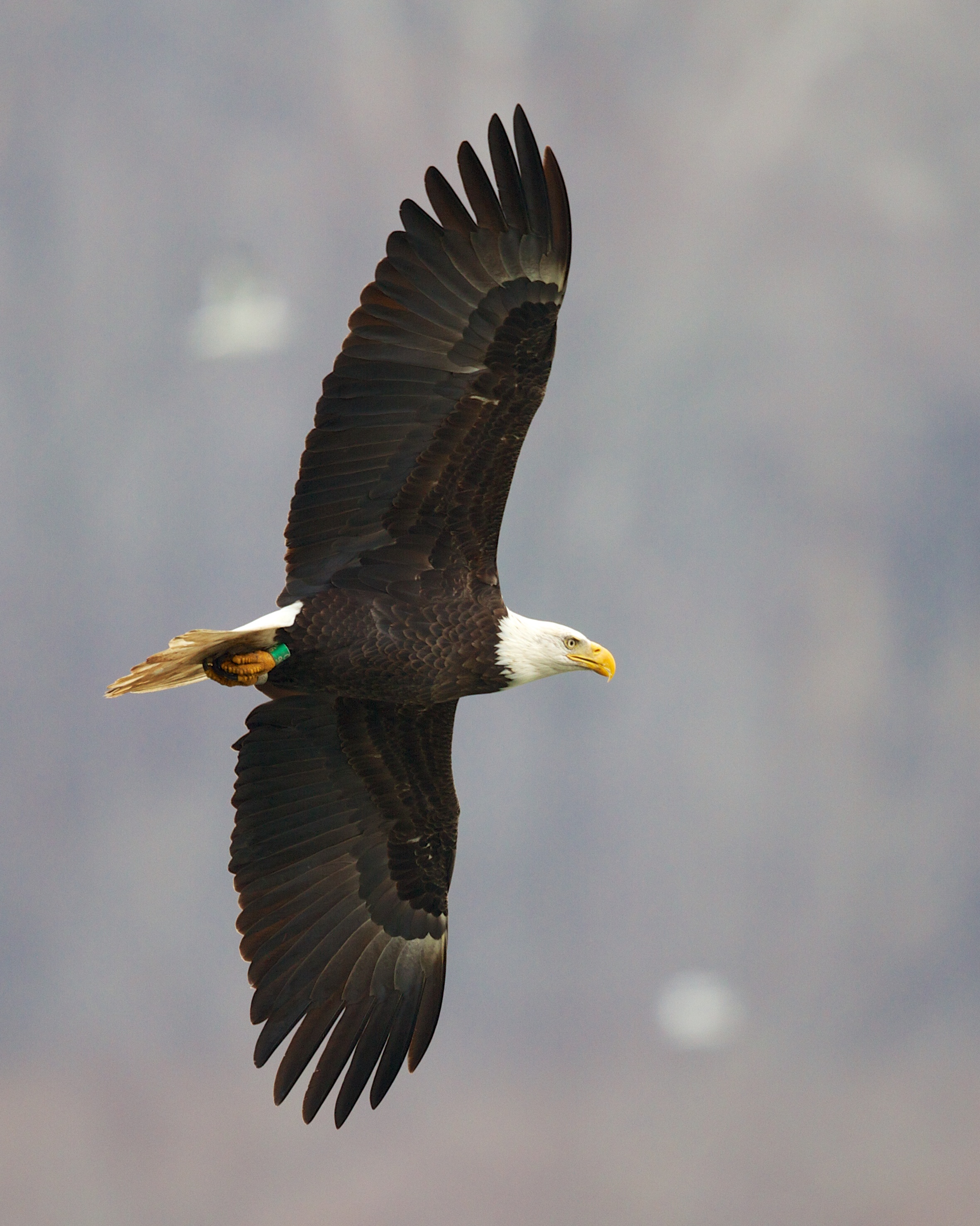
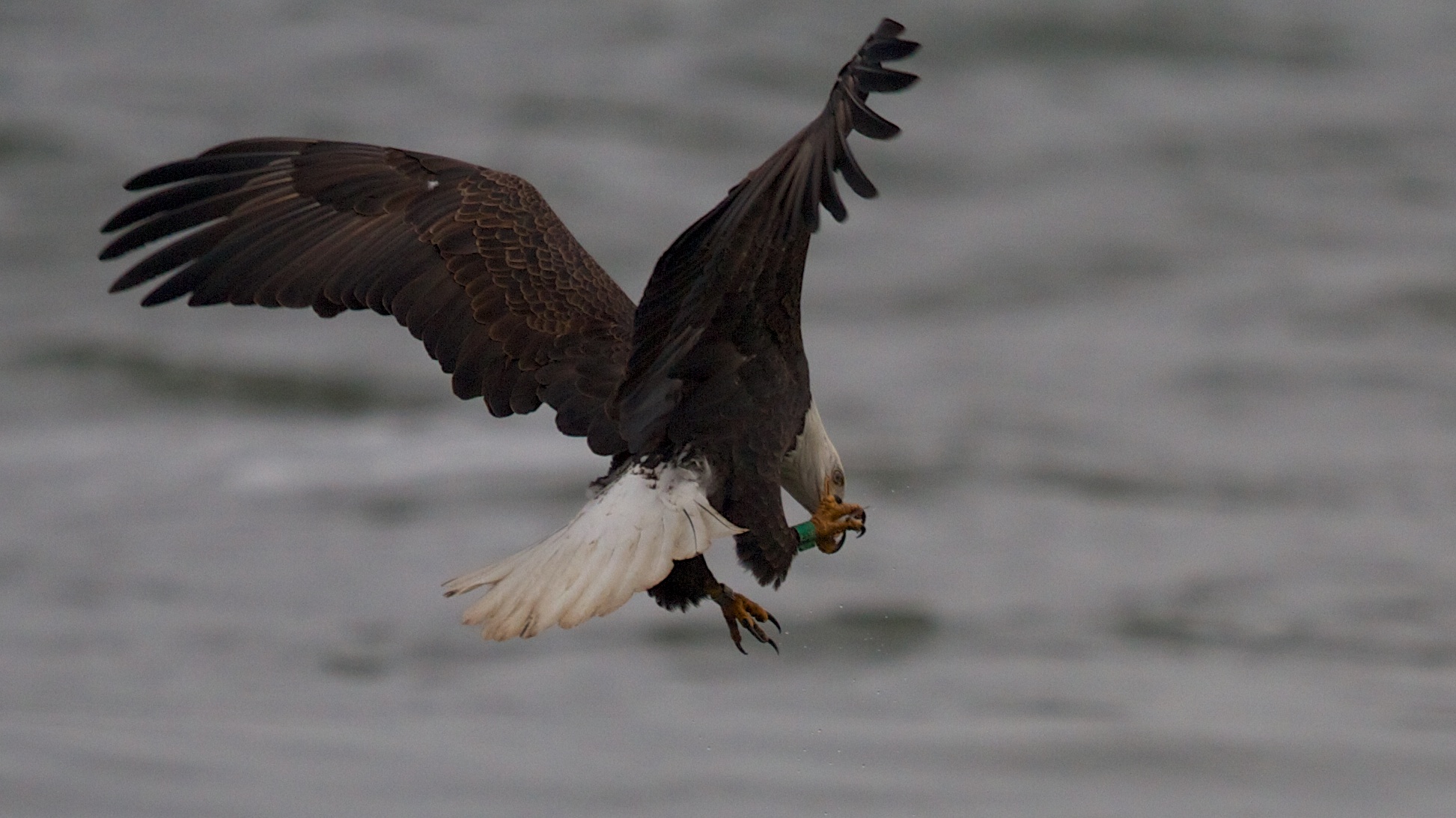
Wildlife Blogger Jim from Readings From The Northside was lucky enough to witness two bald eagles fighting over a deceased duck. He captured their battle on film and describes what he saw on his blog Readings From The Northside.

As the numbers of eagles increase in New Jersey, these type of disputes are becoming more common place. Eagles not only fight over food but territory as well. Several eagles have been found deceased or injured this past year due to conflicts with other eagles.

Learn more about Conserve Wildlife Foundation’s Eagle Project.

Eagles fight over duck at LBI @ Readings From the Northside
Eagles lock talons @ Readings From the Northside

Tracking New Jersey’s Bald Eagles

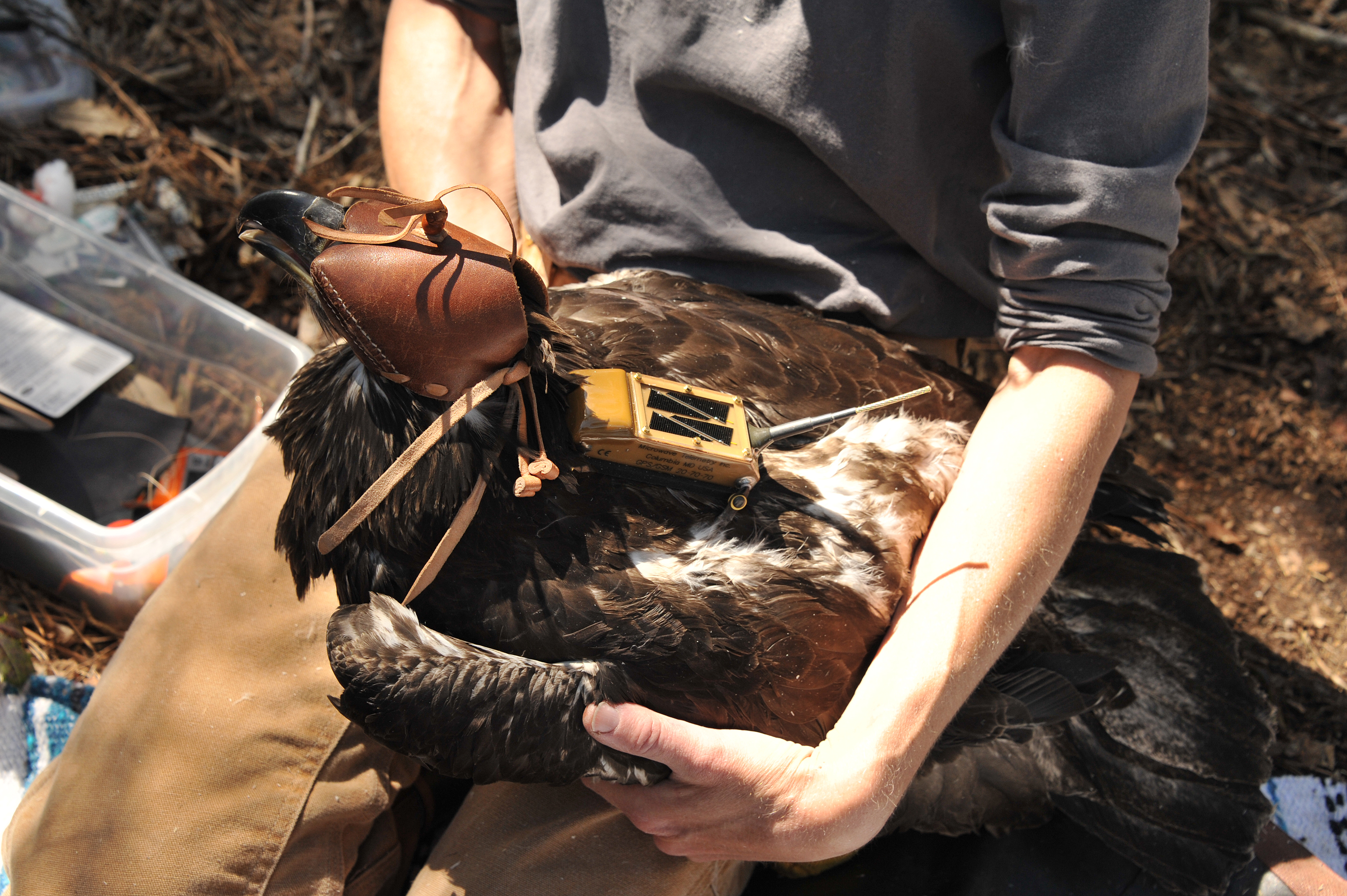
Transmitters attached to juvenile eagles in 2014

by: Larissa Smith, volunteer manager/wildlife biologist

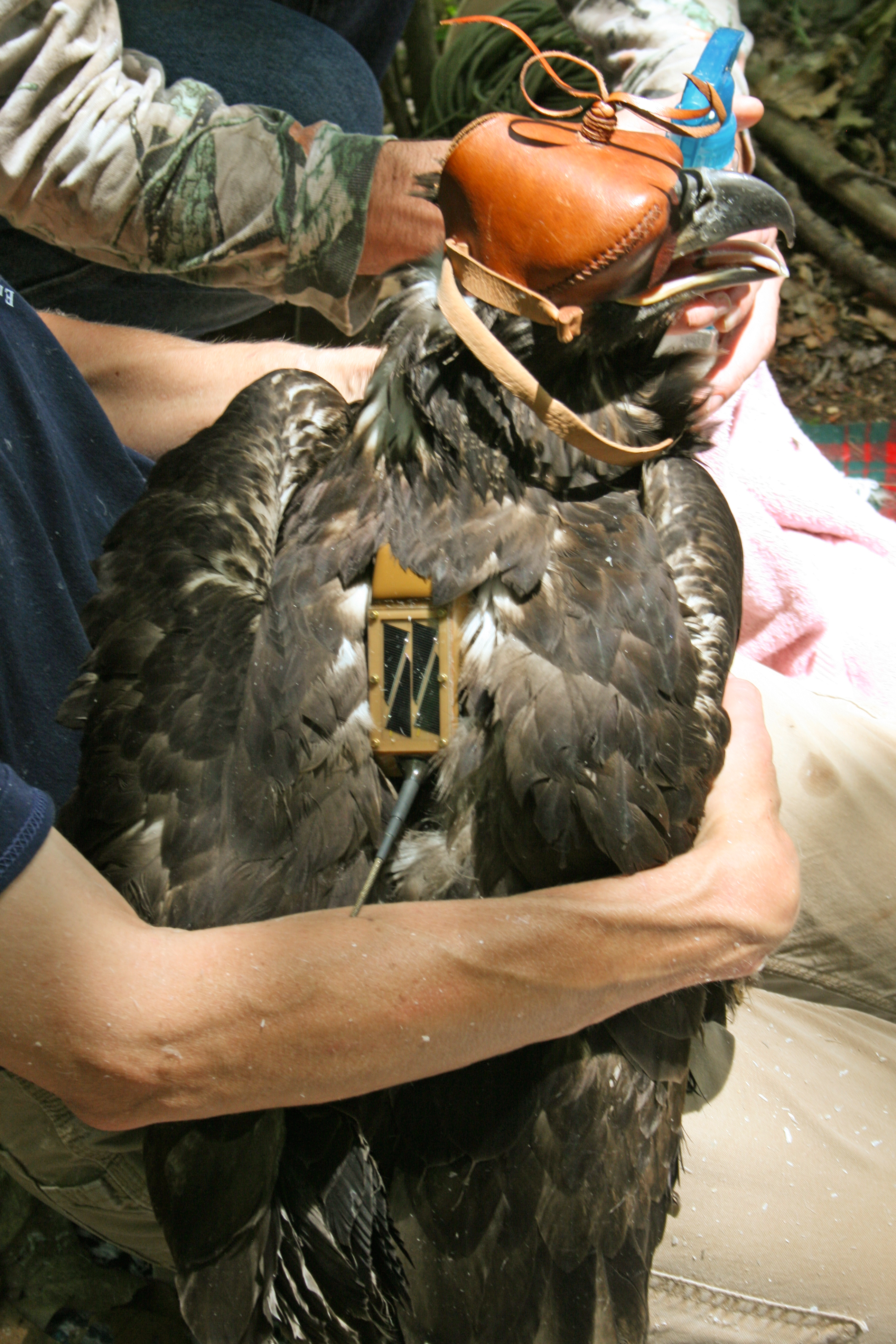
Juvenile male bald eagle (D/95) with GPS transmiter being attached. Kathy Clark/ENSP

Since 2011, the NJDFW Endangered and Nongame Species Program and Conserve Wildlife Foundation have been following the movements of young eagles outfitted with transmitters that have fledged from the Merrill Creek nest in Northern New Jersey. Currently, two eagles are being tracked from the Merrill Creek nest.

During the summer of 2014, two juvenile bald eagles were fitted with a GPS tracking device (a wearable backpack). Biologists chose one eagle from Atlantic County (a male) and one from Cumberland County (a female) to be tagged in this telemetry study. The male hatched at a nest near Nacote Creek in Port Republic, and wears a green band with code D/95. The female is from a nest on the Maurice River; she wears color band E/05.

The male, named “Nacote” (D/95) had a transmitter attached at 8.5 weeks of age on May 6, 2014 and on May 22, he first moved away from the nest tree. He remained within about 1/4 mile for more than one week as he learned flying and landing skills. He made a bold northern movement in late July, and was in Canada until mid-October when he started heading south.

Nacote made a stop at Six Flags Great Adventure on December 1!

The female,  named “Millville” (E/05)  was about 8.3 weeks of age when outfitted with the transmitter. The banding date was May 19, and she remained close to the nest until late July, venturing out to Delaware Bay marshes and back in early August. In mid-September she crossed the Delaware River into Delaware and then spent most of September along the Chesapeake Bay in Maryland before crossing over to Virginia.

The last location received for Millville was on November 17, 2014. On the 24th, we received a call that she had been found dead by the side of the road in Delaware. A necropsy was performed and cause of death was determined to be from electrocution due to a collision with electric wires.

We are lucky that a passerby stopped and contacted us, so we know what happened to her and were able to get the transmitter back. There is a high mortality rate for first year eagles as they learn to hunt, fly and survive on their own.

An interactive map showing Nacote’s current location can be viewed on our website.  It’ll be interesting to see where he ends up this winter!


Update on Duke Farms Eagle Cam

Juvenile eagle, D-98 recovered dead in Maine

by Larissa Smith, Wildlife Biologist/Volunteer Manager

Duke Farms eagle chicks in nest after banding on May 14, 2014

On July 27th the juvenile male, D-98, was found dead by residents of Little Sebago Lake in Maine. He was banded at six weeks of age along with his two siblings one male and one female at the Duke Farms eagle nest which was broadcast live online.

His body was found floating in the lake by residents who reported the band numbers to the National Bird Banding Lab. We then received the report that he was found dead and were able to contact the finders for more information. Residents of the lake which is NW of Portland, reported seeing him near an active eagle nest located on the lake. The nest had chicks which had fledged in early July. On July 25th residents reported seeing a juvenile with a green band sitting in a tree near a boat house;

“The youngster had been in a small tree next to our boat house for quite a long time when an adult, carrying a fish, swooped in over the folks sunning on the beach and attacked the young bird. It dropped the fish in the process. The adult flew off leaving the fish and the juvenile behind. Thanks to a cell phone photo, we know that the youngster had the band colors of the later retrieved juvenile”.

While we don’t know for certain we can assume that the juvenile’s death was in some part due to injuries that occurred when it was attacked by the adult.  It is always sad to report on the death of an eagle especially one that hundred’s of Duke Farms eagle cam viewers watched “grow-up”, but it is the reality of life in the wild. The mortality rate for first year eagles is fairly high as they are still learning to hunt and survive on their own.  It is very unusual to receive this much information on the details surrounding an eagles death.  D-98 made an approximately 390 mile trip up to Maine.  He probably found plenty of food at the lake which is why he was hanging around, but ended up in another eagles territory.  Hopefully the remaining two juveniles from the Duke Farms nest have better luck and survive their first year.


New Jersey Eagle Nesting in PA

the story of “Jersey Girl”

Larissa Smith: Wildlife Biologist/Volunteer Manager

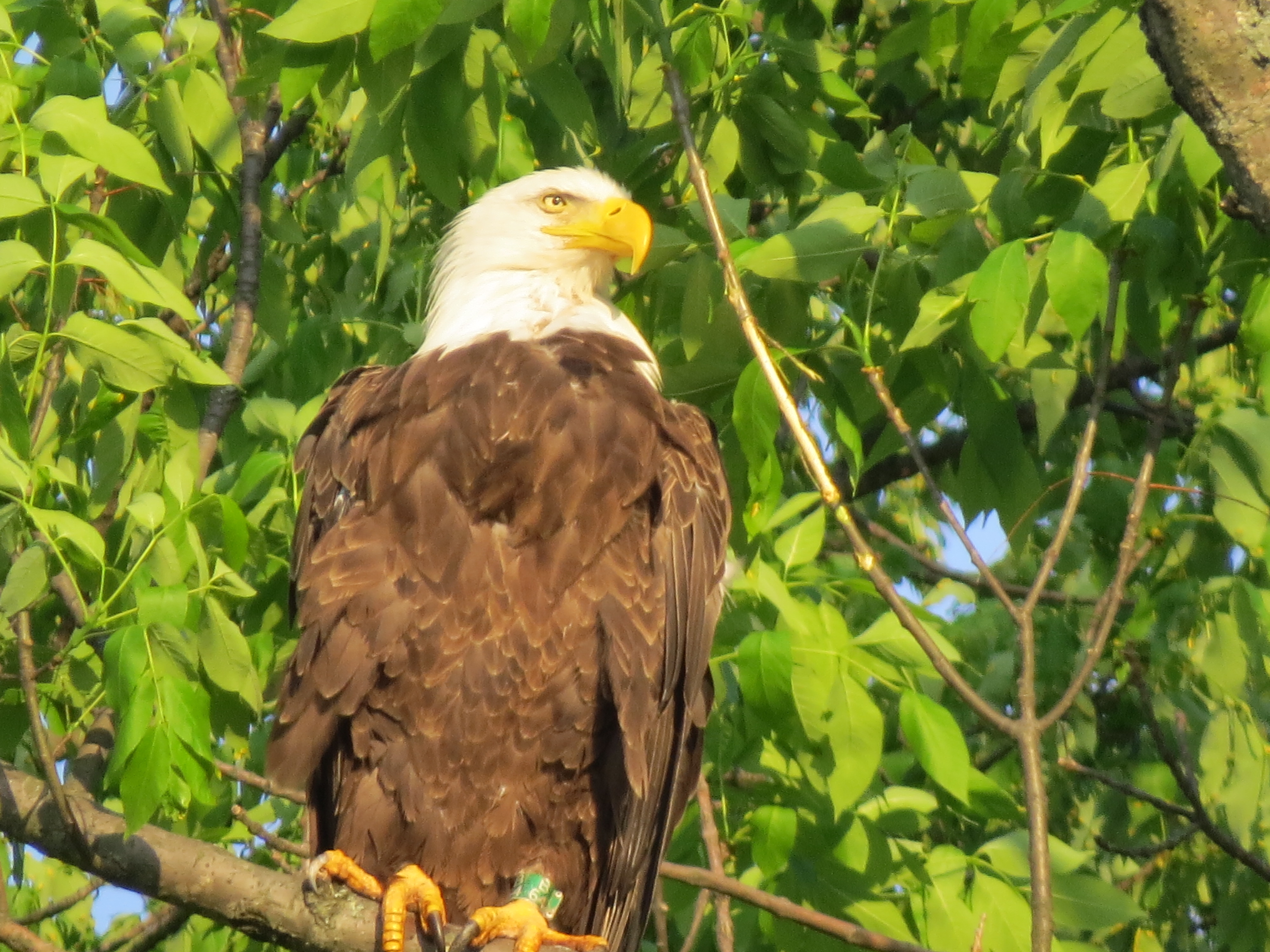
NJ banded bird B-64 taken in PA @ Linda Oughton

Each year biologists with the NJ ENSP & CWF band chicks at eagle nests though out NJ. Each chick gets a green (NJ) band on one leg and a silver federal band on the other.  The Green band indicates that the bird was banded in NJ and the letter over the number combination is recorded so we know where and when.  There are at least 20 pairs of eagles nesting in NJ where at least one of the adults is a NJ banded bird.  Over the past few years we’ve gotten reports of NJ birds seen in other states and if we’re lucky (and someone has a really good camera) the green band can be read.

We recently heard from Linda Oughton who lives in PA.  She  has a pair of eagles nesting near her home and was able to get a photo of the perched female with green band B/64.  She was able to tell us that this pair has been nesting for the past three years near her development in Montgomery County and raised and fledged four young for two of those years. They were active this season and had two chicks, which unfortunately didn’t survive due to the severe winter weather.  Before nesting in this tree they nested for three years at another location where they raised seven young.  The banded eagle is a female which is known because she is larger than her mate (female eagles are larger than the males).

B-64 with two chicks raised and fledged in 2013 @ L. Oughton

B/64 was one of three chicks banded in 2004 at the Hopewell West nest which is located in Cumberland County along the Cohansey River. Linda has named  B/64 “Jersey Girl”  and she keeps everyone in the development where she lives informed about the nest. No doubt that this former NJ bird is well loved and protected.

Living with eagles as your neighbors

Brochures now available

by Larissa Smith: Wildlife Biologist/Volunteer Coordinator

Bald Eagle Project Brochures.

The New Jersey Bald Eagle nesting population is on the rise with 148 nesting pairs monitored in 2013 and 177 young fledged.  As the eagle nesting population increases so do the incidences of eagles nesting in close proximity to humans and human activity. It’s exciting to have a pair of bald eagles nesting and people often want to get a closer look but this can cause disturbance to the nesting eagles and have detrimental impacts. Over half of NJ’s eagle nests are located on private property which makes it important to advise and educate land owners, land managers about living with eagles.

To address this issue CWF received a grant to produce two informational brochures about co-existing with bald eagles in NJ. One is a general brochure for anyone interested in eagles in NJ and the other is specifically for landowners/land managers with eagle nests located on their property.  The brochures contain information on eagle history, living with eagles as you neighbors, how to be a good eagle watcher or steward, as well as phone numbers for information and law enforcement. As the eagle project volunteers monitor their nests they will have these brochures available to educate interested people.

New Jersey’s 1st Annual Super Bowl

This Week, Play in New Jersey’s Super Bowl…of Wildlife

wildlife superbowl

This Sunday, for the first time ever, New Jersey will host the Super Bowl. Millions await the drama between two evenly matched high-flying teams.

You mean the Seahawks versus Broncos in the NFL Super Bowl?

Guess again.

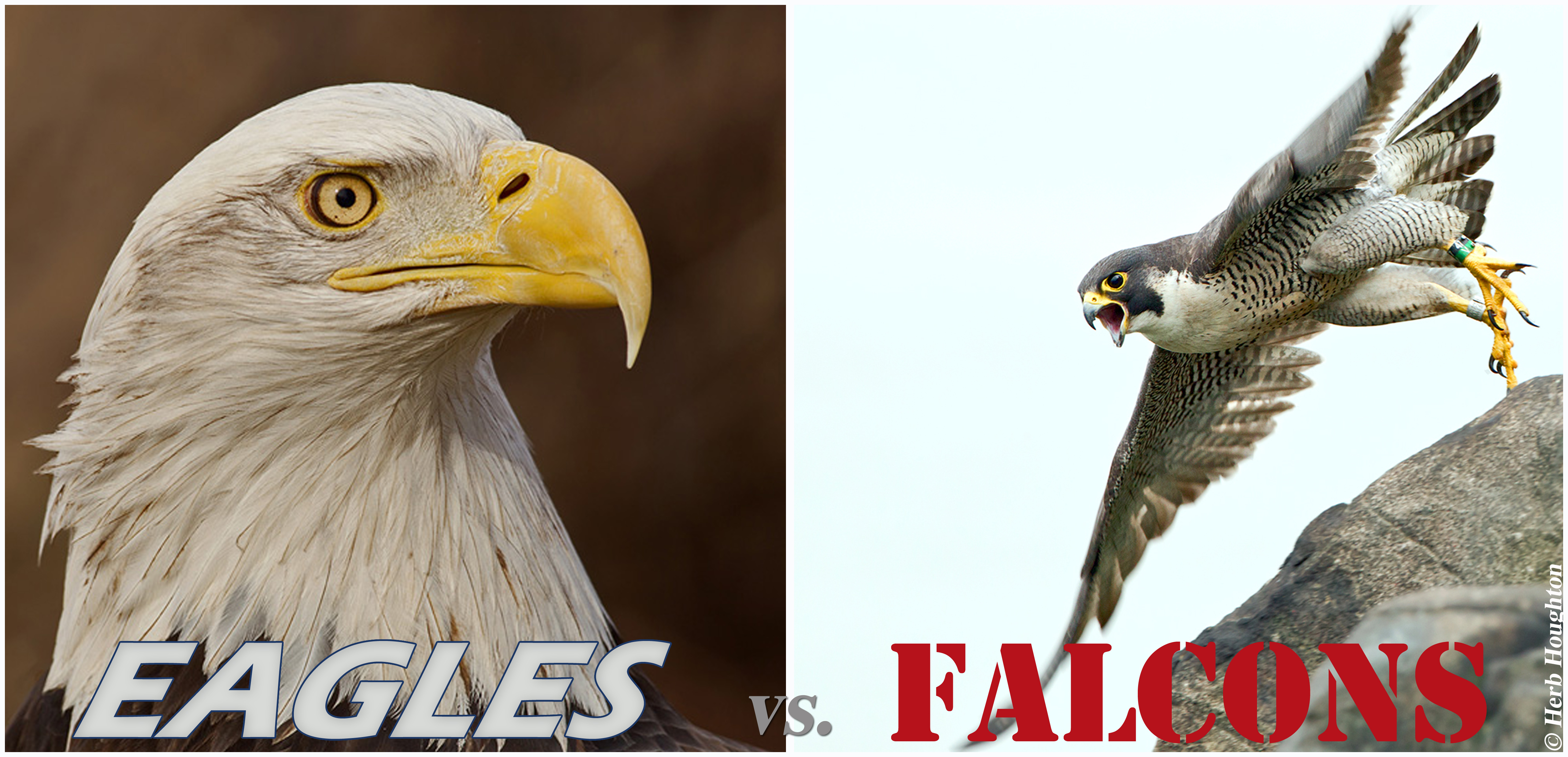
Try the Falcons versus Eagles in the CWF Super Bowl!

As in peregrine falcons, the fastest animal on earth, against the bald eagles, the symbol of All-American grandeur. These two “teams” have overcome incredible odds to make it to the biggest stage imaginable: the Conserve Wildlife Foundation of New Jersey (CWF) battle for the first annual state wildlife championship. The winner will be announced on Monday morning, after a week of Facebook “likes” and donations in favor of the Falcons, or of the Eagles.

All donations will help support CWF’s work on that species, with falcon support dedicated to our Jersey City webcam program and eagle support helping our statewide stewardship work. At stake is not the NFL’s Lombardi Trophy, but an extra boost in CWF’s efforts to protect one of these imperiled species and ensure its inspiring recovery continues.

Surviving the Regular Season

How did these CWF champions make it this far? From their home stadium in downtown Jersey City (and 23 other nests across New Jersey), the Falcons have soared through the season in a continued recovery from decades of struggle against opponents like DDT and pollution. The Falcons then entered the CWF playoffs with momentum, defeating the Bobcats, Terrapins, Ravens, and Fishhawks (ospreys) in succession to reach this big stage.

Their opponent, the Eagles, play the majority of their home games on the windswept Delaware Bayshore, but also play at 118 other nests across the state. Like the Falcons, the Eagles had decades with seemingly no hope because of DDT and a rapidly changing landscape. Yet the Eagles bounced back with an inspiring few seasons, capped by victories over the Bog Turtles, Plovers, Tigers (salamanders), and Dolphins.

Among the teams that continued struggling this season were the Rattlers, the Bats, the Tree Frogs, the Skippers (butterflies), and the Goldenwings (warblers). Conversely, the Seals and Snowy Owls had strong winter seasons. Two closely rivaled teams, the Red Knots and the Horseshoe Crabs, overcame the loss of their stadium to Hurricane Sandy with a newly built New Jersey home that greatly improved their odds of success.

Now that the game is on – what are the rules for the CWF Super Bowl?
Do you win, too, if you support the winning team?

All supporters of the winning team will be eligible for a drawing to join a banding of the winning raptor this summer, with eligibility weighted by donations and points – the greater the donation or support, the greater your chance of winning! But EVERYONE is eligible, even for as simple as a Facebook like!

As for you non-football fans out there…just as the NFL Super Bowl attracts attention far beyond regular football fanatics, our CWF Championship is meaningful to all of us who care about imperiled wildlife in New Jersey. Here is a chance to ensure that a magnificent raptor – a bald eagle or a peregrine falcon – continues to grace New Jersey’s skies. Either way, score a win for New Jersey’s wildlife!

So consider this the opening kickoff! Getting out on the field is as easy as clicking a link in this email – but choose wisely. The champion awaits!

2014 NJ Bald Eagle Nesting Season Has Begun

by: Larissa Smith; Wildlife Biologist/Volunteer Manager

Eight pairs of NJ eagles are currently incubating (sitting on eggs). The earliest pair to start incubating was confirmed on January 12th, so the birds been keeping the eggs warm throughout the snow and cold weather. Eagle Project volunteers report that pairs all over the state are busy working on their nests in preparation for egg laying.

Want to see eagles and other raptors and learn all about them? The Cumberland County Winter Eagle Festival is February 8th, 2014.

The following photos were taken by Eagle Project Volunteer Tom McKelvey.

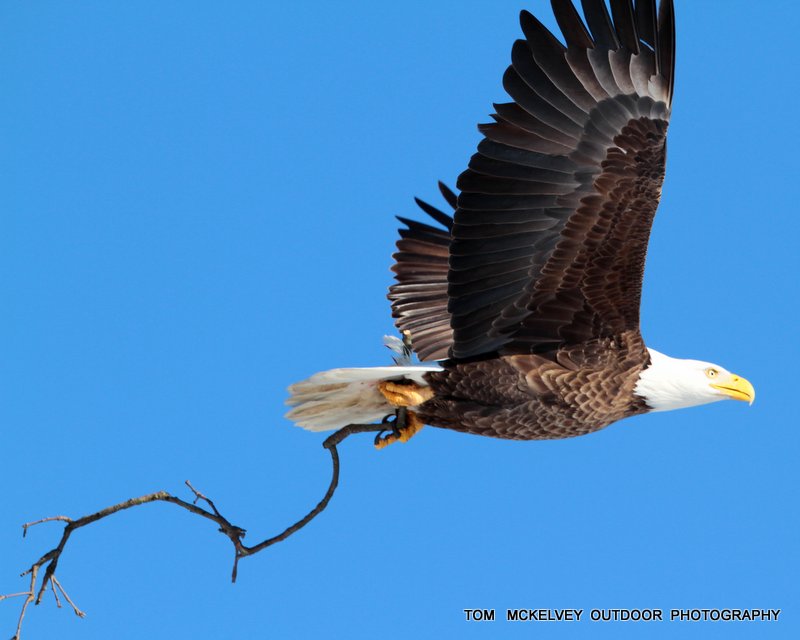
Adult with nesting material. ©Tom McKelvey
A pair works on their nest. ©Tom McKelvey


Duke Farms 2009 Eagle Chick All Grown Up

Jersey banded bird re-sighted in Maryland

by Larissa Smith, Wildlife Biologist/Volunteer Coordinator

NJ banded eagle at Conowingo Dam, MD © Kevin Smith

The Duke Farms eagle camera was put in place in 2008. Since then it has had quite a following of people interested in seeing the pair raise their young. After the young birds leave the nest it is unknown what happens to them. The mortality rate for first year eagles is fairly high since they are just learning how to fly and hunt on their own.  So it was quite exciting when on December 1, 2013 Kevin Smith photographed a NJ banded bird at Conowingo Dam, Maryland. He was able to zoom in close enough to view the green band which read C96. This bird had been banded on May 18, 2009 at Duke Farms. He was the oldest of three males raised by the pair in 2009 while being watched by eagle cam viewers. Below is a photo of the three chicks in the nest following the banding. The largest bird on the right is C96.  Now at 4 1/2 years old he is almost a mature adult but still has just a slight amount of brown in his tail feathers (photo on left).

Conowingo Dam is a popular spot for eagles this time of year due to the abundance of fish. Kevin noted that the eagles were catching smaller fish than usual and eating them on the fly. The photo below on the right shows C96 moving the fish from his talons to his bill. Kevin reports that he (C96) would then circle back around looking for more fish and got his share of food that day. It is good to know that C96 has survived and is healthy.

  • The Duke Farms eagle cam is up and the pair is getting the nest ready for the 2014 nesting season.


NJ banded eagle at Conowingo Dam, MD © Kevin Smith
Duke Farms eagle nest at banding May 18, 2009 © Mick Valent

New Jersey’s Bald Eagle Population is Flying High

© Thomas Gorman
© Thomas Gorman
2013 New Jersey Bald Eagle Project Report

by Larissa Smith, Wildlife biologist/Volunteer Manager

2013 was a good year for the New Jersey bald eagle population.  A total of 148 nests were checked during the season and 119 were found to be active (with eggs).  A record high of 177 young were produced. Eagle nests can now be found in all but two of New Jersey’s 21 counties.

As we wrap up the 2013 season eagle pair’s are already reported to be working on nests for the 2014 nesting season.  I would like to thank all of the dedicated eagle project volunteers as well as all others involved in the eagle project.

The 2013 New Jersey Bald Eagle Project Report has all the details on the 2013 nesting season.

Continuing to Track NJ Eagles.

Update on the Merrill Creek birds.

by: Larissa Smith, Wildlife Biologist/Volunteer Manager

Back in February I gave an update on the Merrill Creek birds that had been fitted with transmitters.  http://www.conservewildlifenj.org/blog/2013/02/01/tracking-eagles-in-nj/

We continue following the movements of the female that had the transmitter placed on May 29th, 2012. She spent the winter down at the Delmarva Penninsula in coastal Virginia and then headed up north and spent a large portion of the summer in Maine. She is starting to head south and on September 2nd was in Connecticut.

On May 31, 2013 the largest of three chicks at the Merrill Creek Reservoir nest, a female, was fitted with a transmitter.

Merrill Creek chick with transmitter May 29th, 2013

This transmitter is different than the ones previously used in that it uses GSM technology. Instead of using satellites to pick up the bird’s location, the transmitter will transmit data via cell phone towers. The data is then transmitted over the internet and delivered as an email to a mobile device or computer. This new technology transmits more data, costs less and allows users to have instant access to the data through smart phones or computers. Since fledging this bird has been on the move spending time in NY, PA and back to NJ and as of September 3rd was back near the nest site.

To follow both these eagles movements  go to: http://www.merrillcreek.com/eagletracking.html.